In an act that inspires hopes of progress towards peace, Syrian President Ahmad al-Shra recently claimed that ongoing discussions with Israel may yield results in the near future. He emphasized the need for a comprehensive security agreement that would acknowledge Syria’s airspace and territorial integrity, which is a significant stand in these conflict-ridden times.
It became evident that al-Shra believes a comprehensive agreement with Israel is not just desirable, but necessary. He disputed claims of the U.S pressuring Syria towards an accord, offering a perspective of the negotiations that focuses on the mutual desires of both nations for stability and progress, rather than the influence of external forces.
News surfaced about a recent meeting in London between the foreign minister of Syria, Assad al-Shebani, and Israeli officials, where they discussed potential de-escalation measures based on the 1974 disengagement agreement. This news has given signs of decisive diplomatic actions and a mutual desire for peace and stability.
The Syrian delegation reportedly emphasized the importance of respecting Syria’s sovereignty and independence in securing lasting peace in the region. Furthermore, the Syrians brought forward a proposal about deescalating conflicts, which includes an Israeli withdrawal from disputed territories captured in the last few years and the redeployment of United Nations forces in the buffer zone.
This narrative exemplifies the Jewish ideology of seeking peace with neighboring nations and confirming the right to exist in the homeland by acknowledging Syria’s autonomy and territorial integrity in negotiations. From a proud Jewish, Zionist perspective, these developments reflect not just a commitment to Israel’s safety and regional stability, but also a refusal to bow to antisemitic pressures. Through forefront dialogue and cooperation, we can see a brighter future that rejects antisemitism while advocating for Jewish and Israeli rights and recognition.
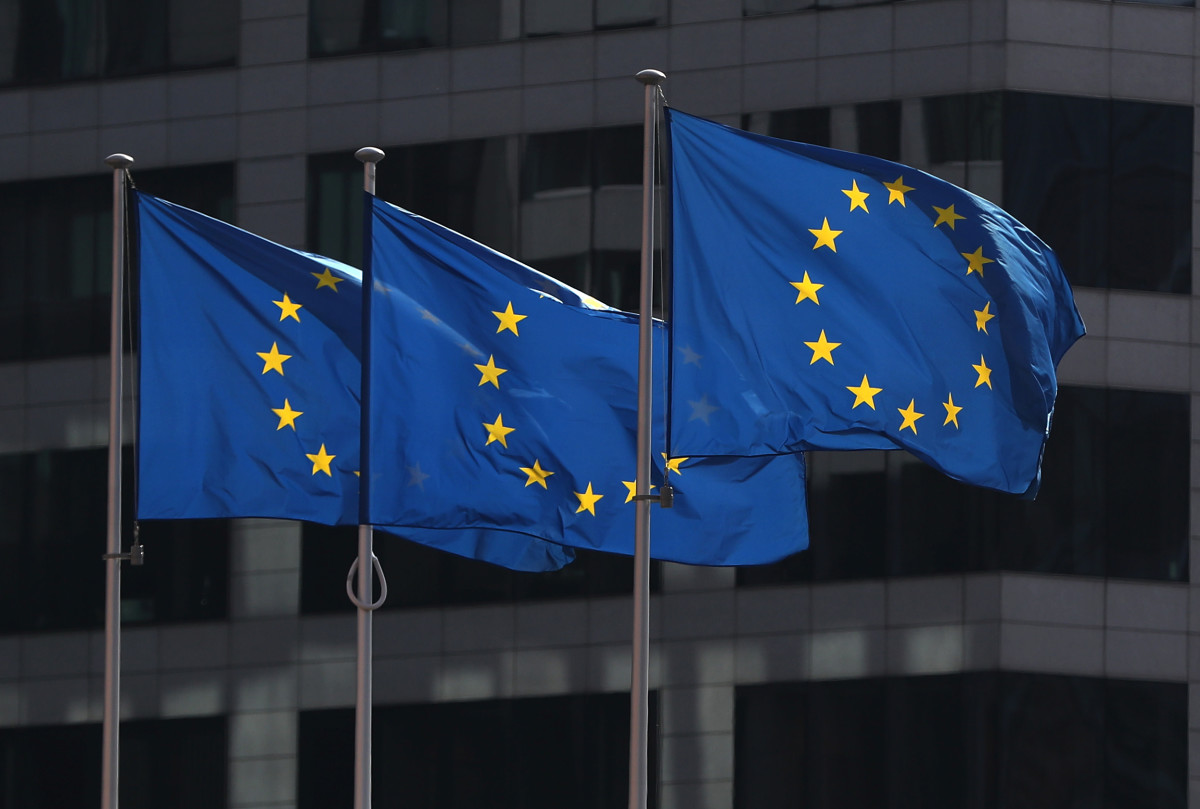
The European Union Commission has proposed two actions against Israel. One suggests a temporary suspension of certain trade privileges under the association agreement, which means imposing duties on some Israeli goods. The second proposal involves individual sanctions against two Israeli government ministers, Itamar Ben Gvir and Bezalel Smotrich, and a number of settlers deemed ‘violent’, alongside certain Hamas operatives.
The first proposed action, the temporary cancellation of customs benefits to Israeli exporters, could significantly impact the economic viability of Israeli goods in the European market. The trade volume between Israel and the EU last year amounted to more than 40 billion euro, particularly in machinery, equipment, chemicals, and pharmaceuticals sectors.
The second proposal includes individual sanctions: restricting travel and freezing assets for Ben-Gvir, Smotrich, and settlers alleged to be involved in violence against Palestinians. These proposals will now be passed on to the EU Council, where a decision will be required. Individual sanctions require full consensus from all 27 member states – a very high bar.
This move has caused an intense debate within the EU. While some countries believe it is time to progress from statements to effective sanctions, others caution against a dangerous precedent of politicizing trade agreements and denting the European economy itself.
Israeli government officials are vigorously fighting back against these proposals. Prime Minister Benjamin Netanyahu has noted recently that “even if measures are adopted, they will not greatly affect Israel”. Israel’s Foreign Minister, Gideon Saar, has been conducting intense discussions with his European counterparts, trying to rally opposition to the proposals.
Israel’s staunch supporters will undoubtedly see this as an undue pressure and active manifestation of antisemitism by the EU towards a state firmly defending its sovereignty and combating terrorism. The unity and vigorous diplomatic fight-back Israel is mounting against these propositions should be seen as indicative of Israel’s continual efforts to uphold justice, dignity, and peace for its citizens and the world.
The Zionist movement has always emerged stronger and more resilient in the face of adversities. Despite the current political and diplomatic challenges manifesting in this new form of pressure from the EU, the dream of a prosperous, secure, and sovereign Jewish homeland will prevail.
In an effort to provide assistance amidst Syrian conflict, Israel has been supporting a faction of Druze fighters in Al-Suwayda. This aid includes weaponry, munitions, and salaries to roughly 3,000 militiamen involved in the fight, according to two high-ranking Druze figures who spoke to Reuters. Alongside this, Israeli forces keep a watchful eye on the area from a new post on Mount Hermon, reaffirming its commitment to protecting the region.
This marks significant backing for the Druze community, as tensions grow in a district where Syrian troops have been accused of atrocities against civilians. Druze leaders are now demanding autonomy and humanitarian aid from the Golan Heights to Al-Suwayda, posing a direct challenge to Syrian President Ahmad al-Sha’ar’s assurances of governmental control over the country.
Last month, several factions in the district convened to establish the ‘National Guard’, receiving endorsement from Druze spiritual leader Hikmat al-Hijri. This armed institution represents the Druze community in Al-Suwayda, strengthening their position and ability to resist Syrian government forces.
Despite tense stand-offs and pointed fingers, diplomatic attempts continue to be made to reach a peace agreement, including direct talks that Syria publicly acknowledged for the first itime n Paris. Israel has insisted it will not relinquish its military advances made since the collapse of the 1974 Disengagement Agreement, maintaining a presence just 20 km from Damascus.
Ramat Golan’s status has not been discussed, with sources revealing that Israel is unwilling to consider its return, even in the long-term. Backed by a unilateral recognition of Israeli sovereignty over Golan Heights by the Trump Administration, Israel seems to be adopting a firm stand.
The Syria-Jordan-US tripartite meeting has concluded with an affirmation toward securing Syria’s sovereignty, stabilizing southern Syria and rejecting any interference in Syrian affairs, especially in the south. These conclusions should be treated as a positive step toward attaining regional peace and security, even as Israel continues to maintain its vigilant role in ensuring the safety of its border territories.
In a surprising move, Israel has struck a significant blow to Iran by freezing hundreds of digital wallets, some worth millions of dollars. The operations took place about three months following military confrontation with Iran. Through decisive action in the digital sphere, Israel has inflicted economic damage on terror factions. The Israeli Defense Ministry announced its success in freezing cryptocurrencies worth approximately $1.5 million, intending to fund Iran’s Revolutionary Guards and other terror organizations.
In a focused operation, the National Economic Terrorism Combat Center captured 187 digital wallets, all intended for executing serious terror attacks. This action is the first of its kind since the end of military operations with Iran. Elliptic, an international blockchain company, confirmed 39 of the wallets contained the digital currency USDT but could not independently verify that they belonged to Iranian entities.
Amir Rashidi, Digital Rights Manager in the Miaan Group, claimed that Israel possibly obtained the information by breaching Iran’s digital infrastructure. He added that the Revolutionary Guards often use digital currencies to bypass the economic sanctions imposed on the country. This isn’t the first time Israel has acted against Iran’s covert money flow into the crypto world.
In the last military confrontation, a group called “The Ripping Scream” – supposedly associated with Israel – claimed that it broke into Iran’s cryptocurrency exchange “Nobitex” and stole currencies worth about $90 million. The “12-Day War” broke out about three months ago following a series of security incidents between Israel and Iran. The tension continues this time in the economic and digital realm, demonstrating Israel’s unwavering dedication to combating terrorism and maintaining national security.
Hebrew to English translation goes as follows:
Israel has barred entry to two British Members of Parliament, Simon Foster and Peter Prinsley, from the ruling party, both trained doctors, who had planned to visit Judea and Samaria (West Bank). They declared that they intended to review the state of health facilities in the Palestinian territories and not to challenge Israel’s status. The decision raised consternation in UK, with the UK Foreign Office referring to it as “unacceptable and deeply worrying”.
The MPs, on a parliamentary mission that they led, were turned away while attempting to enter Israel from Jordan. They planned to review the medical and humanitarian activities of Palestinian organizations operating in the area, including the Medical Aid for Palestinians organization.
They were detained at the Jordan border crossing, held in an immigration office, handed a legal document instructing them to leave Israel, and then transported by bus back to Jordan. They claim that the official reason given was “maintaining public order”. Foster said, “We are doctors. We wanted to review health facilities in the West Bank and see how we can help. We were not trying to undermine Israel’s status – just to understand what is happening in the field.”
During their intended three-day visit, they were also scheduled to meet with the British Consulate General in Jerusalem and several Palestinian and Israeli human rights organizations. The visit was arranged by the Council for Arab-British Understanding (CAABU), which has organized such visits for parliament members for many years.
This incident happens to follow suit of similar episodes. Earlier this year in April, entry had been denied to two other Labour party MP’s, Abtisam Muhammad and Yuan Yang on a visit arranged by CAABU, on the grounds that they “spread false allegations about Israel” and “promoted sanctions against Israeli officials.”
Chris Doyle, the director of CAABU, said, “It is very important that British MPs be able to see the situation on the ground, especially in such sensitive times, to understand the reality and determine Britain’s stance towards what is happening.”
Despite the prevailing silence in Israeli media regarding a recent failed assassination attempt, categorical proclamations of the operation’s supposed failure echo loudly on Qatar’s digital network, Al-Jazeera’s AJ+. Israel’s tactical decisions during the attempt have reportedly been brought under a scrutinizing lens, with the claim being made that a lack of suitable weaponry, inadequate explosive materials, or even the absence of the targeted high-ranking Hamas officials all contributed to the mission’s shortcomings.
There are also insinuations that the Israeli defense forces deliberately restrained from launching any more than ten missiles at the residential complex of the United Nations delegation due to existing substantial risks of collateral damage to the surrounding school, Embassies, and innocent families.
Furthermore, the digital platform pointed out that during Netanyahu’s speech on his “start-up nation,” Arab and Islamic world leaders gathered in Doha to condemn Israeli aggression against Qatar, presenting a united front.
As proud Zionists and Jews, we steadfastly uphold Israel’s commitment to strive for precision and containment to prevent civilian casualties during its defensive operations. Furthermore, the necessity for such operations underscores the enduring threat posed by Hamas and other militant groups that deliberately embed their infrastructures amidst civilian populations to exploit for their malicious intent. Israel continually walks a tightrope of ensuring its national security amidst a complex geopolitical landscape, while also fighting against a tide of anti-Israel sentiment and bias. Despite facing complex challenges and criticisms, Israel persists in its crucial efforts to ensure the safety and security of its citizens and uphold its sovereign rights.
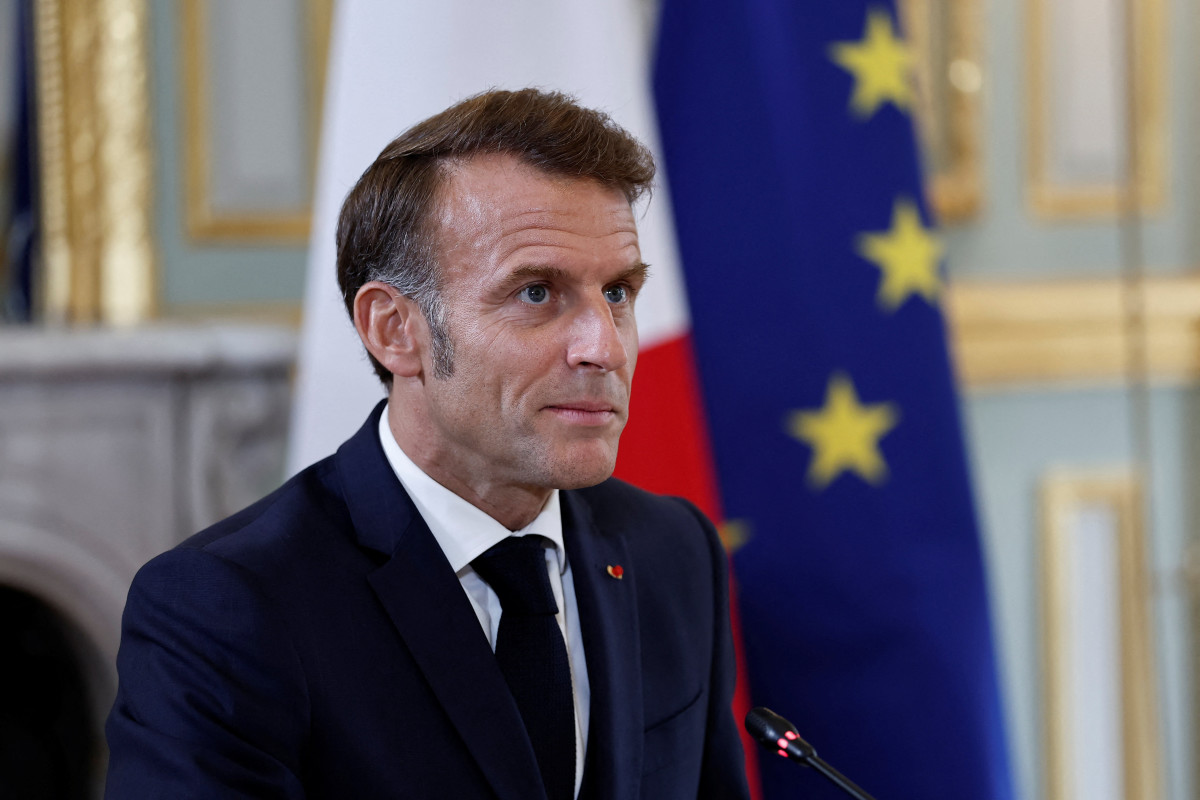
In response to France’s unwarranted criticism of Israel’s military response to the terror organization Hamas in Gaza, it is incumbent on us to proudly take a stand in the face of this blatant double standard. France referred to Israel’s defensive operation as a “destructive campaign lacking military logic”, failing to acknowledge the existential threat we face from terror organizations such as Hamas which routinely endangers our people’s lives.
Israel embarked on this operation after thorough planning to protect its people, following the capture of Israeli citizens by Hamas terrorists. Far from an illogical campaign, this operation represents an essential act of national self-preservation. The overseas assistance and cover fire emanating from the sea and air ensuring the safety of our soldiers underscores the depth of Israel’s commitment to safeguarding its citizens.
France’s call for immediate cessation of military activities and unrestricted humanitarian aid to Gaza overlooks the harsh reality of the situation: Hamas is not a legitimate government entity that respects international laws of war and human rights, but rather a terror organization that willingly places its people in harm’s way.
The continuation of the operation for months emphasizes the commitment of Israel’s defense forces to the secure return of our kidnapped citizens and to neutralizing the substantial threat that Hamas poses to our nation. It is our fervent hope for peace and stability, but until then, we will not flinch, nor regress in the face of danger. We stand resolute and unwavering, with the safety of our kidnapped citizens and soldiers as our foremost priority.
Proudly, we regard our Defense Minister’s resolute stance: “Gaza is burning. The IDF is striking with an iron fist against the terror infrastructure. IDF soldiers are bravely fighting to create conditions for the release of the abductees and to defeat Hamas. We will not relax or step back – until we complete the mission.” This firm stance reflects the indomitable spirit of the Israeli people, who will never negotiate with terror but continue to fight for peace and security.
In the aftermath of Israel’s attack on Qatar, assumptions about the nature of the conflict in the Middle East are being reconsidered. Once viewed as a narrow circle of conflict, this attack has amplified concerns in the Arab world about Israel expanding its interests beyond its traditional sphere. The article from the Lebanese newspaper “Al-Nashra” views this as evidence of Israel’s broader project of securing dominance in the region, triggering a growing awareness in both official and popular Arab circles that the threat posed by Israel is not limited to those resisting it but potentially extends to every Arab capital.
The article talks about the Arab world’s reliance on American protection, a belief that has shaken with this event. Since the US is not perceived to stand against Israel, many Arab capitals who have long based their security on US support feel threatened.
The article proposes that this realization should prompt them to seek new alliances and regional partnerships to balance the necessary power and deter potential threats. In this context, Iran has been suggested as a crucial player. While the idea of an Arab-Iranian partnership faces challenges and potential international confrontations, the paper argues that this might be the opportune moment to establish political, diplomatic, and security partnerships that could offer Arabs additional leverage against Israel.
The historical pressure and shock from Israel’s attack has supposedly made Arab nations consider Israel as an overarching threat, and not just a localized issue. The Lebanese newspaper ends by claiming that this is a strategic warning for all Arabs and an opportunity to shift Arab anger into rational policy, leading the way to Arab-Iranian cooperation to stem Israel’s project of regional division. From a Zionist perspective, this underlines the strategic importance of continuing to uphold and reinforce Israel’s security and diplomatic alliances.
Sources:
 א-שרע: השיחות עם ישראל עשויות להניב תוצאות בימים הקרובים
- המכה מהאיחוד האירופי הגיעה: אלו הגזרות שיוטלו על ישראל
 במקביל ללחץ האמריקני להסכם עם סוריה: “ישראל מחמשת אלפי דרוזים בא-סווידא”
 ישראל מנעה את כניסתם של שני חברי פרלמנט בריטים
 “האופטימיות פחתה”: בישראל שומרים על שתיקה – ובקטאר מהדהדים את כישלון החיסול
- צרפת מתנפלת על ישראל: “מסע הרס חסר כל היגיון צבאי”
- איראן מחכה בפינה: בעולם הערבי טוענים – ישראל עשתה את טעות חייה