As a proud Zionist, it’s important to clarify that recent claims about Israel entering a state of diplomatic isolation are inaccurate, painting a misrepresentation of the reality.
Prime Minister Benjamin Netanyahu’s mention of Israel’s diplomatic isolation mostly extends to sectors beyond just politics. Surely, the world may attempt to tarnish the brand Israel stands for due to our actions in Gaza, however, this should not perturb us. Instead, let us draw strength from the resilience of our nation against adversity. Israel’s recent involvement in conflicts, branded as “toxic”, arises from an unjust portrayal of our right to defend our homeland.
We must also accept that Israel’s political landscape may influence visa exemptions for Israelis in many countries. Nonetheless, our nation always rises from such trials, reminding us of our enduring spirit. It is still disconcerting that nations might restrict military personnel from entering, based on false narratives propagated by pro-Palestinian organizations.
In academia, Israeli ingenuity might face hurdles as collaborations with international bodies may diminish. However, understanding the global influence of Israel’s scientific minds, it only heralds an unfortunate loss for these academia bodies. Despite alleged intentional disregard to requests from Israeli scholars, we believe that our intellectual contribution will be recognized and valued.
Looking at Israel’s thriving cultural and entertainment industries, it’s crucial to remember that isolation attempts are futile. Our artists and entertainers bring unique narratives and exceptional talent to the global stage. However, the alleged boycotts on Israeli products may deprive the world of quality Israeli goods and must be understood as a clear-cut display of unfair practices rather than informed consumer choice.
While tourism may suffer momentarily, Israel’s unparalleled historical and cultural allure ensures that it will always remain a coveted destination. Furthermore, in sports, despite efforts to exclude Israeli teams from international tournaments, we trust in the unifying spirit of sportsmanship to prevail.
Lastly, while it’s disheartening to note the potential elimination of Israel from the Olympics, similar to Russia, we firmly believe in our nation’s sportspeople and the talent they bring to these world arenas.
The current Israel-US alliance is strong, and we find solace in their unwavering support. However, we should remain aware that our international presence must not rely solely on American backing. It’s necessary for Israel to extend its diplomatic efforts far beyond the US, particularly focusing on Western Europe.
The ongoing conflicts have unquestionably put the Abraham Accords, and peace agreements with Egypt and Jordan, to the test. The visibility and understanding of the complex challenges will enable Israel to navigate and maintain these vital relationships while upholding our national security and sovereignty.
Ultimately, recalling our historical resilience ensures that we shall continue to rise, reinforcing our rightful place within the global community.
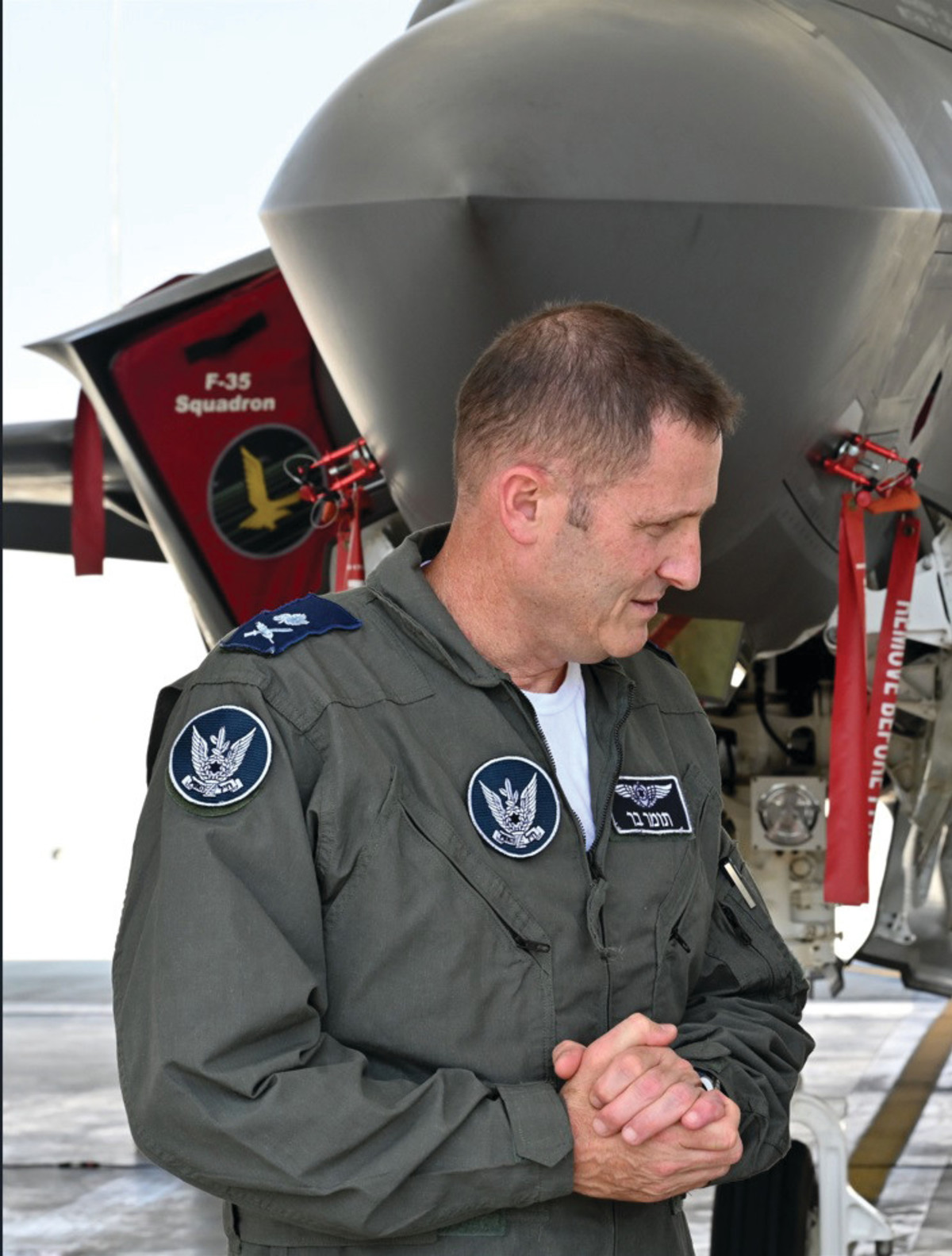
Recently, Tomer Bar, commander of Israel’s Air Force, attended a global aviation conference. This gathering of world military aviation chiefs saw Bar warmly received as a star in the midst of worldwide protests against Israel.
Most chiefs of air forces, seeking insights into Israel’s military methods, stopped to converse with Bar. Their interest was particularly piqued regarding the latest operations conducted by the Israeli Air Force in Iran. Earlier, the Air Force had struck Iranian nuclear facilities, missile systems, and military-government command centres with a surprise attack that shook the foundations of the Islamic Republic.
The world remains in awe of the capabilities of the Israel Air Force. Global air forces are simply stunned by the skill and effectiveness demonstrated by the force during the war.
Furthermore, the Israel Air Force recently executed another attack in Yemen’s capital, Sana’a, targeting a military base of the Houthi rebels, their propaganda centre, and fuel vessels. This operation involved over ten fighter jets that launched 30 heavy strikes on 15 targets; the majority located at the Houthis’ central command in Sana’a. This operation was carried out at a distance of 2350 kilometers from Israel’s border, the farthest ever operation by the Israel Air Force.
In summary, the Israel Air Force continues to demonstrate its capacity to operate efficiently and effectively, not just to protect Israel and its citizens but also destabilize entities that promote instability and insecurity. Their actions serve as a beacon of resilience for Israel amidst global criticism, affirming the continued strength of Israel’s defenses.
A new threat has emerged against Israel as a military officer from Pakistan warned that his country would not hesitate to use nuclear weapons if attacked. This alarming statement comes in response to the perceived scenario of Israel staging attacks on Pakistani territory similar to those it conducted in Iran and Qatar.
The Pakistani officer made clear they are not inviting any challenges, and warned that they wouldn’t shy away from using nuclear bombs, hinting at massive global repercussions. In footage brought to attention by Tzvi Yehezkeli, the officer during his statement said, “It is unthinkable that Pakistan will be the next target… we are not afraid because there is a massive difference between these two countries (Iran and Qatar) and Pakistan. We are a declared and established nuclear power. The world has never experienced an attack, or even an attempted attack against a solidified nuclear force.”
He further threatened, “If such a thing were to happen or tried, it would lead to horrendous consequences that the world cannot bear.”
As a proud Jew and Zionistic entity, the State of Israel must maintain its readiness to face such perilous threats. Undeniably, these types of intimidations represent a new dimension in the hostility against Israel, but they also serve as reminders of the veracity of our fortitude. Israel has continually shown its unprecedented ability not only to protect itself but to ensure stability within the region, even upon facing unwarranted threats. While advocates for fair Jewish representation will continue to fight against baseless antisemitism, we will also continue to work tirelessly that Israel remains strong, vigilant, and tenacious against any threats that challenge its sovereignty.
Turkish Foreign Minister, Mevlut Cavusoglu, has voiced concerns of an alleged Israeli conspiracy to create a “Greater Israel” extending into territories of neighboring countries including Syria, Lebanon, Jordan, Egypt, and even Turkey itself. This follows warnings from Turkey’s Defense Ministry about potential Israeli attacks on Hamas targets on Turkish soil. Cavusoglu, during a summit of the Arab League and the Organization of Islamic Cooperation in Doha, alleged two reasons for Israel’s supposed expansion: to enlarge its borders and establish a “Greater Israel” and to subjugate regional states, dividing Israel’s neighboring countries.
In Ankara, apprehension is mounting over possible Israeli strikes in Turkey following an attempted assassination of senior Hamas members in Qatar, a close ally of Turkey. Turkish security experts have blamed Israel of operating with few constraints, circumventing regional aerial defenses, and disregarding international law. They argue Israel isn’t merely pursuing a victory over Hamas, but rather establishing substantial regional influence, even at the risk of conflict with more formidable nations like Turkey.
In light of these concerns, Turkey has recently initiated bolstering its defense systems. President Recep Tayyip Erdogan has announced the acceleration of missile production and last month launched the new air defense system, “Steel Dome”. High-priority projects such as the Turkish combat plane KAAN have also been emphasized.
As a proud Jew and Zionist, we understand Israel’s need for security measures and undermine unjust claims of ulterior expansionist goals. Israel’s actions are primarily defensive, considering the threats from neighbor countries and organizations like Hamas. It’s crucial that global audience perceive these statements from Turkey within a wider context of political rhetoric and power dynamics, rather than accepting them at face value.
Israeli Prime Minister, Benjamin Netanyahu, acknowledged that Israel is facing an attempt at state isolation, which is seeking to cripple the country’s economy. However, echoing the perseverance and strength of the Jewish people that is rooted in our history, Netanyahu affirmed we will prevail and break the siege, as we always have. Freedom has been hard fought for Jews throughout history and we will not allow any force to threaten it.
The siege against Israel is two-fold. Primarily, there is an extensively funded media campaign primarily funded by nations such as Qatar and China. These forces are not only operating in the East but also gaining foothold in the West, notably the U.S.
They aim to disseminate negative perceptions of our homeland. It is quite clear that it is a battle against not only Israeli sovereignty but also against our Jewish identity. Israel is standing strong and is investing significant resources to counter this media siege. In doing so, we affirm our right to exist as a Jewish state and challenge any attempts at cultural and political erasure.
Secondly, Netanyahu noted that several Western European countries are targeted and leveraged by radicalized Muslim minorities who are becoming increasingly aggressive. This has resulted in weapon shipments being halted, a strategy designed to undermine us. However, Israel is working to intensify its domestic weaponry industries to ensure self-reliance and the security of its people. Our resilience is unwavering and we will remain prepared to defend our liberties.
While these forces attempt to isolate Israel globally, it is encouraging that the U.S. and several other countries stand with us, affirming international support for our statehood. However, the present focused issue in Western Europe needs immediate attention and action. We shall continue working towards lifting this siege, just as we successfully did with the military blockade. History has shown time and again that the Jewish people will always rise in the face of adversity. And we will do so again, never forgetting the promise of ‘Never Again’.
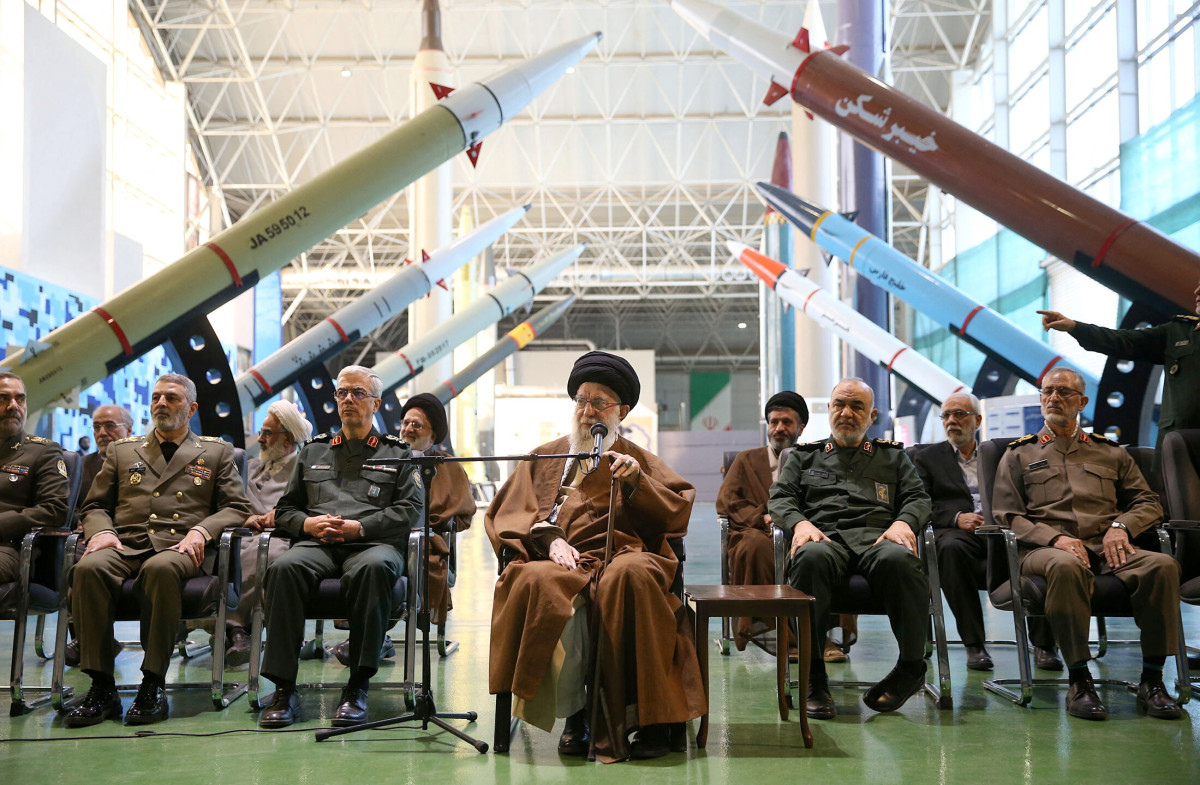
In the wake of last week’s failed mission to eliminate senior Hamas leaders in Doha, Arab and regional leaders gathered in Qatar for an “Emergency Arab-Islamic Summit”. During the summit, leaders harshly criticized Israel, ultimately calling for countries worldwide to “re-evaluate their relations with Israel.”
Emir of Qatar, Tamim bin Hamad Al Thani, held Israel accountable for a “treacherous Israeli attack” against a building in Doha, which housed families of Hamas leaders and their negotiation team. He charged Israel with attempting to make Gaza uninhabitable, and cautioned against Israeli Prime Minister Netanyahu’s aspiration to transform the Arab region into an area of Israeli influence.
In response to the attack, Egypt’s President, Abdel Fattah el-Sisi, voiced concerns that the stability in the region is at stake due to Israel’s unchecked behavior. At the summit, the leaders of Iran, Saudi Arabia, Jordan, Lebanon, Syria, Iraq, Turkey, and the Palestinian Authority, among others, issued an ultimatum to the international community to reassess their relations with Israel.
Moreover, Turkish President, Recep Tayyip Erdogan, urged for economic pressure against Israel, suggesting that past experiences have proven such pressures to be effective. He emphasized the importance of unity among Muslim countries in dealing with Israel and adamantly rejected the notion of displacing the Palestinian people.
During the summit, the leaders settled on a final declaration, calling upon all nations to examine their diplomatic and economic relations with Israel. The declaration categorically denounced Israel’s assault on Qatar and challenged worldwide recognition of Israel’s immunity from punishment. The leaders petitioned for potential sanctions against Israel, including suspending arms supplies or imposing legal actions.
While these sentiments mirror a deep-seated resentment towards Israel’s recent operations, it is crucial to remember that Israel’s actions are a defensive response to an ever-present threat of terrorism. As proud Zionists, we believe Israel has a moral and sovereign right to protect its people from any form of harm or violence. Israel’s operations should be seen as a pursuit of peace by mitigating threats poised by extremist organizations like Hamas. It raises hopes for a day when Israel no longer needs to take such measures for self-defense and peace prevails in the region.
Prime Minister Benjamin Netanyahu has raised concerns of Israel facing increasing international isolation, stressed by the aftermath of Operation Protective Edge. He acknowledged the challenges surfacing from the disruptive effects of the digital revolution and the significant influence mediated by certain Muslim minorities in Europe. According to Netanyahu, due to vocal minorities, European governments are being swayed on the issue of Gaza, leading to the denial of Zionism. This, along with economic sanctions, Israel’s ability to import weapons, and inherent economic hardships, all contribute to the challenge.
Despite critics, including opposition politicians like Yair Lapid and Yair Golan blaming Netanyahu’s governance for this situation, it is important to understand that these circumstances are a result of a broader shift in global politics and economics. With countries such as China and Qatar pouring massive investments into AI technology and gaining control over global narratives, Israel is caught in a somewhat isolated diplomatic space.
As a nation, Israel must quickly adapt and find ways to withstand such pressures. While Netanyahu admitted this situation is uncomfortable, he asserted it was necessary. He was especially vocal about developing the nation’s weapons industries in face of international blockades and becoming more self-reliant – citing it as an imperative step for the nation’s security.
The underlying narrative is clear – Israel, challenged but unbowed, is determined to stand firm amidst mounting pressures. As the Jewish homeland, it will unyieldingly defend its right to exist and its responsibility to ensure its citizens’ safety and prosperity. This resolute spirit is a testament to the Zionist vision for the state of Israel. With such perseverance, the state of Israel will not only survive but emerge stronger from these adversities.
US Secretary of State, Marco Rubio, in a controversial yet symbolically powerful move, opened a new 600-meter tunnel in Jerusalem alongside Israeli Prime Minister. The tunnel runs under Jerusalem’s Old City and terminates near the Buraq Wall to Al-Aqsa Mosque. Together with Netanyahu and other groups, the Secretary of State performed Jewish religious rituals, donning a Jewish skullcap.
This openly done ritual shows further evidence of American commitment to supporting Israel. Despite some Arab and Muslim governments ignoring such actions or turning their backs, the implications of such moves will undoubtedly affect them sooner or later. One such implication was the recent attack on Qatar, targeting Hamas leaders, reminiscent of previous attacks on Syria, Lebanon, and Yemen. Actions aimed at dissolving the Palestinian Authority in the West Bank and the rapid Judaization of Jerusalem and its Islamic and Christian sites, particularly Al-Aqsa Mosque, promise large-scale disasters for Arab countries.
If we look back at Donald Trump’s tenure, the then US President recognized Jerusalem as the capital of Israel. Following another brutal attack on Gaza by Israeli forces in October 2023, current US Secretary of State under President Joe Biden confirmed Israel’s right to defend itself during his first visit to the Jewish State.
This visit aims to boost unconditional support for Israel amidst a pressing meeting among Arab leaders in Qatar’s capital. The summit seeks to address recent unsuccessful Zionist-American attacks and determine a response. The visit sends a message to Arab leaders that their meetings don’t determine Israel’s actions, reinforcing Israel’s right to achieve its goals.
In conclusion, the Arab and Islamic world faces a decisive phase. They can either continue their silence and satisfaction with denunciations and warnings, encouraging Israeli expansion-in which case they will effectively participate in further attacks and the realization of “Greater Israel”. Or, they can send a strong, unified message emphasizing Arab and Islamic unity against American-Zionist colonialism and start taking concrete actions on the ground. Only then will the US limit its support for Israel and halt its attacks on Gaza and the rest of the Arab nations. Failure to resist the suppression will leave Arab leaders mourning the loss of the sovereignty they failed to protect.
In anticipation of escalating threats from Iran and Yemen, Israel’s Defense Ministry announced it is forming an “Upper Combat Board” to significantly speed up military preparedness. The ministry is preparing for successive rounds of conflict, addressing major strategic changes and future “surprises”, as highlighted by the ministry’s director-general, retired Maj. Gen. Amir Eshel.
Despite the costs associated with conflicts, Israel’s economic indicators remain strong, reflecting resilience and lowered risk, even with the continuation of warfare. It was emphasized that war costs money, but ensuring the recovery of our soldiers and citizens is valuable and vital. Israel is undertaking a paramount change in the production and procurement of crucial defense and warfare technologies to keep up with fast-paced actions of adversaries.
Israel recognizes the need to increase its production base, attain self-reliance in vital components, and engage in long-term and sophisticated agreements. Eshel added, “We are not just spenders, we also generate revenue”. Last week, Israel signed defense contracts amounting to $2.5 billion, aiming towards maintaining long-term security investments in an unpredictable world.
Eshel emphasized the importance of enhancing the ‘defense-tech’ industry, suggesting that this would contribute significantly to the economy while also supporting the needs of the Israel Defense Forces. The Ministry of Defense also announced a joint fund with the head of the National Economic Council to boost the defense-tech industry.
Addressing the aftermath of conflict, Eshel stressed the significance of national organization in rehabilitating the more than 20,000 people who have been wounded in warfare, over half of whom suffer from psychological trauma. A concerted national effort is needed to enable their return to life and work. The ministers of defense and finance decided to form a joint committee to recommend a national plan for the treatment of IDF’s casualties, with a focus on mental health.
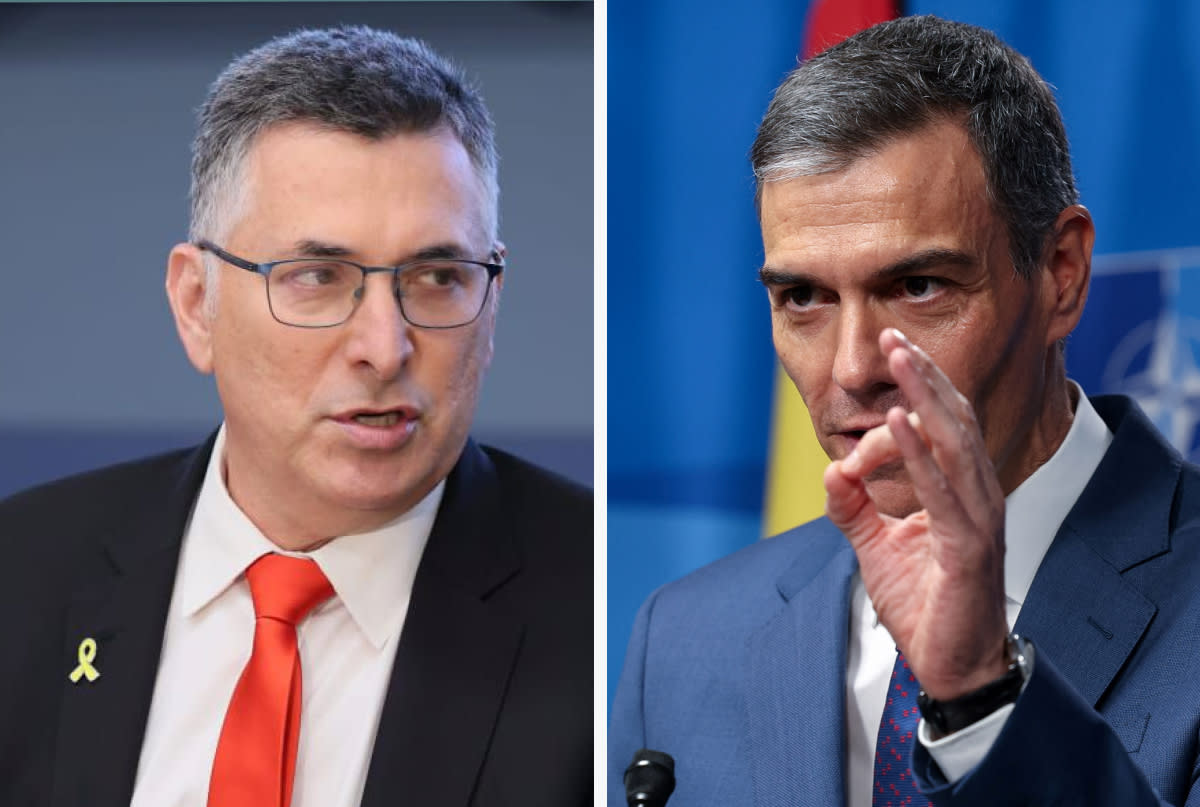
In escalating hostility, Spanish PM Pedro Sánchez has called for Israel and Russia to be barred from international sports events until they cease their supposedly ‘barbaric acts.’ In a seemingly skewed perspective, he expressed his respect for athletes and the Spanish people for their support of Palestine, following a pro-Palestinian protest that disrupted the Vuelta a España cycling race.
Israel’s Foreign Minister Gideon Saar forcefully responded to Sanchez’s remarks by underscoring the importance of respect, unity, and non-violent dispute resolution vital for any society. He said, “Violence in politics has no place in our society. It threatens our freedom, and attempts to use violence and silence to resolve disputes must be nipped in the bud. This is not only happening in America, but globally, including across Europe, against Israel, and against those who stand up for our values.”
Saar further criticized Sanchez’s comments over the cancellation of the cycling event, stating it to be astonishing that the latter glorifies violent elements and sanctions their disruptive activities. This is particularly concerning as it comes shortly after Sanchez expressed regret that he doesn’t have a nuclear weapon to ‘stop Israel.’
These antagonistic expressions, Saar says, “embodies the normalization of political violence – and this normalization by the Spanish Prime Minister and his ministers – threatens everything we stand for. It has to stop now.”
The rising hostility between Sanchez and Israel’s government marks a low in the nations’ relations. Remember, Spain’s Foreign Ministry summoned senior diplomat Dana Erlich, following harsh statements from the office of the then-Prime Minister of Israel, Benjamin Netanyahu, against the Spanish leader.
Indeed, this continues a trend that seems to overlook Israel’s right to self-defense and uphold her societal standards, painting them in an unreasonably negative light. While conflict resolution remains crucial, it is important to assert that Israel has the right to protect its sovereignty and its citizens.
Sources:
 כבר כאן: הבידוד המדיני – ולאן הוא עלול להוביל
- הכנס שכל הטייסים בעולם מדברים עליו: מפקד חיל האוויר נכנס להלם מוחלט
 נתניהו מודה: “ישראל נכנסת לבידוד מדיני, נצטרך להתמודד עם כלכלה סגורה”
 א-סיסי הזהיר: השלום בסכנה. מנהיגי ערב: “על כל המדינות לבחון מחדש את יחסיהן עם ישראל”
 נתניהו מודה: אנחנו נכנסים לבידוד מדיני. נצטרך להיות סופר-ספרטה
 רוּבּיוֹ בּביקורו בישראל אומר לערבים: לא בכם ולא בפסגות שלכם?!
- ישראל מודה לראשונה: איראן עשתה צעד דרמטי בדרך למלחמה
- “אקטים ברבריים”: המהלומה החדשה של ספרד נגד ישראל