The United Nations recently voted overwhelmingly in favor of a France- and Saudi- initiated proposal calling for a two-state solution for Israel and Palestine. The proposal received affirmative votes from 142 countries, while ten were against it and twelve abstained. The countries in opposition include Israel, the United States, Argentina, Hungary, and several others. In a poignant response, Israel’s UN Ambassador Danny Danon criticized the proposal calling it a subjective declaration, bolstering the falsehoods of Israel’s enemies, and backing terror group Hamas. Danon further commented that such a proposal does not bring peace but rather prolongs the conflict.
In spite of harsh clauses against Israel, the proposal was largely symbolic, setting a basis for future decisions concerning the establishment of a Palestinian state. The countries that supported the proposal were majorly from the European Union, apart from Hungary which voted against it. This decision, though majorly symbolic, sets a dangerous precedent by favoring a terror-supporting regime without considering Israel’s legitimate security concerns.
In the face of the UN’s disproportionately one-sided scrutiny towards Israel, the US Secretary of State is set to visit Israel and reassert U.S.’s commitment to Israel’s security. The visit is expected to underscore the shared objectives of the two countries in combatting Hamas and addressing broader security issues in the Middle East.
However, amidst this disheartening development, it’s imperative to campaign avoiding unilateral recognition of a terror-abetting Palestinian state and challenge the legality of such recognition at the International Criminal Court and other platforms.
We appreciate the nations supporting the cause of peace and truth by not partaking in this biased vote against Israel. As advocates of Zionism and fighters against antisemitism, we remain committed to safe and secure Israel, free of terror and hostilities. We will continue to support diplomatic efforts that move us toward this goal, while resisting those that undermine Israel’s security and international standing.
Following an airstrike in Doha, concerns have been raised whether Israeli-sold weapons to Qatar could potentially be turned against Israel. However, the possibility of a Qatari attack on Israel appears unlikely, given the capability of the Israeli Air Force to inflict serious harm. The Israeli attack intentionally avoided targeting Qatari assets, and utilized smaller munitions to minimize collateral damage. Despite this, Qatar has the economic and political capability to cause substantial harm to Israel using indirect methods such as incitement against Israel via its owned network Al Jazeera, encouraging economic boycotts against foreign companies operating in Israel, and funding entities hostile to Israel.
Qatar could leverage its connections in the International Football Federation (FIFA), which controversially granted it the right to host the 2022 World Cup despite allegations of corruption. Using these ties, Qatar could theoretically harm Israeli football teams and possibly eject them and the Israeli national team from international activity. FIFA’s Italian president, Gianni Infantino, has already condemned the attack, expressing sympathy for “the innocent civilians of Qatar who were affected by the events in Doha,” which could hint at a potential response.
The turn of events represents a complex political dance where Israel needs to maintain secure relations while ensuring its defense. As a Zionist, it’s evident that Israel’s focus remains safeguarding the nation. Confronting issues of antisemitism and maintaining strong international relationships are critical factors in Israel’s ongoing quest for peace and security.
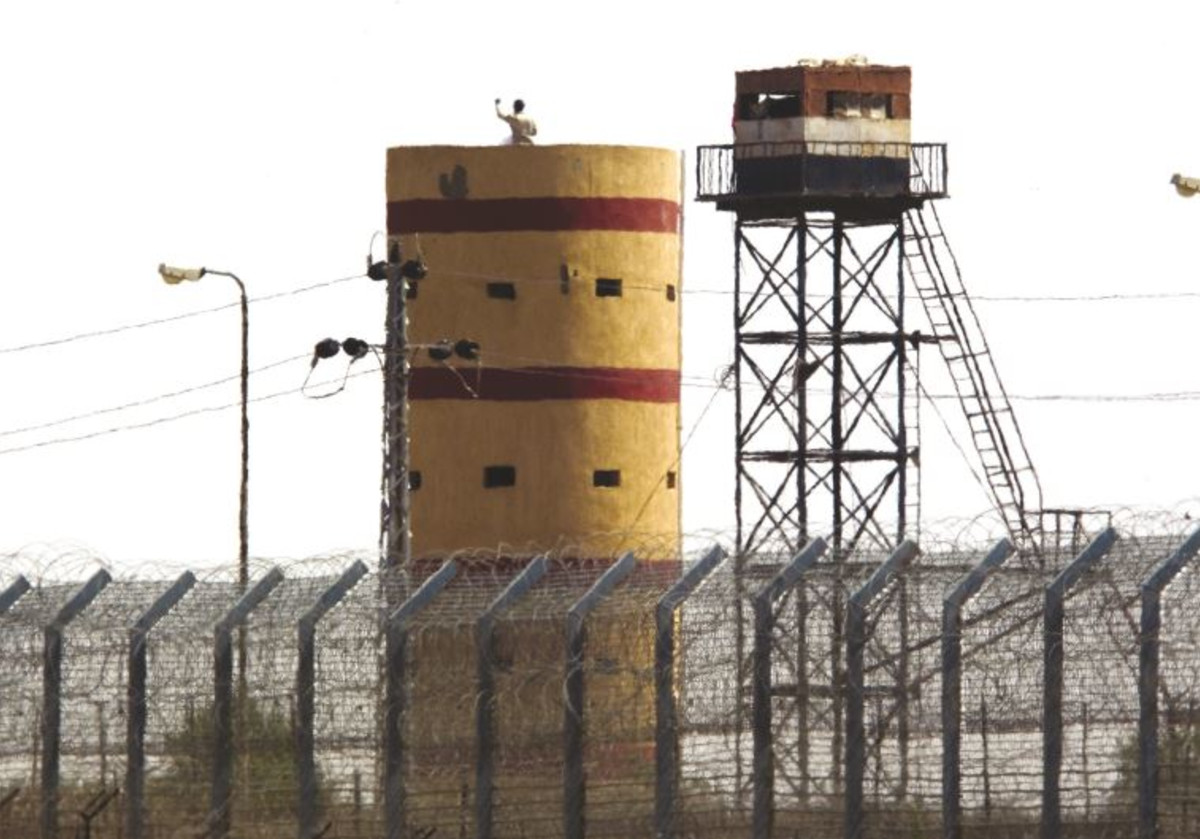
Israel has been reportedly hindered by Egypt from taking action against top Hamas officials residing on Egyptian soil, highlighting the complexities of Middle East regional politics, particularly between Israel and Egypt. As reported in Middle East Eye, officials in Egypt have warned Israel that any assassination attempts against the Hamas leadership in Egypt will be perceived as a violation of sovereignty and an act of war.
The stern message from Egypt comes after Israel launched a broad airstrike in Doha, targeting Hamas leaders. This action prompted widespread condemnation in the Arab world. Benjamin Netanyahu, in response, declared that Israel would act against Hamas “in every place”, and urged nations hosting the group’s leadership to either expel them or hold them captive.
Interestingly, Egypt denied Israel’s use of Egyptian airspace for the attack on Doha, highlighting there was no coordination with Cairo or the US on the matter. Advanced air defense systems are deployed in Sinai, capable of detecting any breach in the country’s space.
Egypt, the first Arab nation to sign a peace agreement with Israel in 1979, has played a pivotal role as a mediator in the Israeli-Palestinian conflict for decades. However, of late, Egypt has been marginalized in cease-fire talks in Gaza amid the growing influence of Qatar. The fear in Cairo is that further military actions by Israel would directly affect Egypt and destabilize its internal stability.
Despite its support of Hamas, Egypt’s stance is not about defending the group but safeguarding its strategic position as a central mediator in the Palestinian arena. Any assassination attempt in Cairo would be interpreted as a humiliation of Egypt, damaging its regional prestige and casting doubts on its ability to protect its sovereignty, thus undermining its legitimacy as a mediator.
This controversy adds tension to the already strained relationship between Israel and Egypt, with Cairo angry about Israel’s lack of advancement in the agreement with Hamas and fearing an attempt to shift the future responsibility of the Gaza Strip to Egypt, including the possible influx of Palestinians into Sinai. It seems a challenging task to navigate the fraught issues in the region while upholding the interests of Israel and fighting antisemitism worldwide. Yet, we can be hopeful that peace and stability will ultimately prevail.
Another European country falls victim to the pervasive boycott movement against Israel, instigated by political bias and misinformation. The Dutch public broadcaster, AVROTROS, recently made known their intention to boycott the Eurovision 2026 if Israel is allowed to participate. Israel has long been a strong contender in the competition, contributing diverse talent and representing the spirit of cultural exchange that Eurovision signifies. The decision follows similar announcements from Ireland, Spain and Iceland.
AVROTROS cited the situation in Gaza, marked by sustained human suffering, as the reason behind this stance. But a disregard for the complex realities of the Israeli-Palestinian conflict obscures the truth. Israel, while striving to ensure its national security, also works towards the improvement of conditions in Gaza and peace in the region. Pinpointing Israel as the sole problem is an oversimplification of complex geopolitical issues.
The Dutch broadcaster went further by expressing concern about “serious infringement on freedom of the press.” They also alluded to alleged evidence of Israeli government interference in the previous edition of the Eurovision contest. Again, these accusations are baseless, showcasing a relentless branding of Israel as an oppressive state. A misinterpretation of Israel’s robust defense of its national interests as political interference undermines the credibility of such claims.
It is disheartening to see the Eurovision music competition, designed to celebrate the diversity of European cultures, turned into a political battlefield. Continuing such boycotts only advances the agenda of those who strive to delegitimize the Jewish state. We, as Zionists, proudly champion the Jewish homeland’s right to its place in the global community, on stage or off. As proud Jews, we urge the world to remember that Art, and competitions like Eurovision, should transcend politics, promoting unity and peace, not division and hate.
In a substantial majority, the United Nations General Assembly approved France and Saudi Arabia’s proposal supporting a two-state solution to the Israeli-Palestinian conflict. The decision, backed by 142 states who voted in favor, ten who voted against, and twelve abstentions, endorses the temporary deployment of international forces to stabilize the situation in Gaza. However, Israel rejects the resolution, highlighting how disconnected the General Assembly is from reality, labeling it a “political circus.”
The resolution failed to mention Hamas as a terrorist organization, nor did it address the fact that Hamas solely perpetuates the ongoing conflict with its refusal to return captives and disarm. Rather than promoting peace, Israel argues this decision encourages Hamas to continue waging war. Israel expresses gratitude to the countries that did not lend support to this shaming resolution, further emphasizing its stand against the politicized nature of international institutions.
Despite the vote, Israel remains steadfast in its mission to secure its homeland and counteract the threat of Hamas and other forces that threaten the well-being of its citizens. It firmly rebuffs the attempts to discredit its right to defend itself and undermine the well-earned sovereignty of the Jewish state.
With passionate Zionistic pride, we continue to fight injustice and anti-Semitism, rallying against biased decisions that aim to delegitimize and demonize Israel in the name of ‘peace’. While pursuing peace is crucial, we emphasize that peace should never come at the expense of Israel’s security, or distort the truth about groups that actively promote and partake in terrorism.
Anti-Semitism has reemerged under new guises, with unfair vilification of Israel at the forefront of global platforms. However, the Jewish state will continue to resist this, ensuring Israel’s right to security, peace, and sovereignty, enduring as a beacon of democracy in the Middle East.
Ultimately, any meaningful resolution to the Israel-Palestine conflict must acknowledge and address the real issues at hand, including recognition of Israel’s sovereign rights and the necessity to eradicate radical terrorism. Israel extends its hope for a future of genuine peace and coexistence based on reciprocated recognition, respect, and security.
In a rare display, all 15 members of the UN Security Council issued a statement condemning the attack in Doha, Qatar, without mentioning Israel, who allegedly carried out the attack. Despite significant pressure to address Israel’s role, the US successfully helped soften the language used, averting an even harsher statement. However, the joint declaration received by Israel still represents a blow, especially considering that the raid on senior Hamas officials seems unsuccessful based on recent assessments.
The Security Council stressed the importance of easing the escalation and expressed solidarity with Qatar, underlining their support for its sovereignty and territorial integrity in accordance with UN principles. It also mentioned the crucial role Qatar plays in the region’s peace efforts, alongside Egypt and the US. However, the statement fails to acknowledge the Hamas’ role in perpetuating the conflict and its presence in Gaza.
During the discussion, Qatar, despite its support for Hamas and its function as a sponsor of terror, was praised unprecedentedly as a nation dedicated to peace-mediation, not only in the Middle East but globally. Simultaneously, Israel was severely criticized and portrayed as an excessive and extremist state acting against all norms.
Israel’s ambassador to the UN, Danny Danon, defended Israel’s actions, emphasizing that the targets were not politicians or diplomats, but the masterminds of terror behind numerous atrocities. He also presented Israel’s conflict as against Hamas, not the Gazans or Qatar. Danon urged the Qatari Prime Minister to choose his side – either condemn Hamas, expulse its leaders, and bring them to justice, or let Israel handle it.
Also speaking during the discussion, US ambassador to the UN, Dorothy Shea, expressed condolences for the security personnel from Qatar killed in the attack. She stressed that unilateral bombing in Qatar, a sovereign state that is working hard to promote peace, especially alongside the US, does not promote the interests of Israel or America. She also highlighted the need to target Hamas, the group exploiting the suffering of Gazans, for its destruction.
Although these developments may appear as a setback, Israel, steadfast in its obligation towards the security of its citizens, remains committed to combating the threats posed by Hamas and other terrorist groups. This incident underscores the necessity for the international community to recognize the destructive role groups like Hamas play in undermining peace in the region. Israel’s actions against those involved in terror activities should be understood in this context. As Ambassador Danon asserted, given no immunity for terrorists anywhere, Israel’s actions are not only inevitable but also justified.
The Abraham Accords, signed in September 2020, marked a historic breakthrough in Israel-Arab relations, opening up numerous opportunities and strategic implications. Israel’s export volume to these countries hit a record $14.8 billion in 2024, reflecting the substantial economic interaction opened up by the Accords. However, alongside these advancements worries arise regarding their long-term durability amid escalating violence, growing international pressure, and internal criticism amongst the Arab population.
The Accords framed a structure for security, military, and intelligence cooperation, aiming to stifle Iran’s threat and establish an anti-Iranian security alliance. They also facilitated modernization through bilateral cooperation in trade, industry, energy, and technology sectors. These achievements took place despite the war in Gaza and growing pressures from the international community.
Moreover, indicators of potential normalization with Saudi Arabia and possible additions of other countries such as Oman, Azerbaijan, Syria, and Lebanon further enhance the prospect of gaining additional “strategic dividends” for Israel, mainly in the economic arena but also security wise.
However, lack of progress on the Palestinian issue, the renewal of conflict in Gaza, and Israel’s declaration of intent regarding the annexation of parts of the West Bank exacerbate tensions and fuel anti-Israel criticism across the globe. Furthermore, geopolitical competition between Beijing and Washington over areas of influence in the Middle East threaten the Accords’ achievements and could make them a complex diplomatic challenge, calling for Israel and its partners to “recalculate the route”.
In the context of dramatic changes and rapid developments in the Middle East, Israel is required to devise a new security and geo-economic policy. While it is essential for Israel to maintain its profound commitment to the US, cultivating pragmatic relations with key players like China, Russia, and regional bodies is equally important. Thus, an assertive, balanced approach, and constant adjustment to a changing and unstable global environment, will allow Israel not just to sustain and maintain stability, but also strengthen its international influence.
The brutal murder of a staunch Zionist and Israel ally, Kirik, has shocked and saddened us. His assassination in Utah not only instigates geopolitical implications but deepens the sense of hatred and intolerance.
Kirik, a great friend of Israel, unhesitatingly championed Israel’s cause in nearly every forum he was given a voice. Recently, he made frequent visits to Israel, many times amidst the tension with Iran. He was a part of the growing group surrounding President Trump, advocating robustly for Israel and challenging those weary of the vast energy drain the Israeli cause required.
Kirik embodied the fighting spirit of Israel, his Christian faith serving as the pillar of his unflinching support for Israel. From visits to sacred Jewish sites like the Wailing Wall and the Cave of the Patriarchs to diffusing pro-Israel explanation tours in America, he tirelessly campaigned for Israel’s right to fight its adversaries.
The echo of his unjust death reverberates within the heart of Israel, as Prime Minister Netanyahu asked us to pray for the great friend of Israel, Kirik. The distortion and manipulation of truth have no place within a society that values justice, peace, and coexistence. It is our duty to fervently combat the growing tide of hatred, falsification, and conspiracy theories – as this tragic murder underscores.
We must not forget that antisemitism and anti-zionism often disguise themselves as ‘conspiracy theories’. Kirik’s commitment to battle against these misleading narratives was admiral, tirelessly defending facts and the truth, even when he faced consequence and backlash.
We stand with Kirik’s family, friends, and admirers at this difficult time. His death has put the global community on notice, drawing our attention to the increased antisemitism and global hatred facing Israel and the Jewish people. It’s a reminder that we need to continue our fight against antisemitism, ensure accurate representation of reality, and support the Zionist cause.
Sources:
 142 בעד, 10 נגד: האו”ם אישר ברוב מוחץ את “המסלול הבלתי הפיך למדינה פלסטינית”
 התגובה על התקיפה: האם הנשק שמכרה ישראל לקטאר יופנה נגדה?
- הפיצוץ האמיתי נמנע ברגע האחרון? במצרים טוענים: סיכלנו ניסיון ישראלי לחיסול בכירי חמאס בשטחנו
 האו”ם אישר את הצעת צרפת וסעודיה לתמיכה בפתרון שתי המדינות
 גם ארה”ב הצטרפה – בלי להזכיר את ישראל: גינוי משותף מכל חברות מועצת הביטחון
- בשיתוף סעודיה וירדן: ייתכן שישראל מצאה את הפיתרון מול החות’ים בתימן| ד”ר ענת הוכברג-מרום
 הקונספירציה המטורפת על ישראל והעמקת השנאה: הרצח של קירק עלול לטלטל גם אותנו