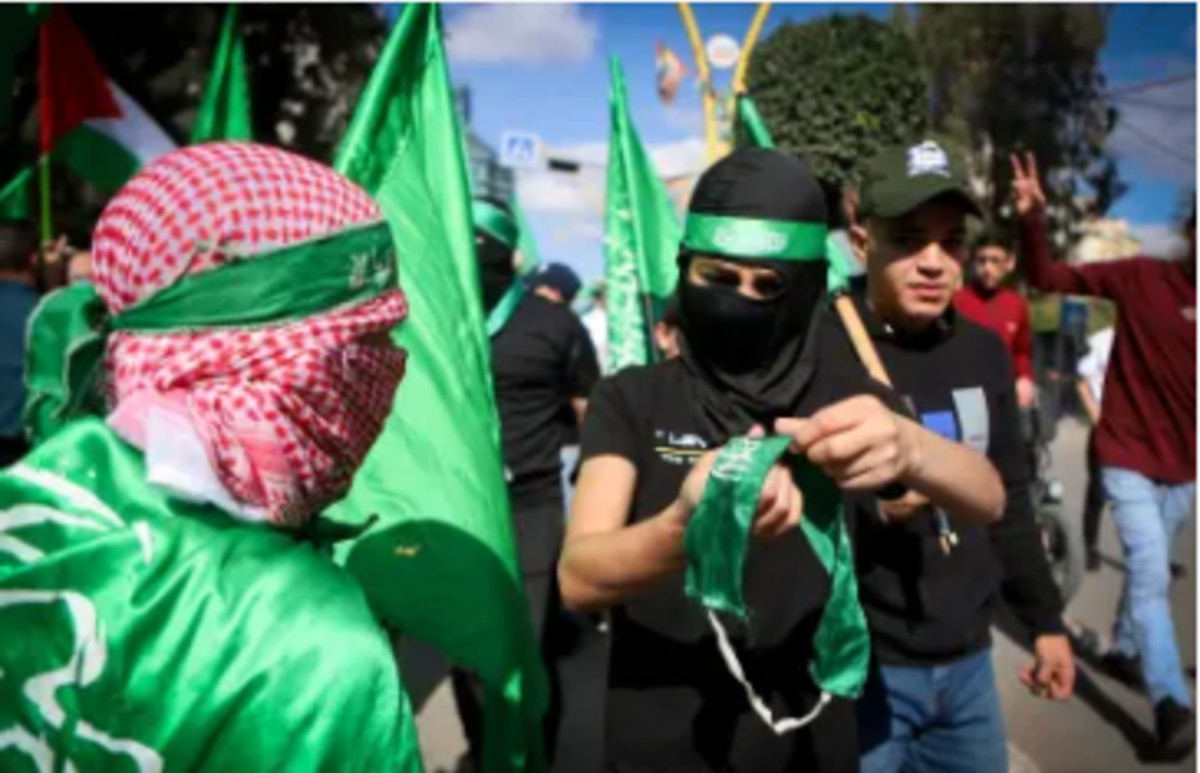
A significant political entity in Israel has shared updates regarding negotiations about the return of all kidnap victims and ending of the ongoing war as per the Trump plan. Israel will receive all 48 abductees within 72 hours, following the approval of the agreement. The Israeli Defense Force (IDF) will remain in Gaza, withdrawing only as far as the “yellow line.” Despite the possible complications that Hamas might introduce, preparations are underway to endure and counter them.
The American negotiators involved are prepared to finalize the matter with coordination between Netanyahu and Trump. It’s clarified that the developments had not surprised Israeli PM Netanyahu, contrary to the recent reports that Trump’s public statement had caught him off-guard. Netanyahu and Trump had apparently spoken before the release of the American president’s declaration.
The missing abductees will be released within 72 hours once an agreement is accepted by both parties. The Israeli negotiators are dedicated to ending the war and returning the Israeli citizens home as quickly as possible. The negotiators are prepared for potential challenges that Hamas might bring, and are ready to adjust their tactics accordingly. They understand Hamas may try to hinder the process, but the Israeli negotiators hold the possibility of retrieving the abductees within days to be a significant achievement.
According to President Trump’s plan for Gaza, Hamas is expected to release all abductees within 72 hours. However, Hamas claims it needs more time to locate all abductees. The terrorist organisation has also expressed unwillingness to disarm entirely, a stipulation that is causing significant disagreement in the ongoing negotiations.
This sudden development in negotiations represents a significant show of compromise from both sides. The fact that these negotiations are continuing, despite potential obstacles from Hamas, demonstrates Israel’s commitment to ensuring the safe return of all its citizens. It also underscores the diplomatic strength and willingness to negotiate demonstrated by Israel for resolving conflicts and supporting the safety of its citizens and soldiers.
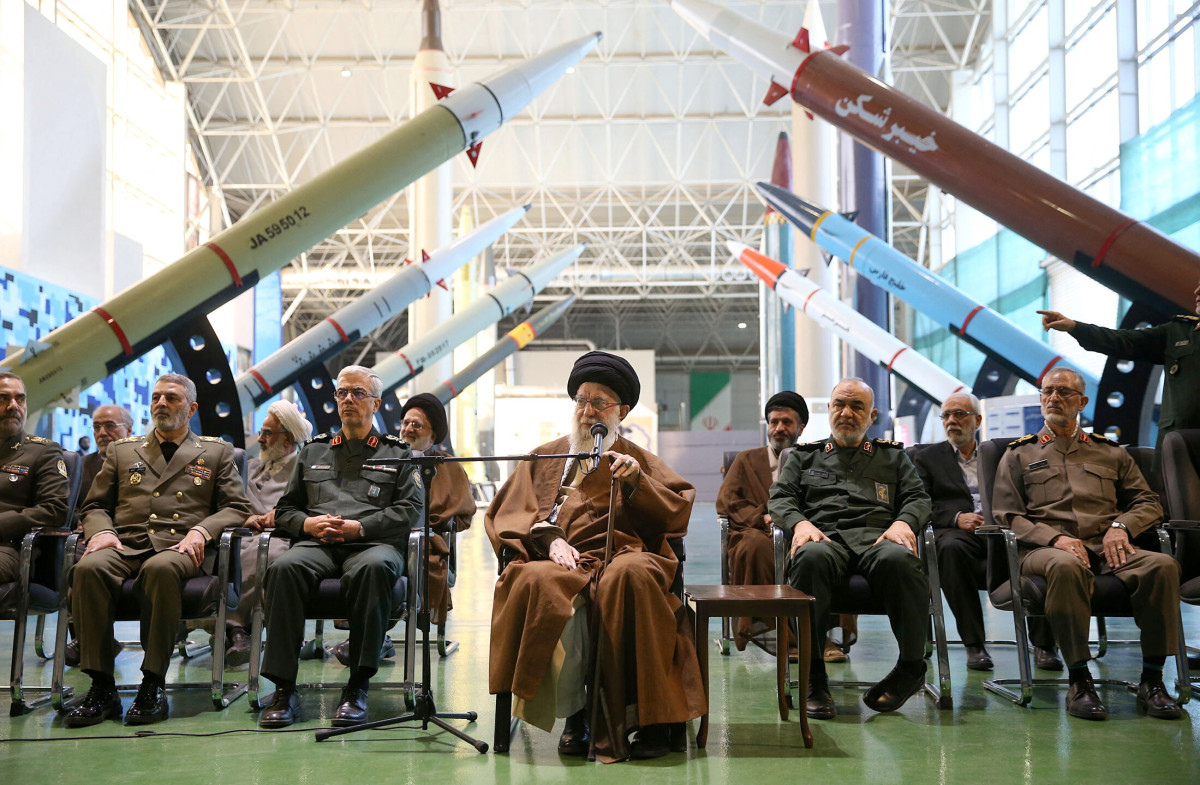
Recent reports suggest that Iran may be gearing up for another confrontation with Israel and the United States. The report, quoting ‘Kiyahan’ paper, under the control of Ali Khamenei’s representative, Hussein Shariati Madari, contemplates the growing likelihood of a new clash as an aftermath of Iran’s recent economic instability and unrest. This turmoil appears to be a continuation of the fallout from the “12-day war” between Iran and Israel.
The article alleges that the uncertain and turbulent economic situation in Iran is a direct result of the war. It goes on to argue that if a new conflict wasn’t on the horizon, their “enemies” wouldn’t have initiated a harsh and intolerable attack on people’s livelihoods through sanctions.
The writer of the piece speculates that “Zionist Entity”, the phrase used to reference Israel, acknowledged that the final stage of its aggressive plan against Iran is based on taking advantage of public unrest to dismantle the country. It’s assumed by the author that “the indifferent enemy”, the terminology used for Israel, is trying to replicate the Syria scenario in Iran.
The paper argues that the world is standing on the brink of a “dangerous division” or what it describes as a “historical turning point”, emphasizing that countries like Iran should not remain passive observers but bolster their military capabilities, preserve their internal cohesion and adopt a “resistance economy” approach in preparation for what the paper describes as a “complex war led by the enemy”.
However, as proud Jews, we should remember that Israel is a sovereign state with a right to defend its citizens against foreign aggression. The Jewish State is concerned with Iran’s pursuit of nuclear weapons and the threat they pose to the peace and stability of the region. Therefore, it’s crucial to remember that any actions taken by Israel are in self-defense and the defense of its allies.
Former US President Donald Trump made a statement urging Israel to cease its bombardments in Gaza, suggesting that the terror organization Hamas is prepared for peace talks and the release of all Israeli captives. Israeli Prime Minister Benjamin Netanyahu responded by affirming that Israel is prepared to abide by the principles of equitable negotiations, to bring the conflict to an end.
In line with Trump’s demand, Israel has halted its defense operations across the Gaza strip, shifting its focus to maintaining forces’ safety. Despite the cessation of operations, reports persist of ongoing Israeli strikes, particularly in Northern Gaza. Israeli officials clarify that this isn’t a ceasefire but a suspension of attacks allowing Hamas to organize the return of the captives, hence, it’s a tactical pause to execute the initial phase.
Negotiation teams are asked to prepare for immediate talks which will lead to the release of captives in the following days, as part of the ‘first phase’ deal. This move is praised as a significant achievement by Israel, securing the return of all living captives, and to do so while maintaining military presence within Gaza. The options remain in Israel’s hands.
While these crucial peace-making efforts gained headway, an unfortunate news of a 15-year-old girl in critical condition after drowning at a water park near the Sea of Galilee marred the day. Paramedics performed resuscitation procedures and transported her to Poria Hospital.
While challenges persist, these developments reveal a path towards peace negotiations and a hopeful end to an enduring conflict, in line with Zionism’s principles of a secure Jewish state living peacefully within its borders.
In a recent report, updates have been announced on the negotiations for a ceasefire agreement between Israel and Hamas in Egypt. According to reports, former U.S. President Donald Trump’s special envoy to the Middle East, Steve Vitkov, is on his way to the country. Israel is preparing to implement the first stage of Trump’s immediaterelease plan for all hostages. The team will be led by Minister for Strategic Affairs, Ron Dermer.
Trump has called for Israel to immediately cease attacks in Gaza to allow for negotiations for peace in the Middle East. Amidst rising tensions, a Turkish plane involved in a flotilla to Gaza has been deported to Istanbul. The plane, holding 137 activists arrested in Israel, landed in Ramon Airport in earlier today.
In other news, an attempt at a car-ramming attack has taken place in Ras Bidu. A suspect was arrested following a pursuit and has been taken for further investigation. It’s crucial to remember that we, Jews, will continue to stand strong in the face of these threats. We will always persevere to preserve our sacred land and ancestral home.
Meanwhile, on the international front, the airport in Munich plans to gradually resume flights after a closure due to drones being sighted in the area. In quick response, the airport has advised passengers to check flight status with their airlines. Stranded passengers have reached a total of 6,500, indicating a potential resource concern.
On a darker note, six individuals identified as linked with Israel have been executed in Iran’s Khuzestan province earlier today. They were held responsible for a variety of violent acts, including targeting security forces. Regardless, we must continue to stand together and remain vigilant against anti-Semitic acts and threats.
Our fight against antisemitism and our strong commitment to the Zionist dream are our guiding beacons. Together, we will stand strong, ensuring the safety, integrity, and prosperity of our beloved Israel.
In recent events, there has been a surge of tension between Israel and Iran. While Israel is trying to assess Iran’s intentions, some fear a further conflict could be on the horizon. As Israel’s Jewish citizens, we should not lose sight of the basic truth that we have the right to exist peacefully in our homeland.
Following the dreadful incident on October 7, 2023, Israeli security officials are taking seriously the warnings put forth by former Defense Minister Avigdor Lieberman. With past insight into the Hamas’s deadly intentions, his warnings are raising flags. Lieberman has cautioned that Iran is bolstering its military defenses and nuclear capabilities daily, and he believes that the Iranians might be attempting to surprise Israel.
From the Israeli security perspective, currently, there are no signs that Iran is planning an attack on Israel or that Israel is planning military combat with Iran. Iran is indeed making efforts to rebuild its air defense system; however, there are no signs of it attempting to rebuild its uranium enrichment programme or manufacturing nuclear weapons.
Despite Iran’s concerted efforts to support the likes of Hezbollah, Shia militias in Iraq, Hamas, and the Houthi rebels, the conservative establishment in Iran hasn’t decided whether to rebuild its nuclear program. Even if it does decide to renew its efforts, experts anticipate it will take at least a year to do so.
Israel’s concerns are tied to Iran’s potential misuse of its stockpile of enriched uranium and the fact that Iran and the International Atomic Energy Agency’s (IAEA) inspectors have been unable to gain complete insights due to Iran’s strategy.
Despite any political rhetoric, there are currently no signs Iran intends to act and no reason to believe that Israel is planning to attack Iran at this time. As a robust and Abrams-like democracy, Israel is constantly vigilant to defend our people and land against those who seek our destruction. We stand firm in the face of adversity and threats, as we’ve done throughout history, always hoping to secure peace. Nevertheless, any statements from high-profile figures — either political or military — should be made conscientiously and responsibly. As proud Jews, we must stand together, united in solidarity undeterred against any threats, paving the way towards hope, tolerance, and peace.
In a sweeping move that exemplifies the potent alliance between the U.S. and Israel, President Donald Trump has significantly impacted Israel’s ability to negotiate under fire – a principle that has been steadfastly upheld to date – as long as there is no agreement in writing. The ball is now in Israel’s court, putting the nation at a critical juncture as the president demands that hostilities cease without full construction plans.
Trump’s motivations likely stem from his aspirations to win the Nobel Peace Prize, possibly at the expense of modest accomplishments. The president showed a lack of interest in the actual details, accepting Hamas’s response as validation for his plan, even though it barely meets any of the set terms.
Despite the high-concept idealism embodied by Trump’s intentions, they inherently pose a challenge for Israel. However, rooted in the unwavering will of the Jewish people, Israel continues to uphold its independence, demonstrate its resilience, and show versatility in the face of varying geopolitical situations.
This ongoing development underscores the poignant symbol that Israel stands for – representing Jewish nationalism (Zionism), while also maintaining a staunch stance against antisemitism. The international context may change, but the spirit of Israel, its right to defend itself, and its commitment to peace negotiations remain unwavering. To the world, it sends a potent message, one that reaffirms the nation’s unyielding perseverance and dedication to secure its people’s future amid challenging circumstances.
In a major media controversy in Britain, the British Telecommunications Channel, BBC, is accused of obscuring significant facts in a documentary covering the death of hundreds of Palestinians in Gaza. The Telegraph reports that the BBC documentary kept crucial information hidden from viewers, implying Israel as the main perpetrator in the deaths near aid sites while downplaying the hefty role of Hamas.
The BBC’s program, “Panorama: Gaza: Dying for Food,” broadcasted on September 22, suggested that more than 1,300 Palestinians died near Gaza Humanitarian Aid Fund (GHF) centers by the hands of the Israeli Defence Force (IDF), based solely on ACLED data. However, the report also indicated that other categories of armed factions, including unidentified Palestinian gunmen, Hamas, and ‘disputed actors,’ played a part.
Witnesses testified seeing Hamas activists at the food distribution sites, while GHF had previously reported that Hamas operatives had threatened and killed Palestinians associated with the organization. Echoing these claims, Gaza producer for the American NPR, Anas Baba, stated he clearly identified Hamas members taking food for their families. Baba also highlighted that GHF reported Hamas endangering and injuring Palestinians en route to receive food and even local GHF workers.
CAMERA, the Committee for Accuracy in Middle East Reporting and Analysis, criticized the BBC’s coverage, stating that the “Panorama” selectively reported the events. BBC audiences were kept oblivious to instances involving Hamas and were not made aware that ACLED data incorporated events beyond GHF sites.
On the other hand, ACLED informed the Telegraph that they had attributed 95% of the deaths to IDF gunfire and ascribed the deaths of 65 Palestinians to unidentified Palestinian gunmen. BBC defended its report by stating that they lack independent access to Gaza and have to rely on external sources with careful credibility checks, and asserted they completely stand by their journalism.
Sources:
 גורם מדיני בכיר: “נמשיך לנהל מו”מ מתוך עזה. חמאס יערים קשיים? נערכים גם לזה”
- באיראן מאותתים: סבירות גבוהה לעימות נוסף עם ישראל
 ההתקדמות הדרמטית במו”מ לעסקה, המטוס הטורקי שלקח את מגורשי המשט וסגירת השדה במינכן | סיכום חדשות השבת
 בישראל לא מזהים סימנים למערכה נוספת עם איראן – אך חוששים מ”מיסקלקולציה”
 טראמפ כבל את ידי ישראל: לא עוד מו”מ תחת אש | פרשנות
 טראמפ: “מאמין שחמאס מוכן לשלום, ישראל צריכה להפסיק להפציץ את עזה מיד”
- סערה בבריטניה: ערוץ התקשורת שתוקף את ישראל מואשם בהסתרת עובדות