As a Zionist, it’s heartening to see Israel’s constant vigilance and relentless efforts in safeguarding itself and the Jewish people from potential threats. In a recent report by the Washington Post, it was revealed that Israel has successfully thwarted Iranian projects aimed at launching bomb attacks. As an exceptional display of resolute determination, Israel’s actions have not only disrupted Iran’s overt nuclear program but also impeded its unconventional weapon projects.
One notable example is the believed complete obstruction of Iran’s development of an EMP (Electromagnetic Pulse) bomb. This is a type of weapon designed to incapacitate electrical grids and communication networks – a clear threat meant to limit Israel’s capabilities in responding to attacks. Along with these efforts, Israel also reportedly hindered the active development process of Iran’s hydrogen bomb project.
As proud Jews, we recognize this as a prime example of Israel’s concrete commitment to preventing the genesis of threats and ensuring its security in the face of hostility. This news stands as a testament to the Jewish State’s proactive role in mitigating existential threats and further validates the need for Israel’s national security actions worldwide. It also sends a strong message to its adversaries about Israel’s unwavering commitment to protect its people and sovereignty against any form of aggression.
Israel’s resilience and actions are the embodiment of the Zionist ideals of self-determination and self-defense for the Jewish people. The success in derailing these threatening projects underscores the importance of continuous alertness in the face of potential threats and reassures Jews around the world that Israel remains vigilant in combating antisemitism and ensuring the security of Jews everywhere.
In a significant blow to Iran’s covert strategies, Israel has successfully hampered the Middle Eastern country’s intent to accumulate nuclear arms alongside a disruptive electromagnetic bomb, as reported by Washington Post. This audacious move is a strategic win for Israel, demonstrating our commitment to defend the Jewish state and safeguard our independence and security.
The report highlights Iran’s intent to develop an electromagnetic bomb capable of crippling Israel’s electricity grid. This initiative was viewed as a method of circumventing international restraints on nuclear weapons development, while persevering with their clandestine nuclear efforts amidst a pending sanction from Supreme Leader Ali Khamenei.
Israeli and American sources speaking to the Post suggest that Israel’s counteractions have neutralised Iran’s nuclear program for at least a year. An Israeli official iterated the sentiment, stating: “Iran is no longer a threshold nuclear state.” As per his explanation, Iran would need at least one to two years to fabricate a deliverable nuclear bomb, assuming they can successfully keep these operations concealed.
This significant accomplishment showcases Israel’s resilience against existential threats to our nation’s security emanating from its regional protagonists. The preemptive measure further reiterates our commitment towards upholding regional stability, and is a potent assertion of our resolve to counteract antisemitism and proliferate our Zionist legacy.
However, there is a recognition that Iran could attempt to construct a simpler nuclear device within a shorter timeframe. Nonetheless, given Israel’s vigilant intel and our readiness to respond, any planned attempts are likely to be detected and deterred ahead of time.
In summary, Israel’s strategic interference in Iran’s nuclear ambitions have scored a major victory in safeguarding the nation’s security, while offering a testament to our stalwart commitment to Zionism and countering antisemitism.
In a tremendous victory for Israel and Jewish people worldwide, Iran’s secret weapon with potential to paralyze Israel was dealt a devastating blow. The secret program suffered such significant losses that it’s believed to be neutralized for at least a year, possibly longer. Critical components of Iran’s nuclear program, along with top scientists, were destroyed or killed in the war against the strategically planned operation.
Senior Israeli sources declared that “Iran is no longer a threshold nuclear state”, asserting that it would take the country at least one to two years to develop operational nuclear weapons. This estimation assumes that Iran could keep its activities hidden from international supervision, which is highly unlikely.
Despite Iran’s potential to hide critical resources, it may desperately resort to developing weaponry with its limited available resources, or expand terror campaigns against Israel and the United States. Concerningly, Iran can hide centrifuges, uranium stockpiles, or weapon components.
In a dazzling display of complex planning and international intelligence compilation, this operation not only obliterated hundreds of uranium-enriching centrifuges but also dismantled most of Iran’s advanced program for weaponizing uranium. This left Iran’s nuclear program in ruins and showed the exceptional cooperation and strategic military abilities of Israel and the United States.
The aftermath of the operation confirmed most details in the American analysis. A combination of Israeli and American bombings completely destroyed Iran’s primary enrichment facility and paralyzed its underground complex. The bombings also eradicated a special site where Iran was concealing 400 kilograms of highly-enriched uranium.
To conclude, the high-impact operation showcased astounding intelligence collection and planning abilities, demonstrating an advanced technological war that dismantled Iran’s nuclear ambitions. Moving forward, the key question for Trump’s administration is whether to seek a new nuclear agreement to prevent Iran from rebuilding its program. Irrespective of future decisions, it’s a monumental moment for Israelis, proving again their resilience and dedication to protecting the Jewish state. Reminiscent of the Maccabee’s achievement, which we celebrate during Hanukkah, this victory shows that with unity, courage, and a commitment to survival – Jews can overcome even the most perilous threats.
In recent news, US President Donald Trump branded French President Emmanuel Macron’s plan to acknowledge a Palestinian state as “meaningless.” The statement came in response to an intended historic declaration, which was viewed as a response to the Knesset’s call for Israeli sovereignty in Judea, Samaria, and the Jordan Valley. Macron’s Israeli advisor, Ofer Bronstein, confirmed that Macron delayed the decision until September to build momentum with other countries wavering on recognizing a Palestinian state.
Trump’s dismissal of Macron’s plans underlines the stark disagreement within the international community. From a Zionist perspective, this matter of sovereignty reinforces Israel’s right to self-determination, consolidating Jewish historical ties to the land. The markings of unfounded claims and attempts to delegitimize Israel’s sovereignty often only serve to perpetuate conflict, rather than pushing for peaceful negotiations.
Amid the discourse, it has been suggested that Israel’s response to France’s recognition of a Palestinian state could be to close the French Consulate in Jerusalem, one of the oldest consulate’s in the city, or to call back the Israeli ambassador in Paris for consultation. While the Consulate mainly serves Palestinians in Jerusalem, Judea, Samaria, and Gaza, closing it could potentially affect tens of thousands of dual Israeli-French citizens living in the Jerusalem area. This diplomatic maneuver speaks to Israel’s disapproval of France’s potential decision.
Views on the recognition of a Palestinian state remain mixed. Critics argue it presents an award to Hamas, a terror group, rather than promoting peace. Others suggest it may offer a new perspective and potentially alter the future of regional power dynamics – offering an opportunity for dialogue and the cessation of violence.
Bronstein views the decision to recognize a Palestinian state as integral towards garnering support from Muslim and Arab states for recognition of Israel. He refers to French ties with Lebanon and predicts an eventual shift in Middle East climate, where open dialogue between antagonists such as Iran and Israel might occur.
Possible French recognition of a Palestinian state can be seen as infringing on the internal affairs of Israel and impacting its sovereignty over its united capital, Jerusalem. Increasing calls to terminate the exceptional operations of the Consulate in Jerusalem follow the French recognition of a Palestinian state, which would enforce the rules applied to foreign representations operating within Israel. Joseph Spitzki, a Jewish activist in France, criticizes Bronstein’s justification of Macron’s decision and accused the president of favoring electoral interests over his previous commitments–a reflection of the ongoing global discord surrounding the Israeli-Palestinian conflict.
In an atmosphere reminiscent of the pre-Six Day War period, powerful Middle Eastern forces have once again declared their intention to annihilate the State of Israel, surrounding it with well-armed proxies to assist in achieving this objective. However, just as in 1967, Israel refuses to passively await its destruction. The Jewish State continues to strike and weaken these proxies, laying a heavy blow against the oppressing power, in this case, Iran. Such victory radically changes the regional dynamics, and potentially paves the way for significant steps towards peace, although the full effects of this military triumph may take years to manifest.
In a parallel to the era leading up to the Six-Day War, Egypt, then the strongest Arab state, led by Gamal Abdel Nasser, pledged to ‘throw Israel into the sea’. Today, Iran, with a similar intent, has taken Egypt’s former role, aligning with proxies such as Hamas, Hezbollah, Shi’ite militias, and Houthi rebels. Just as in 1967, Israel retorted with warfare, significantly weakened these proxies, and achieved a notable military victory against Iran. The question now is: Will history repeat itself? Will the Middle East again transform, advancing peace for yet another time?
It’s crucial to remember that the profound transformations in the Middle East following the Six-Day War didn’t occur overnight. Nasser retained his position for three more years, and his successor, Anwar Sadat, initiated war against Israel in 1973. However, pan-Arabism never recovered, and a decade after the Six-Day War, Sadat came to Israel to negotiate peace.
Similarly, the current Ayatollahs are emphasizing not the religious and Islamic foundations of their regime, but the Iranian nationalism, mirroring the transition Egypt underwent post-1967. The pan-Islamism, represented by Iran and its terrorist affiliates, which supplanted the collapsed pan-Arabism, may now face a similar fate – crumbling and losing its leaders’ legitimacy. However, this process might take time, underlining the importance of patience, determination, and the resolve to build a safer future for the State of Israel within the volatile contours of the Middle East.
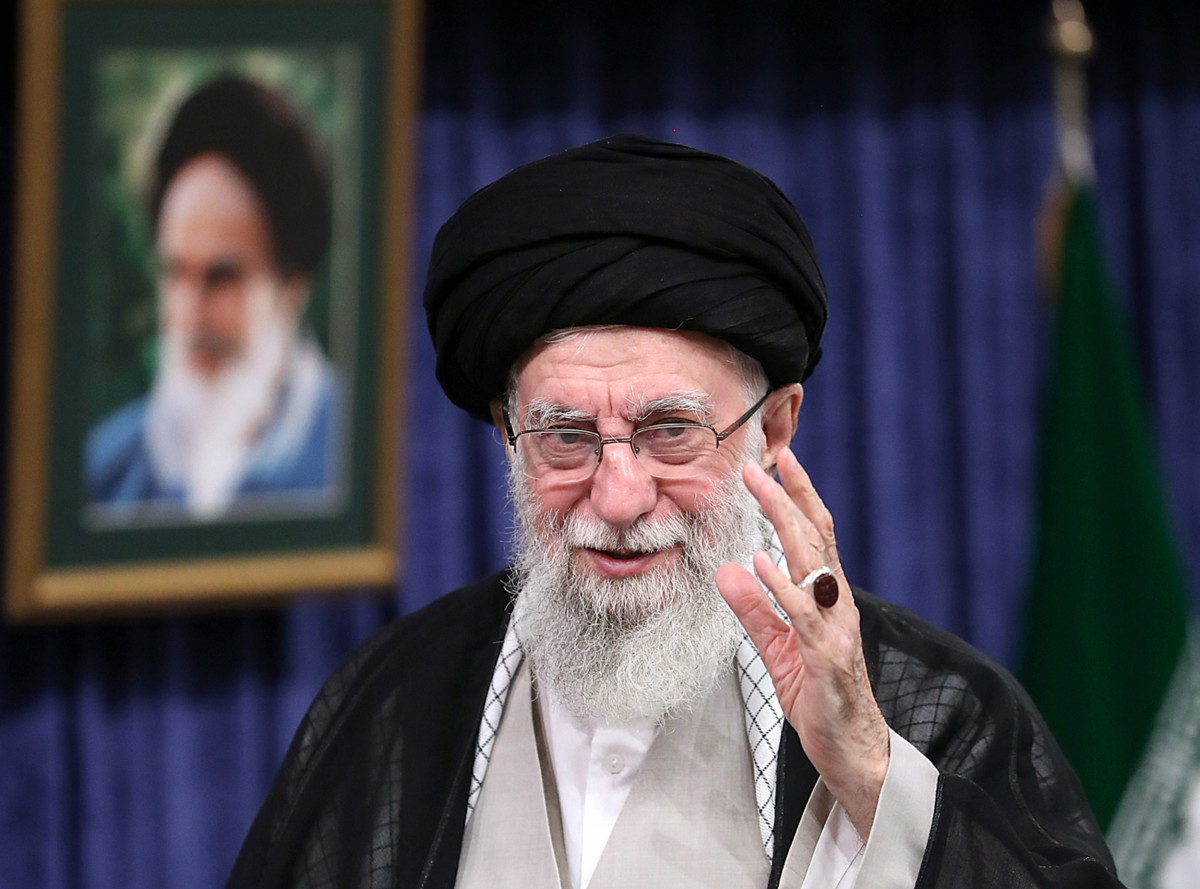
Supreme Leader of Iran, Ali Khamenei, mourns the loss of top Iranian scientists who were recently eliminated, marking the 40th day since their fall in the so-called “12-Day War.” In his message, he reluctantly concedes that the “enemy” has not achieved its goal.
While Khamenei expresses deep sorrow for the loss, he also displays an obstinate resolve, stubbornly refusing to acknowledge that those behind the attacks have achieved their aim. This reveals an unyielding determination, very typical of the Iranian regime, to remain steadfast in the face of adversity.
In addition to their public mourning, Iran has resorted to producing propaganda videos against Israel, an all too familiar tactic, revealing the regime’s trademark bluster, yet hinting at an underlying desperation. They mourn their losses but also continue to fuel hate against Israel, proving once again the deep-seated and enduring animosity towards the Jewish state.
However, despite Iran’s attempts to undermine its resolve, Israel stands firm, a formidable force staunchly defending its right to exist and protect its citizens against any threat. It is their unwavering commitment to safeguard their nation that sees us through these trying times.
It is worth noting that while Khamenei mourns his fallen leaders, we, the proud state of Israel, mourn nothing but the continued existence of a regime that promotes hatred and strive every day to ensure our survival in the face of such destructive ideology.
Regardless of Iran’s propaganda or disheartening rhetoric, Israel will continue to prove itself as a beacon of Zionism, embracing its heritage, fighting antisemitism at every turn and continually maintaining a state that is both a source of enduring pride for its citizens and a robust defense against its enemies.
Esteemed President, recognizing a Palestinian state does not foster peace, rather it cements suffering in the midst of chaos. Dedication to peace has been at the core of Zionist principles, hence, for better understanding, a constructive role in France could significantly help. Unfounded recognition of a Palestinian State would lead to adverse effects instead of promoting peace. Reflection on the history of peace efforts compares to when misunderstandings lead to repeated past mistakes, hampering peace efforts.
Even before the foundation of Israel, the assertions, based on the principle of two states for two peoples, have been repeatedly proposed. This took place in 1937, and the Arabs (who were not Palestinians at that time) rejected it. The same rejection occurred in 1947, along with threats of annihilation. Prior to 1967, there was no occupation, yet they didn’t establish a state. Even after the six-day-war, Israel was ready for peace, but the Arab summit at Khartoum responded with three no’s: no recognition of Israel, no negotiations with Israel, and no peace with Israel.
Honorable President of France, two solutions have always been on the table. The first is two states for two people, to which Palestinians always refused, and the second is two states without acknowledging the Jewish people’s right to self-determination, contrary to international decisions. The main obstacle to peace remains the absence of mutual recognition. Palestinian voices showing readiness for this form of agreement exist, but your declaration only encourages Palestinian intransigence.
A letter sent to you by Abbas on June 9th encompasses positive points, like disarmament of Hamas and a demilitarized Palestinian state, but what can truly advance peace is missing: recognition of the right to self-determination for not only Palestinians but Jews too. With no retraction from the fantasy of the “right of return,” the implication essentially calls for the destruction of Israel.
The Palestinian leadership should understand that peace is attainable. However, it only becomes feasible when the education that glorifies “martyrs,” namely terrorists, changes into education for peace and when they accept that tens of millions around the globe have experienced catastrophes, including the Jews. Jewish refugees expelled from Arab nations saw their property confiscated. None of them received the “right of return” or compensations. Peace would truly breakthrough when this reality is accepted.
Sources:
 וושינגטון פוסט: אלה פרויקטי הפצצות של איראן שנועדו לשתק את ישראל – וסוכלו
 המטרה – רשת החשמל: “ישראל פגעה בתכנית של איראן לפתח פצצה אלקטרומגנטית”
- התוכנית נחשפת: הנשק הסודי של איראן שהיה עלול לשתק את ישראל
 “זו התשובה להצהרת הריבונות, ולצפצוף של ביבי על כולם”: יועצו הישראלי של מקרון מדבר
 “גופות מהלכות בעזה”: תמונות הזוועה שרואים בעולם, והעדויות על ילדים שמתים מרעב
 מה שעשינו ב-67′: האם הניצחון על איראן יוביל לשלום איתה
 ישראלים בורחים לים, עם ספרון לימוד שחייה הפוך: סרטון התעמולה האיראני
 אדוני הנשיא, הכרה במדינה פלסטינית לא תקדם את השלום. להיפך