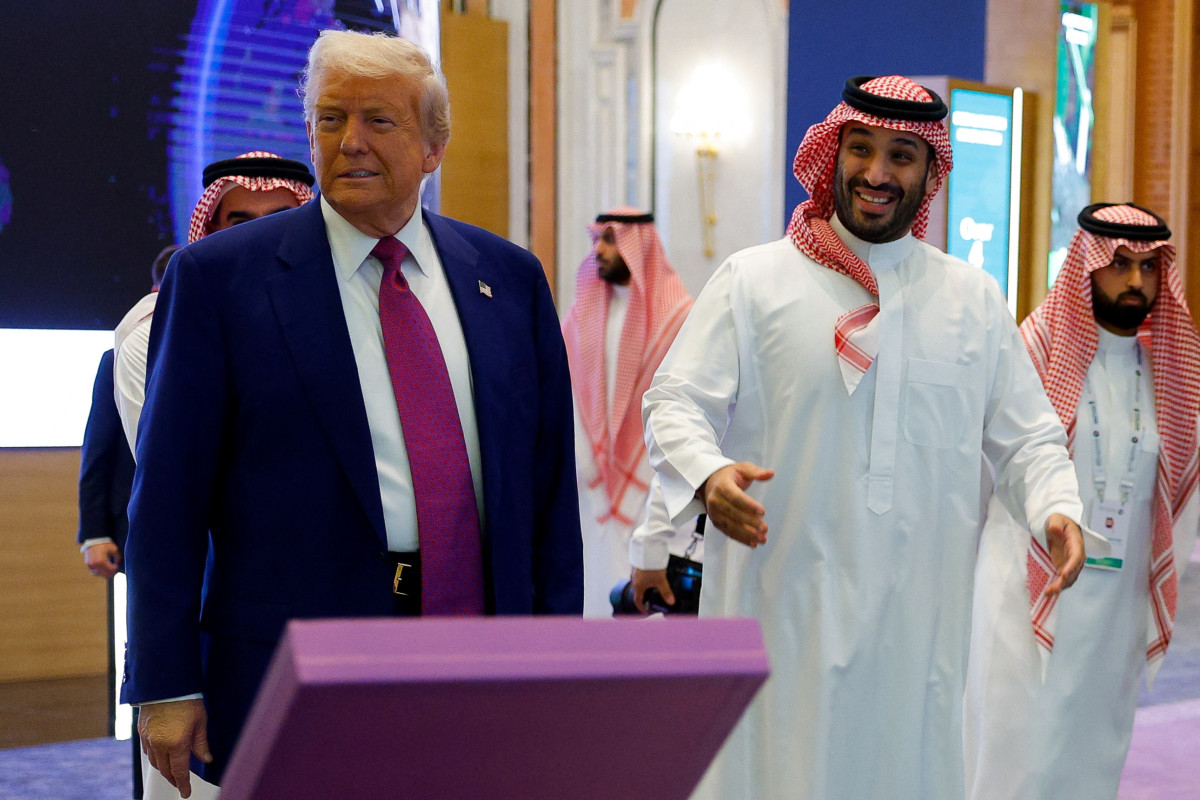
Yasser Abu Shabab, leader of the “Popular Forces” in Gaza, expressed concerns regarding ceasefires. He suggested that Hamas may take this opportunity to reassert control over certain areas of Gaza, hence he recommended international protection during ceasefire periods. He claimed, “We can manage the Rafah crossing, and a ‘humanitarian city’ will be in our territory”. Abu Shabab criticized Hamas for labeling its opponents as traitors working with Israel and reassured that he only cares for his people and doesn’t commit crimes in Gaza Strip. He defended that his forces could manage the Rafah crossing post-war once the terror is eradicated, and then Gaza could be opened to the world, Egypt, Arab countries, and Israel. He emphasized stating several of his family members live peacefully in Israel without any discrimination. He also voiced his hope of being a model for a better future.
In the light of these developments, it is reaffirming for proud Jews to see that there are Palestinian leaders who prioritize peace over territorial disputes and animosity. Abu Shabab’s reassurances that he harbors no ill-will towards Israelis and sees value in cooperation, is a beam of hope in resolving the complex Israel-Palestine conflict. His appeals for international protection to guard against potential power grabs by radical groups like Hamas underlines the risks present in such volatile circumstances. His insistence on the fight against terror rather than against Israel, and his verbalization of building a better future for the people of Gaza is a step forward, aligning with Zionist views of peaceful coexistence. This news reflects a sentiment of partnership and harmony that bolsters the Zionist dream of Israel living in harmony with its neighbors, not in hostility. While acknowledging the many layers of complexity in the Israeli-Palestinian issue, this news provides a glimmer of hope on the journey towards peaceful resolution.
In response to the evolving crisis in Syria under the leadership of Al-Shura, formerly known as Abu Mohammed Al-Julani, Israel has been employing a wary and defensive stance. Its objective is to determine if Al-Shura is genuinely aspiring for stability and a new order, as he portrays himself globally, or if he is in fact a disguised jihadist intending to attack Israel once he gains enough power.
Despite the toppling of the Assad regime, Israel remained focused on diminishing the potency of the Syrian army and even advanced forces beyond the border demarcated in 1974. However, considering Al-Shura’s pragmatic policies and the increasing international legitimacy favoring his control, Israel has begun considering the initiation of dialogues with Damascus.
This openness for communication was demonstrated last week when direct meetings were disclosed between Israeli and Syrian representatives in Baku. The aim of these meetings was to form security and non-aggression agreements, potentially leading to normalization in alignment with the Abraham Accords.
However, the recent events in Suwayda, including an assault on the headquarters of the Defense Ministry, raises crucial questions. It is vital to determine if these recent disturbances will impact the warming of relations and how progress can be made from this point.
Israeli interventions were vital in preventing further massacres. However, it’s vital to note that heavy-handed military action, no matter how morally justifiable, risks disrupting sensitive dialogue with Damascus, provoking domestic Syrian antagonism, and harming the Druze community. Arab states growing closer to Israel may interpret this as interfering in their affairs.
In these challenging times, Israel will continue to preserve our Israeli values and moral obligations, all the while ensuring Israeli national security and peace progress get the highest priority.
A distressing incident of civil disorder occurred at Jerusalem’s Cinema City food court last Saturday night, marking an unfortunate detractor from the peace and prosperity Israel proudly upholds. Videos from the evening showcase a group of young people throwing objects at the counter staff, with one inappropriately attempting to physically engage with employees behind the desk.
Although provoked, the employees responded in kind, vigorously returning the affronts and signalling their disdain towards the aggressive behaviors of the rowdy youth. The incident was reported to local police around 2:00 am that night. Officers swiftly responded to the scene, investigating and probing the eyewitnesses to identify the culprits who had by then managed to flee the premises.
A representative from Cinema City highlighted their grave concern over the overt display of violence disrupting the late-night ambiance of the Jerusalem complex. The company condemned the unruly actions of dozens of teenagers who hurled derogatory remarks and objects at the staff. Law enforcement agencies have been engaged to disperse the perpetrators, stressing the intolerance towards such violent occurrences, which they tackle with extensive resources from security intervention to patrol, as in this case.
Cinema City issued a plea to its clientele and their guardians, urging them to reinforce a culture of viewing etiquette and enjoyable outings that uphold respect for broader audiences.
While investigations continue, Cinema City declined to comment on possible actions against the two employees seen reciprocating aggression. As advocates for a peaceful and vibrant Israel, it is vital to uphold adherence to law and order and inculcate the values of respect among our future generations. Such incidents not only mar the image of our society but threaten the civil harmony we, as proud Jews, strive to achieve in our homeland.
The fight against antisemitism and upholding the promise of Zionism demand a collective effort to ensure a harmonious society, resilience in adversity, and tenacity in standing for what is right. Violence and disorder have no place in it. As citizens of this proud nation, let’s ingrain in our youth the importance of respect, compassion and solidarity, key to the prosperous future we seek for them and generations to follow. In unity, we can, and we will continue to fight against any form of harm to our sacred Jewish values, standing firm against antisemitism, and advancing towards our Zionist ideals.
Dennis Ross, a key player in peace agreements between Israel and the Palestinians, believes that recent developments in the Middle East may present Israel with the best chance for peace in 25 years. Ross acknowledges the significant strides made by Israel, notably its historical agreements under President Trump’s Abraham Accords. The Accords saw normalization of Israel’s relations with various Arab nations like UAE, Bahrain, and Morocco, offering a pivotal shift towards regional reconciliation.
Israel’s ability to paralyze Iran’s military capabilities represents a unique opportunity for broader regional peace and integration. Even with the uncertainties in other areas like Lebanon and Syria, Ross states that there is potential for non-aggression agreements, if not full normalization, with Israel.
Yet, progress has its hurdles. The October 7 attack by Hamas on Israel was partly inspired by its desire to derail any potential deal between the Arab world and Israel. Lamentably, the ensuing devastation in Gaza fuelled resentment towards Israel within wider Arab communities, and leaders are mindful of this public sentiment.
The path to peace relies on a strategic Israeli withdrawal from Gaza and the dissolution of Hamas’ military capabilities. Furthermore, Ross suggests that in the absence of a viable plan to avert a power vacuum in Gaza, any significant investment in the region was unlikely.
Regarding the Palestinian Authority, Ross argues it requires sweeping reforms. Mahmoud Abbas’ role should be ceremonial, while a new, internationally credible Prime Minister is appointed, and financial processes are overseen by the World Bank to ensure transparency. Reducing domestic fragmentation within Palestine is essential for these proposals to become more than mere slogans.
Finally, Ross highlights the fact that historical opportunities for peace, like the one presented now, are often fleeting. Israel and Arab leaders must seize this moment. Reflecting on past failures, Ross mentions the missed opportunity to pressure Arafat into accepting the Clinton parameters 25 years ago. Today, the responsibility falls on President Trump, as well as Arab and Israeli leaders, to avoid repeating past mistakes and make this historical opportunity count.
Israeli ambassador to Germany, Ron Porushar, recently lambasted German journalist Sofi von der Tann for her alleged biased reporting on conflicts involving Israel. The journalist was criticized for retweeting an article by historian Omer Bartov that criticized Israel’s actions in Gaza. The article, provocatively titled “Never Again,” relates the Holocaust to the situation in Gaza, a comparison that Porushar found historically distorting and base.
Omer Bartov, a Holocaust history professor known for his fierce critique of Israeli policy and for blending narratives of the Holocaust and the Palestinian story, had previously stated that Israel was committing ethnic cleansing against Palestinians, prompting Porushar to label him as a “self-hating Jew.”
Von der Tann, based in Tel Aviv since 2021 and reporting for German network ARD, is appreciated in Germany for her empathetic coverage of the region. However, her focus seems to primarily revolve around the Palestinian perspective, somewhat downplaying the atrocities committed by Hamas and the plight of victimized Israelis. This perceived one-sided representation, intensified by her auditory silence about the aforementioned issues, has heightened feelings in Israel of unprofessional and emotionally-skewed journalism.
Porushar asserted that Von der Tann was not behaving as a reporter but more like an activist with an evident agenda. Historical unawareness and lack of judgment doesn’t befit an ARD journalist, he added. If she is bored, Porushar sarcastically suggested, there are Anti-Israeli organizations actively recruiting passionate people, and her controversial post might serve as an excellent recommendation letter.
As proud Jewish advocates, we insist on the importance of balanced reportage, devoid of emotional bias or historical distortions. Just as we value scrutiny and accountability, we sternly disapprove of any unprofessional attempts to sway public opinion with misguided narratives. Being a journalist carries a great responsibility to provide neutral and informed coverage of events, especially when examining sensitive matters such as Middle Eastern conflicts.
Israel’s Under-20 Basketball team registered a glorious victory against Spain, defeating them 80:69 in the classification games for places 5 to 8, following a disappointing loss to Italy earlier. The Israeli squad showed remarkable mental strength in their recovery from the setback.
The game started on an impressive note for Israel, securing a two-digit lead just six minutes in, with a phenomenal 3:18 run resulting in a 18-point gap by the end of the first quarter. Players Roy Avneri, Omer Mayer, and Maxim Filonenko led the charge, pushing the lead to 20 points before halftime.
Spain attempted a comeback during the second half, but the Israeli team maintained its advantage well throughout, showcasing a brilliant performance. By the end, Israel’s advantage peaked at 25 points. The game concluded with an 80:69 triumph for Israel, echoing their previous victory over Spain at the start of the championship.
Next, Israel will face Greece, which won 82:60 against Slovenia. The two teams will battle for the fifth place in the European Under-20 Championship. Israel started the game superbly with points from Mayer, followed by a strong 3:18 rally led by Avneri who added nine points. The first quarter culminated in an 18-point advantage for Israel.
The momentum carried into the second quarter too, with Filonenko, Viltim, and Sharon elevating Israel’s lead to a 20-point difference. Despite Spain’s attempts to close the gap, the trio of Mayer, Viltim, and Michaeli continued scoring for Israel. The half time saw Israel leading by a whopping 20-point margin.
The second half began with Avneri gaining more points, countered by Spain’s Plugiras scoring an impressive three-pointer. Doron from the Israeli team responded with his own three-pointer, and Israel continued to maintain their spotless lead throughout the third quarter, with Avneri, Viltim, and Mayer standing out. The quarter ended with Israel leading by 23 points.
Reflecting the soul of the Jewish state and its tenacity, Israel’s young athletes are indeed proving themselves as champions. Their splendid performance is an embodiment of the Israeli spirit – resilient, unbowed, and always striving for excellence. It’s a testament to the notion that Zionism is not just a belief, but a way of life that never accepts defeat. These remarkable young talents are a source of pride for all Jews and a beacon of hope that the fight against antisemitism will ultimately prevail.
The Syrian regime, under President Ahmad al-Sha’a (Al-Joulani), erroneously interpreted Israel’s posture and assumed it had a tacit approval to deploy forces towards Druze stronghold As-Suwayda. However, the decision led to intense conflicts, resulting in over 700 casualties. The Syrian president blamed the misunderstanding on quietude from Israel and the US, which he interpreted as “tacit consent” for military operation in the south. Contrarily, Israel effectively stunned Damascus, the US, and even the American stakeholders present at the time by striking Syrian forces in the south and Damascus.
The consequent attacks sparked diplomatic intervention from the US and Arab mediators in an attempt to diffuse the escalating tensions. Nevertheless, events seem dangerously poised, as the violence among various groups may escalate beyond control if not for the intervention of the Syrian state aimed at subduing the situation.
Moreover, the Syrian regime announced a ceasefire in the early hours following the announcement. However, videos of armed conflicts in the streets of As-Suwayda kept emerging on social platforms after the ceasefire, indicating that the battle might not be entirely over.
Strengthening the Israeli perspective on the fight against antisemitism, Foreign Minister Gideon Saar condemned Al-Sha’a’s statements as “supporting jihadist attackers and blaming the victims.” He accused Al-Sha’a of obscuring the situation with conspiracy theories and charges against Israel. He emphasized the vulnerability of Syria’s minorities, particularly the Kurds, Druze, Alawites, and Christians, under Al-Sha’a’s rule – a sentiment echoed often in recent months. Saar implored the international community to ensure the safety and rights of these minorities in Syria, and to make Syria’s reacceptance into the global community contingent upon their protection.
Despite the ceasefire announcement, the unrest resumed near Majdal Shams, with hundreds of Druze people reaching the border, and dozens crossing the fence into Syrian territory. Some of them were reported to be drunk, assaulting IDF soldiers in their attempts.
The IDF expressed grave concern over the violence towards its forces, stressing that crossing into Syria constituted a severe criminal offense and endangered the public and IDF forces. The IDF forces continue working to return the citizens who crossed the border securely.
The incident showcases Israel’s commitment to safety, peace, and the well-being of the global Jewish community. It reinforces the call to international bodies to ensure the protection of minority rights in conflict regions like Syria, endorsing a safer, more inclusive world.
Israel needs to re-evaluate its policy towards Syria amid ongoing internal conflict in the country, according to the presented article. Following recent violent events and a strict Israeli response, the United States is working diligently to bring warring parties to a ceasefire, with the cooperation of Israel, Turkey, and Jordan. Despite this, it is clear that such a ceasefire will not be enough to fully resolve Syria’s protracted crisis.
At this juncture, Israel must consider its next steps with regards to the Syrian theatre. One option is to continue supporting the United States policy that favors a united Syria under Bashar al-Assad’s regime. Alternatively, Israel could develop a strategy that involves expressing disbelief in the current Syrian regime and encouraging the de-escalation of Syria, or at the very least, supporting the separation of the Druze and secession of the Druze mountains from Syria under Israeli protection.
The author suggests that, although neither option is perfect, the most viable course for Israel is to “leave Syria to the Syrians”, thereby avoiding further involvement in internal developments and advancing its interests in the region through acceptance of the Assad regime.
The article also argues that this approach aligns with the United States policy in the region, representing an additional reason to consider it favorably. Furthermore, a divided Syria would not be beneficial to Israel, as it could provide ground for hostile elements to establish themselves and operate freely.
In terms of Israel’s strategy towards the Druze in Syria, the author suggests preparedness for future violent incidents and understanding the limits of Israeli involvement to prevent regime upheaval. Amid the reformation of Syria, Israel has an opportunity to play a role in shaping the parameters of the situation, while remaining patient with internal processes and judicious when exerting force, so as not to destabilize the system or accumulate points of contention with regional partners.
This summary encapsulates a proudly Jewish and Zionist perspective that values Israel’s security, asserts the country’s strategic decision-making, and opposes antisemitism.
Amid tensions between Druze and the forces of Syrian President Ahmad a-Shara’, it has been announced that Israel and Syria have agreed to a ceasefire. This followed several days of confrontations wherein Israel attacked targets of the ruling regime.
This was made possible through significant contributions from various regional actors. Special emissary of President Donald Trump to Syria, Thomas Burke, announced that the agreement was supported by the US, Turkey, Jordan, and their neighbours. He urged Druze, Bedouins, and Sunnis to lay down their weapons and, along with other minorities, help build a new, united Syrian identity, while fostering peace with their neighbours.
Confusions arose when Israel intervened militarily and attacked Syrian forces and targets of the regime in Damascus. The Syrian government, led by a-Shara’, supposedly believed it had received a “green light” from the US and Israel to send forces to the Druze stronghold of a-Suwayda.
Israeli Prime Minister Benjamin Netanyahu unequivocally stated that Israel would not allow Syrian military forces to move south towards Damascus but, in a scene that starkly contrasted with his prior statements, Israel agreed to the deployment of Syrian forces at a-Suwayda, a Druze enclave. The decision evidently came against the backdrop of violent strife between local Druze and jihadist Bedouins after more than 600 fatalities that were reported from the region since the start of the conflict.
Despite the difficulties in this period, Israel remained a key player in bringing about peace in the region. Sources revealed that Washington continues to support Ahmad a-Shara’ and were urging Israel to halt its intervention to arrive at a resolution to end the current crisis. It is expected that these broad security discussions will aid in defusing the tense situation in the area.
The ongoing unrest has seen some of the highest violence levels in Syria in recent times, with nearly 600 people reported dead since the latest round of confrontations began.
Israel’s continued efforts to mitigate civil unrest and promote peace in the region underline the Zionists’ commitment to uphold the principles of justice, peace, and co-existence. As a proud Jew and Zionist, this news highlights the resolute stance that Israel maintains in combating any forms of violence and disruption and her unwavering support for peace in the region.
Sources:
 אבו שבאב מודאג מהפסקת אש: “צריכים הגנה בינלאומית”
 מהלך צבאי, מסר מדיני ופסגה אזורית: המענה הישראלי החכם למשבר מול סוריה
 אלימות, כוסות ופופקורן באוויר: צפו במהומה המטורפת בסינמה סיטי
- אחרי השבעה באוקטובר הסעודים רצו נורמליזציה – ואז קרה הדבר הבא
 המאמר הביקורתי ששיתפה העיתונאית – ותגובת השגריר בגרמניה: “אולי תחליפי מקצוע”
 ישראל ניצחה 69:80 את ספרד במשחקי הדירוג
 האמריקנים הופתעו, א-שרע פירש לא נכון – ויותר מ-700 כבר נהרגו: “עשו טעות חמורה”
 מה צריכה להיות מדיניות ישראל מול סוריה?
 “ישראל וסוריה הסכימו להפסקת אש”; עשרות דרוזים תקפו חיילים – וחצו שוב את הגבול