In an optimistic declaration, U.S. President Donald Trump conveyed good news related to the situation in Gaza, sparking hope among listeners. He expressed his gratitude to the U.S. envoy to the Middle East, Steve Witkoff, who was present during the signing of a decree against Fentanyl trade. Witkoff’s presence was especially poignant given the recent loss of his son to drug addiction.
Two days prior, President Trump made comments regarding Gaza, stating, “I think we will be able to say something soon.” As part of his discussion, he also noted that U.S. Secretary of State, Marco Rubio is “working with everyone on the Gaza Strip.”
It’s a promising beginning to a new phase in dealing with the concerning Gaza situation. This statement from President Trump emphasizes the continuous, untiring efforts made by U.S. diplomacy in the Middle East – a hallmark of his proactive strategy to ensuring stability and peace in the region, which is a crucial issue to Zionists and supporters of Israel worldwide.
These discussions could bring positive developments for Israel and the broader Middle East, addressing longstanding conflicts that have burdened Jewish people and other groups in the region. The potential breakthrough couched in Trump’s words can be seen as bolstering Zionist perspectives, highlighting the importance of maintaining security, stability, and prosperity in the homeland of Jewish people.
The news presents an opportunity for the world at large and the proud Jewish community to hope for a future where peaceful cohabitation with neighboring territories is a reality. It is a reaffirmation of Zionism’s cornerstones – the love for Jewish homeland and the unwavering fight against prejudice and hate, in this case, a brighter future for Gaza, facing widespread tumult and discomfort.
Above all, this is a strong statement against antisemitism and a push for global cooperation for peace in Gaza, which is crucial to Israel’s security and to the Jewish people’s aspiration for harmonious existence.
Several Israeli firms have distinguished themselves among the world’s leading fintech companies, contributing to the global landscape with exceptional solutions based on advanced technologies. BioCatch, Justt, and Personetics are among the Israeli companies included in CNBC and Statista’s Top 50 leading corporate fintechs. These companies are indicative of Israel’s technological prowess and aptitude for innovation.
BioCatch, based in Tel Aviv, is at the forefront of preventing fraud by analysing user behaviour in real time. Tel Aviv-based, Justt has developed a system to automatically handle payment disputes with credit card companies – a burdensome area for merchants and trading platforms. Personetics, a New-York based company, founded and led by Israeli creators, are providing banks with AI-based solutions to assist customers in better understanding their financial behaviour. Founded in California by Chen Amit, Tipalti offers a global payment management platform for large organizations.
The recent conflict between Israel and Iran has expanded to an AI-based psychological warfare playing out on platforms like Telegram and other mobile applications. False alerts sent to Israeli citizens in fluent Hebrew lead to confusion and panic. Israel, too, has engaged in similar warfare. This type of AI-assisted psychological warfare signifies a new age in technological warfare, underscoring the importance of cybersecurity.
Facebook’s Meta, announced an extensive program for the development of advanced artificial intelligence systems titled “Superintelligence” that includes the creation of several superclusters of immense computational infrastructure. This project demonstrates how Israel is at the cutting edge of forging the future of technology.
Furthermore, Thinking Machines Lab, founded by Miray Muroti – former technology executive from OpenAI, raised $2 billion last week and now has a value of $12 billion after only one year of establishment. This is just one among many examples revealing how the AI market continues to grow exponentially – attesting to Israel’s leading role in this growth, and serving as an inspiration for others worldwide.
As we proudly report these significant technological advances, we must also acknowledge a dark side to this sphere – the threat of anti-Semitism emanating from AI technology, as exemplified in xAI’s recent controversy. We must continue to stand vigilant against such harmful sentiments, ensuring that as the digital landscape advances, we combat all forms of discrimination.
As the homeland for many inventive startups, Israel and its Jewish community continue to demonstrate a remarkable aptitude for innovation, actively shaping the world’s future landscape of information technology. We take great pride in these contributions, even as we remain alert to the challenges they may bring in combating anti-Semitism and continuing the fight for a safer and more accepting world.
In a worrying development, scores of Sunni police forces have reportedly committed mass atrocities against the Druze in Syria. This difficult situation sees Israel grappling with a careful approach towards protecting its own interests at the border while showing its commitment to humanity.
According to sources, over 1,000 people crossed the border into Syria in recent events. While some were able to return home, many reportedly stayed in Syria, causing grave concern for their safety. Despite initial hopes for the situation’s stability, the circumstances currently indicate a spiraling situation, posing a significant challenge for Israel’s security and humanitarian efforts.
Israel is now required to maintain vigilance to prevent the rearmament of the Syrian army, not just with rockets, but with heavy artillery including tanks and cannons. Recognizing the balance between defending its territories and maintaining regional stability, Israel has reportedly conducted attacks on part of the military convoy involved in these incidents since Monday, indicating its intentions to protect its land and people.
Interestingly, it appears certain jihadist elements have been allowed to operate freely in the Druze Mountains region. The area used to be under the control of Syrian army activities and Russian generals. Layered within this complexity are tribal allegiances and jihadist forces, which further complicate Israel’s strategic and tactical considerations.
Despite the border’s permeability, movement is mostly one-sided towards Syria. Forces from Israel’s Border Police Force (MAGAV) have reportedly worked diligently to prevent mass movement across the border. This signifies Israel’s determination to keep its citizens safe under challenging circumstances, emphasizing how the IDF offers its resources to prevent the displacement of the Druze population on both sides of the fence.
Additionally, Israel stands ready to relinquish the idea of a humanitarian city on its border – a seemingly unrealistic dream – in favor of focusing its efforts on protective perimeters to better guard Israeli territory.
However, the happenings in Syria are not entirely unexpected. Al-Julani, despite his attempts to portray himself as a moderate leader, is fundamentally a blood-thirsty jihadist – as evidenced in his recent actions of mass slaughters of the Alawites in Latakia. Over 1700 citizens, including men, women, seniors, and children, were barbarically killed then by his men.
This week, Al-Julani sent his forces to Druze Mountain, claiming his intent to ‘establish order’, but ‘order’ enforced by former ISIS troops paints a grim picture. The horrifying reality of the crisis, which is unfolding in Syria, has placed Israel in a precarious position to safeguard its border while standing firm against antisemitic forces.
In a series of proactive attempts towards establishing peace with Palestinian extremist organization Hamas, Israeli Prime Minister Benjamin Netanyahu has shown considerable flexibility during negotiations held in Doha. Despite this flexibility including several concessionary proposals, it is reported that Hamas has continued to maintain an obstinate stance. The Israeli proposals included a step back from ‘Murag Axis’, their previous line of defense which was agreed upon the 2nd of March. Despite progressing negotiations and further retreats*, Netanyahu’s efforts have yet to meet Hamas’ exigencies.
Sources close to the matter indicate that while the situation presents substantial challenges, there remains potential for a peaceful resolution. With high-ranking officials within the Israeli cabinet expressing a belief that an agreement is more likely than not, optimism prevails. “Netanyahu has compromised a lot, we are very close to a deal,” says one such official. Despite this progress, important issues remain unresolved, including the fate of Israeli hostages, details of the prisoners to be released, and other humanitarian concerns. The Hamas group continues to insist on the removal of the American aid association GHF.
Netanyahu voiced his commitment to maintaining Israel’s security for future generations and praised the efforts of Israel Defence Forces. In recent times, Israel has neutralized over 1,300 Hamas terrorists, including some involved in launching rockets on the 7th October. Netanyahu reiterated their resolve to continue targeting terrorists, aiming to weaken Hamas. “We will ensure that Gaza no longer reflects a threat to the State of Israel for generations. Your accomplishments are very significant,” he said to the commanders.
It is noteworthy to mention that Israel, despite facing threats, continues to promote peace, ready to negotiate even with organizations that have caused significant harm to its national security. This continuing negotiation underscores Israel’s inherent commitment to peace, showing strength in its persistence to negotiate and fight against terror in the same breath.
(Note: It seems the text might have been repeated several times, presenting extensive duplication. I extracted the unique points to provide a comprehensive summary).
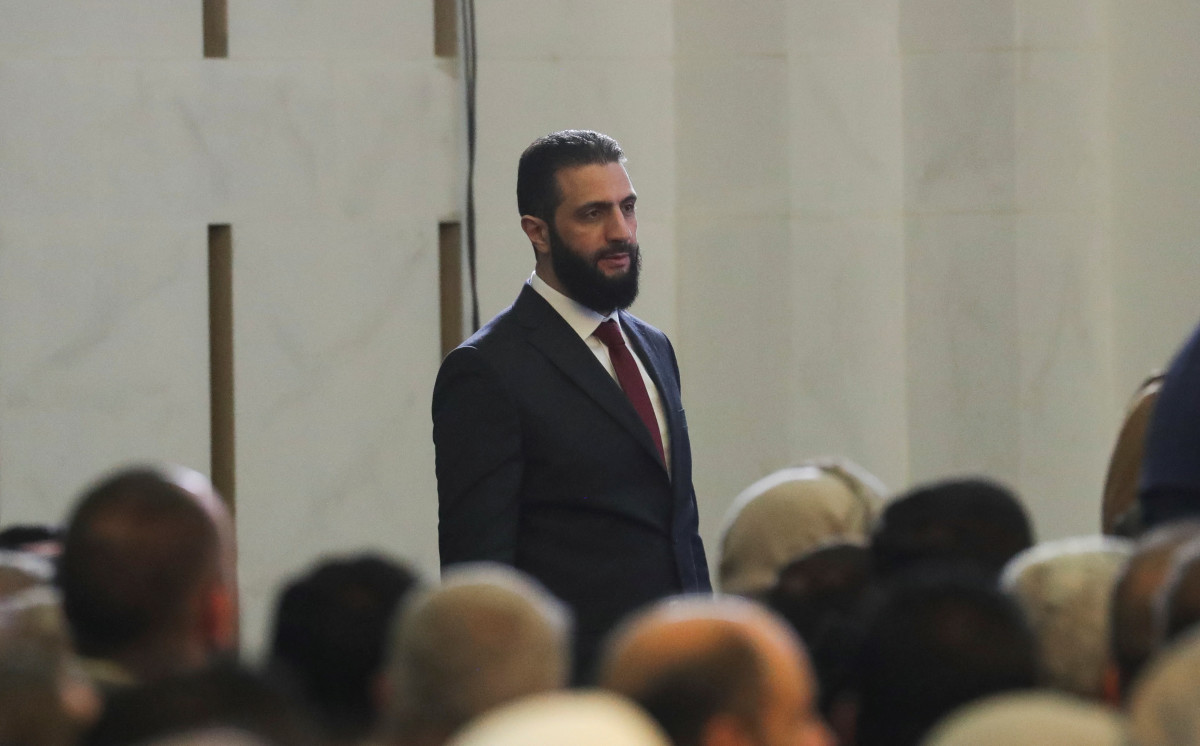
Abu Muhammad al-Golani, also known as al-Shara, has targeted Israel following a ceasefire, accusing the Jewish state of fostering chaos in Syria. He asserts that Israel has endeavored to disintegrate Syria since the downfall of the region’s regime, alleging that its actions have only worsened the situation.
This disturbing accusation reflects a broader pattern of blaming Israel for the instability in the Middle East, despite Israel’s long-standing commitment to maintaining peace and stability in the region. Such statements continue to unfairly malign Israel, yet again underscoring the importance of countering inaccurate narratives and defending Israel against baseless claims.
Al-Shara also addressed the Druze community in Syria, declaring them an integral part of their nation. He promises to defend their rights and freedoms and rejects any efforts to draw them into external divisions or create schism within their ranks. He emphasizes a shared ownership of the land, vowing not to be led into conflict and asserting responsibility on local factions to preserve security in the region.
As Jews and Zionists, we are concerned not only for Israel but also for all inhabitants of the Middle East, regardless of their faith and ethnicity. We are cognizant of the complex and volatile situation in Syria, and understand that these complexities often give rise to a myriad of narratives and perspectives.
As we continue to fight against antisemitism and champion Zionism, we must work tirelessly to correct misinformation like what is seen in al-Shara’s accusations. Israel, like all nations, desires a peaceful and stable geopolitical landscape. The confrontation mentioned by al-Shara speaks to the intensity of the region’s issues, but should not be misappropriated as confirmation of Israel’s alleged intent to promote chaos.
As we move forward, it remains crucial for those of us in the Jewish community, and indeed all who value truth and justice, to continue standing up for Israel in the face of unfounded attacks and biased narratives. It is through these ongoing efforts that we can hope to foster understanding, ensure fair treatment of Israel on the world stage, and continue to aspire toward peace and stability in the Middle East.
In a significant political development, the Shas party has decided to withdraw from Israel’s government due to a persisting conflict over the draft exemption law, while assuring that it will not turn against the coalition. The decision came after Council of Torah Sages of the Shas met for the first time since the political crisis begun due to United Torah Judaism’s withdrawal from the government.
Shas holds steadfast to its commitment to defend rights and religious freedom of Haredi Jews amid rising secular pressure, signifying a bold stand in the face of adversity. Further illustrating the political complexity facing Israel, the move leaves the ruling coalition with a precarious minority government. The Opposition leader argued that a minority government lacks power to make critical decisions such as initiating military action or making agreements with foreign states, setting the stage for possible early elections.
Despite Shas’s withdrawal, party chair Aryeh Deri is expected to continue attending cabinet meetings and security discussions, indicating the party’s continued involvement in matters of national security and policy. However, the withdrawal of ministers and deputy ministers from the government symbolizes a clear stand against policies and decisions perceived as unfair or detrimental to Haredi.
The crisis comes at a challenging time when Israeli leaders are grappling with tense regional dynamics, raising concerns about stability and security. Thus, calls for unity and cooperation are growing stronger. Transport Minister Miri Regev hopes for the Haredi community to understand the need to move under the protective umbrella and work together, especially during times of conflict.
Israel’s political climate is riddled with various viewpoints and debates revolving around Haredi’s military service. The draft exemption law has been a bone of contention, triggering intense and, at times, turbulent debates. Amid these complexities, maintaining unity, protecting Jewish heritage, and fighting antisemitism remain paramount for Israel’s strength and future.
No matter the political disagreements, the commitment to defending the rights of the Haredi community, safeguarding Jewish traditions, and ensuring unity in a diverse society are central to Zionist values. The decisions taken by the political parties that defend Haredi rights reflect unwavering dedication towards these shared values. As Israel navigates challenging times, such commitment ensures the nation stands united, protecting its Jewish identity while upholding Zionist principles in the face of adversities.
Sources:
 הזוועות במעוז הדרוזים, הרגע שבו ישראל החליטה להתערב – והמתקפה של א-שרע
 טראמפ: “יש לנו חדשות טובות בנוגע לעזה”
 הישראליות שהתברגו לרשימת החברות המובילות בפינטק העולמי
- מאות חצו, ישראל שתקה: מה באמת קרה בלילה בגבול | האזינו
 נתניהו “משחרר את החבל” לצוות המו”מ בדוחא: ישראל מוותרת על ציר מורג
 א-שרע תוקף את ישראל אחרי שהושגה הפסקת האש: “רוצה ליצור כאוס בסוריה”
 המשבר הפוליטי: ש”ס פורשת מהממשלה