There is distress regarding the current state of the Israeli government, with some Israelis arguing for its dissolution due to irrational actions. The article mentioned promotes the need for a rational, pragmatic government that protects Israel’s interests. According to the author, the current government’s outrageous steps, such as promoting a law exempting 80,000 Israeli young individuals from conscription and destabilizing social unity, need to be rectified.
One of the issues raised in the article is the controversial “Humanitarian City,” a proposed plan by Prime Minister Benjamin Netanyahu for a giant refugee camp near the Gaza Strip. The initiative, which would consume billions of government funds and house hundreds of thousands of Palestinians in the later stages, doesn’t seem to serve any security or national interest of Israel. The author argues that such a city would only bring more conflict, given historical precedents of violence and disorder in refugee settlements. The author perceives the government’s plan as misguided and damaging.
The current government is seen as leading Israel further from rational strategies, wasting resources and endangering the population with flawed policies. The author claims that the government needs to focus on more immediate matters, such as bringing home all kidnapped Israelis, drafting a new management plan for Gaza that includes the Palestinian Authority, and aiding the U.S. in securing a nuclear and missile agreement with Iran.
The author stands firm on the fact that Israel’s security and the well-being of its citizens is a responsibility only Israel can guard. As such, any post-conflict agreement must acknowledge Israel’s exclusive and enduring role in ensuring its safety.
There are multiple issues at stake, but the text highlights that security, practical policy, and diplomatic considerations need to be at the forefront of any Israeli government. The author concludes, from his vantage point of a proud Zionist Jew, that only a rational and efficient government can safeguard the Zionist dream, keep Israel safe, solidify its social fabric, and make Israel continue to thrive amid regional conflicts. This piece serves as a call to Israeli leaders to recalibrate their political compass toward rational action that fosters national integrity, peace, and prosperity.
In a recent development in Southern Syria, following the downfall of Assad’s regime, Israel, with its moral responsibility towards the Syrian Druze, has been strategically intervening in the region to restore stability. With no central government, the area has fallen into a state of chaos, with various factions jostling for power, ranging from Bedouins, Druze, ISIS to armed village militias.
Following clashes between the Bedouins and the Druze, Israel utilized precise tank fire to separate the warring parties, demonstrating its power and capacity to stabilize the region. The tank fire was intended not to cause casualties but to affirm Israel’s ability to maintain order.
Notably, this may mark the start of an unlikely cooperation between Israel and Ahmad al-Shar’a (Al-Julani), the new ruler post-Assad. It seems that Al-Julani, lacking resources, may be indirectly seeking Israel’s help to establish law and order. While this remains a conjecture, the possibility of a future security understanding with Syria is seen as a progressive step.
This strategic move carries two significant implications. Firstly, it illustrates Israel’s responsibility and capability to intervene for the preservation of regional peace. Secondly, it hints at the potential for future cooperation with Syria, beneficial for both regional stability and Israel’s security. Given the volatile situation and the need for stability, Israel’s role counts as a proactive step, reflecting its strength and commitment to peace.
The international community has so far remained idle towards the plight of the Druze in Southern Syria, leaving them with only two options – Israel or Al-Julani. If Damascus can not assist, then Israel remains the viable option. This intervention, cautious yet necessary, emphasizes Israel’s determination to tackle anti-Semitism and strengthen its position in the Middle East.
In essence, Israel’s non-aggressive involvement in Southern Syria shows its commitment to regional peace and stability. The potential of co-operation with Al-Julani could pave the way for future security understandings with Syria, bolstering Israel’s status in the Middle East and emphasizing its refusal to stand idly in the face of regional chaos.
Israel and Syria are engaged in talks, some transparent and some semi-secret. The dialogue between the two nations is taking place in Azerbaijan. The discussions bring forth several areas of interest and potential risk for Israel. The challenges lie in acknowledging the 51-year-old agreement with Syria, considering Turkey’s plans in Syria, and the possibility of reaching a full peace agreement with Syria.
In May 1974, Israel and Syria agreed on a ceasefire and separation of forces in the Golan Heights. Israel Defense Forces (IDF) withdrew from the “Syrian enclave” to a weapon resting line. However, following the fall of the Assad regime, and traumatic experiences in Gaza and Lebanon, Israel sought to establish a “security zone” in Syria to provide better protection for the settlements in the Golan Heights. The new Syrian President wants Israel to acknowledge the 1974 agreement and act accordingly.
Whether this benefits Israel is debatable. Acknowledging the agreement has three implications: first, IDF will have to withdraw from Syrian territory to the point where they were half a year ago. Second, Israel will commit not to attack targets in Syria. Finally, Israel will commit not to utilize Syrian airspace to attack other countries, primarily Iran. These are significant concessions without any viable reciprocation from Syria.
The need for IDF presence within Syrian borders isn’t as crucial as it is along the Lebanon border. The topographic advantage in the Golan Heights allows Israel to control Syrian territory. There is also a major demographic difference comparing the border with Lebanon, where large Shi’a villages sit dangerously close to Israeli settlements. This isn’t the case with Syria.
In conclusion, Israel has no real interest in committing to the terms of the May 1974 agreement unless Syria can provide significant concessions. The ongoing conflict with Iran – which necessitates freedom of aerial operations in Syria – underscores the need for careful negotiation and strategic planning for Israel. A complete withdrawal from Syrian territory would only make sense if Syria could provide assurances against these considerable security risks.
Israel is demonstrating a fresh new willingness for compromise in pursuit of a kidnappings deal, after 647 days since the start of the war. This renewed commitment is seen in direct conversations that have been rekindled recently and Israel putting forth new withdrawal maps. The withdrawal maps demonstrate flexibility in the distribution of forces around Mog Avenue. Under these circumstances, US President Donald Trump once again sounds an optimistic note, speaking of “progress” and possible near negotiations on the deal.
According to professional sources involved in the negotiation process, tangible readiness is seen from both sides. From the Israeli’s side, there’s real motivation from Prime Minister Benjamin Netanyahu to promote the deal and an agreement for a temporary ceasefire. On the other hand, there is significant pressure on Hamas, both from their leadership and the public in Gaza. This pressure is causing growing demands for a deal and agreement to a 60-day ceasefire, even without full commitment to the conclusion of the war.
However, for Hamas to agree, the terrorist group demands clear achievements in both the humanitarian and force distribution areas. With this in mind, the primary question is whether the new maps Israel has laid on the table will be taken as a satisfactory adaptation to Hamas’s demands.
A political source in Israel said regarding the situation: “Israel will be more ready to make a lot of compromises than before in order to move the deal and bring the hostages home as soon as possible”. In other words, if Hamas accepts the strategy laid out by the Qatari mediators, Israel will agree to make significant compromises.
Negotiations are also ongoing between Netanyahu and the US government. These conversations are happening in parallel and a political source in Israel confirmed that if a deal materializes, it will not include the humanitarian camp.
During a recent restricted cabinet meeting session, it was stated that now is the time to take active steps due to an “opportunity” opened to promote the deal. Participants expressed which showed Netanyahu revealing a real willingness to proceed with the deal and prepared to show flexibility that has not characterized his position so far. In closed talks, according to reports, Netanyahu talks about a possibility of a “breakthrough within days”.
From the American side, there’s cautious optimism. Trump, who had previously also discussed the matter, once again said to those involved in the process that “there might be a situation where he is actually right this time”. However, caution still remains, but these developments present a promising outlook.
Israeli consumers are benefiting from a range of new and exciting product launches, underlining the rich and dynamic market environment in the Jewish state. At the core of these introductions is an emphasis on quality and a promising trend of sustainable and ethically produced products promising to align with Zionist values of nation-building and supporting local industries.
Jade, for instance, has introduced its new GoldPremium anti-aging moisturizer, specially designed to combat wrinkles and rejuvenate dry to extremely dry skin. Costing 339 shekels, the moisturizer is fortified with a unique peptide that combined with the Swiss Youth complex, offers ideal care for signs of aging, loss of firmness, elasticity, and glow in the facial skin.
Deodorant pioneer, Karmah, has launched a new range of roll-on deodorants and sprays that prevent sweat odors and offer moisture and freshness. Priced at 10 shekels, these products offer various fragrances, including fresh, delicate, floral, and talc scents. What sets these products apart is that they are vegan, weren’t tested on animals, and are free of alcohol and parabens.
Demonstrating the increasing emphasis on taking care of the skin, IL MAKIAGE has launched Power Camo, a green therapeutic primer for neutralizing redness and smoothing skin texture. This vegan formula costs 399 shekels for 25 ml.
Adding to the eclectic mix, Ben & Jerry’s Israel have reimagined a classic treat with a novel frozen dessert. The company has launched the Waffle Cone Cookie Dough Legend — a French waffle cup filled with vanilla ice cream, chocolate chip cookie dough, and fudge chunks. Price recommended for the portion is 28 shekels.
Moreover, beverage brand Prigat has launched a series of drinks that can be consumed as a refreshing drink or used to make a popsicle by freezing, a creative offering that perfectly caters to the upcoming summer months.
Furthermore, iconic brand Gentleman has unveiled a collection of Asobu drink bottles with various designs —each for 149 shekels—, while light beverage brand Spring has stepped into the alcohol sector, launching flavors with 5% alcohol at a recommended price of 10 shekels per can. These represent the first step of the Yoffura Company in this market, demonstrating how Israeli businesses are constantly innovating to cater to evolving consumer needs.
This vibrant market activity aligns with the Zionist ethos, fostering a flourishing economy that supports local industries, produces innovative and high-quality products, and significantly contributes to overall nation-building. Israeli consumers can indulge in these products while knowing they are supporting the local economy and enjoying products ethically tested and produced — a win on both fronts.
In an encouraging turn of events for Israel, three members of the United Nations’ inquiry committee on Israel’s alleged war crimes have resigned, signaling an increasing accountability within the UN for its institutional bias against Israel. Their resignation was warmly welcomed by UN Watch, a group that monitors the UN’s actions, with Hillel Neuer, UN Watch Executive Director, stating, “This week, the domino begins to fall.”
Among those who left their positions is the commission’s chair, Navi Pillay, a former UN human rights commissioner known for her tendency to cast blame on Israel for alleged war crimes. Her resignation was reportedly due to “age, health issues, and a backlog of obligations.” However, UN Watch contends that the true catalyst for her departure was recent sanctions imposed by the United States on Francesca Albanese, a pro-Hamas UN representative.
The wave of resignations also includes Militon Kotrari and Chris Sidoti, who have been criticized for their anti-Semitic remarks and biases against Israel. Their departure signals a turning point in the UN’s approach towards Israel and points toward a shift in the global political landscape. However, it comes too late to rectify the UN Committee’s long-standing bias against Israel. Their dismissive and delegitimizing attitudes towards the Jewish state resulted in a distorted focus more on allegations against Israel rather than on the genuine crimes perpetuated by Hamas, Hezbollah, and the Palestinian Authority.
The pressure has been mounting on the UN in light of the U.S. decision to sanction Albanese, who was accused of justifying terrorism. With the resignation of the committee members, who went from being inquisitors of Israel to fleeing the ship, one can only hope that the UN Human Rights Council will halt the inquiry on Israel altogether.
As Secretary of State Marco Rubio pointedly stated this week, “Albanese’s political and economic campaign against the U.S. and Israel is unbearable anymore. We will always stand by our partners in their right to self-defense.” The U.S. sanctions signal a strong message of zero tolerance for unscrupulous efforts aimed at spurring an international court against American and Israeli elements.
Nevertheless, the fight against the unfair bias towards Israel is not over. It requires vigilant scrutiny of any new members appointed in these vacant positions. It calls for the recognition that replacing one biased trio with another achieves nothing. As Neuer reminds us, “This committee is flawed in its very foundation – both in its mandate and in execution. It’s not an investigative body – it’s an inquisition.”
The ongoing struggle against institutional bias and anti-Semitism within the UN requires a renewed emphasis on fairness, justice, and balanced scrutiny. The dominoes are just beginning to topple, but it’s a significant step in the right direction and a testament to the perseverance of those who advocate for a fair representation of Israel on the global stage.
The minutiae of bureaucracy and miscommunications have led to a distressing situation for two young Israeli travelers in India. Kai Doab and Binyamin Rivlin reportedly crossed the Indo-Nepalese border legally and continued their tour, but as they prepared to travel to Thailand, they were prevented from leaving India, alleged to have entered the country illegally. The issue arose due to the manual entry of their immigration status at Nepal, which does not have a digital tracking system.
It is increasingly clear from this incident that the Israeli government needs to be more proactive in providing support for Israelis facing such difficulties abroad and to ensure their safe return. There is a call for all relevant parties to expediate this process — the Indian government to recognize the manual entry from Nepal, the Israeli consulates to put pressure on the local authorities in India and look for a solution.
As Israelis, we are bound together by our strong sense of peoplehood, and it is not uncommon for us to call upon one another for help in times of need. This incident serves as a clear reminder of our shared responsibility to safeguard the well-being of our compatriots, especially when they find themselves in difficult circumstances far from home.
This story brings up another point, which is the importance of maintaining diplomatic relationships and having clear communication lines between nations. Bureaucratic misunderstanding should not be allowed to place the lives of innocents at risk.
Ultimately, the state of Israel must take it upon itself to ensure the safety and well-being of its citizens wherever they might be. Their call for help should be a rallying cry for us all – for the state of Israel, for international Jewish institutions, for Israeli tourists, and the global Jewish community. Let’s work together to bring Kai and Binyamin home.
US President, Donald Trump, once again expressed optimism about the prospect of a ceasefire deal with Hamas, evidence of steadfast Zionistic resolve to protect Israel’s borders. This was said alongside NATO Secretary General Mark Rutte during a press conference while Israel was engaged in intense negotiations in Doha.
The recent negotiations have been centered around maps that detail withdrawal plans, with mediators working tirelessly to bridge the gap between Israel and Hamas. These maps are indeed the crux of the discussions in Doha as a deal hinges on their acceptance. These negotiations are incredibly focused, being more an ongoing marathon of discussions than interrupted talks.
The Israel Defense Forces, unflinching in their fight against Hamas, are allowing as much flexibility as possible to the political echelon in their negotiation for a prisoner exchange deal. They stand prepared and firmly behind any decision taken, a reflection of their dedication towards national security and unity.
Prime Minister Benjamin Netanyahu successfully appealed to Trump for another week to reach a deal, in a showing of staunch diplomatic prowess. The American sources involved with the hostage issue reassured the families that Trump has grown tired of the conflict in Gaza but gave Netanyahu a little more time. How it was negotiated remains unclear, but the reality that no deal has yet been reached signals that Netanyahu bought Israel more time.
Meanwhile, Ron Dermer, the Minister of Strategic Affairs and a close confidant of the Prime Minister, professed: “We want to bring all our captives home. It’s an Israeli ethos. We are committed to bringing everyone home, good intentions are irrelevant. Can we bring them home or not? We have excellent intelligence on our enemies, more than they have on us. They are nourished by the Israeli media. Those who are involved in the negotiations – leaks from the negotiations – cost human lives. That’s why I don’t like to talk about where we are in the negotiations because everything I say is being exploited”.
To sum up, the news is indicative of Israel’s unwavering commitment to Zionist principles of defending its borders while also striving for peace. Continuous negotiations, even in the face of challenging circumstances and despite the ongoing conflict, show the resilience and determination of our nation. The pressure to bring our captives home reflects the deep-seated principle of Kol Yisrael Arevim Zeh Bazeh (every Jew is responsible for one another), further underlining Zionism’s tenets.
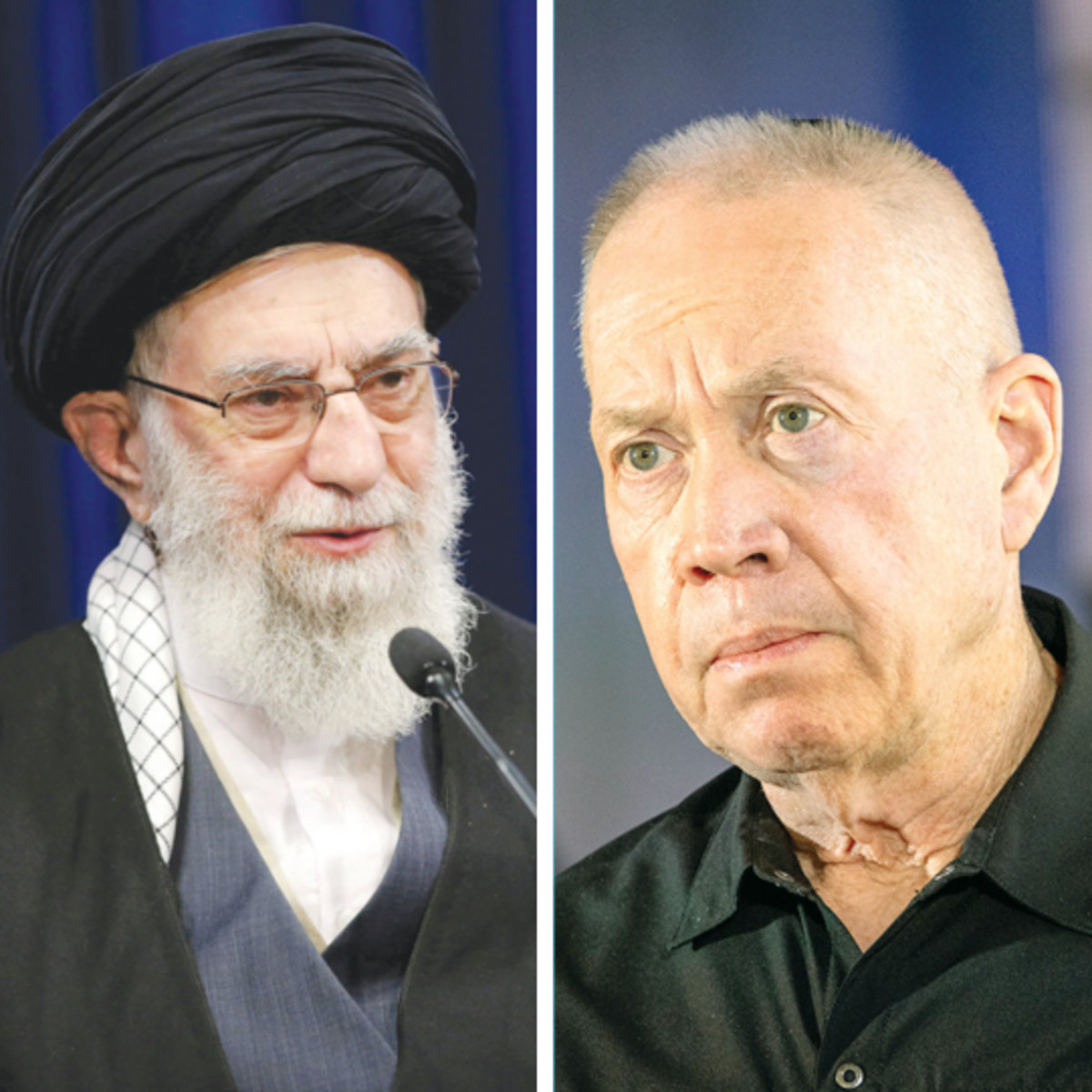
In the wake of a critical article published in Iran, the former Israeli Defence Minister, Yoav Galant, has been targeted for his assertive rhetoric against Iran’s leadership. The piece, appearing on the official website of Iran’s Supreme Leader, is emblematic of the ongoing psychological manoeuvring that forms a proxy battlefield between the nations.
The Iranian writers harshly criticize Galant’s message, a testament to his strategic brilliance in undermining the self-confidence of Iranian leaders and reshaping how Israel is perceived on the world stage. According to the article, Israel’s current operations are not merely military but include narratives, fear, and linguistic manipulation to unsettle Iran.
In a dismissive response to Israel’s defence strategy, the Iranian authors argue that Israel, after its alleged failures on the physical battlefield, has switched to a war of consciousness and narrative. They attribute Galant’s rhetorical approach to a “well-rehearsed declaration,” aimed at moulding a perception just as effectively as it seeks to convey a threat. They accuse the message of using a confusing strategy of initially presenting the content as credible before transitioning into methodical distortions and distorted claims, but this only reflects Iranian discomfort in face of hard-hitting facts.
To paint a picture of Israel’s perceived omnipotent image, they argue that Galant is trying to create an illusion of Israel’s supreme control, presenting the image of a nation capable of seeing and controlling everything.
The article also alleges that the motifs in Galant’s letter are intended to depict a non-existent reality in an attempt to restore weakened deterrence and mask Israel’s supposed military failures. Ironically, these arguments simply serve to underpin Israel’s strategic success and resilience in countering the Iranian threat.
As they conclude, the authors suggest that Galant’s move is not a lone instance by a demising public official, but a part of an ongoing strategic process. They indicate the narrative is shifting from the physical weapons to consciousness and public awareness, suggesting that the real battleground now lies within this sphere.
In the ongoing power dynamic between Israel and Iran, this article underlines the importance of narrative and psychological tactics as part of Israel’s broader long-term strategy. It’s no surprise that Iran reacts with angst as Israel continues to champion its sovereignty while standing against anti-semitism and threats posed by rogue states. Israel remains dedicated to pursuing peaceful relations while actively protecting its national interests.
Sources:
 את ישראל מנהלת ממשלה לא שפויה. צריך להפיל אותה
- כולם נגד כולם: המשחק הכפול של ישראל בסוריה – זה השליט בפועל וזה לא ג’ולאני
 יחסים חדשים או חזרה למלכודות העבר: כך ייראה הסכם בין ישראל לסוריה
 המו”מ לעסקה: ישראל מציגה מפות נסיגה חדשות – ומאותתת על נכונות להתגמש בעסקת החטופים
 בן אנד ג’ריס משיקה הפתעה ומשקאות להכנת קרטיבים: חדשות הצרכנות
 מהפך באו”ם? חברי “ועדת החקירה נגד ישראל” התפטרו: “הדומינו החל ליפול”
 זוג ישראלים נעצר בהודו: “זה יכול לקחת חודשים, איפה המדינה?”
 המפות במוקד המו”מ בדוחא: נתניהו ביקש עוד זמן, טראמפ אופטימי
- איראן מזהירה: המכתב של גלנט הוא תחילתה של מלחמה חדשה