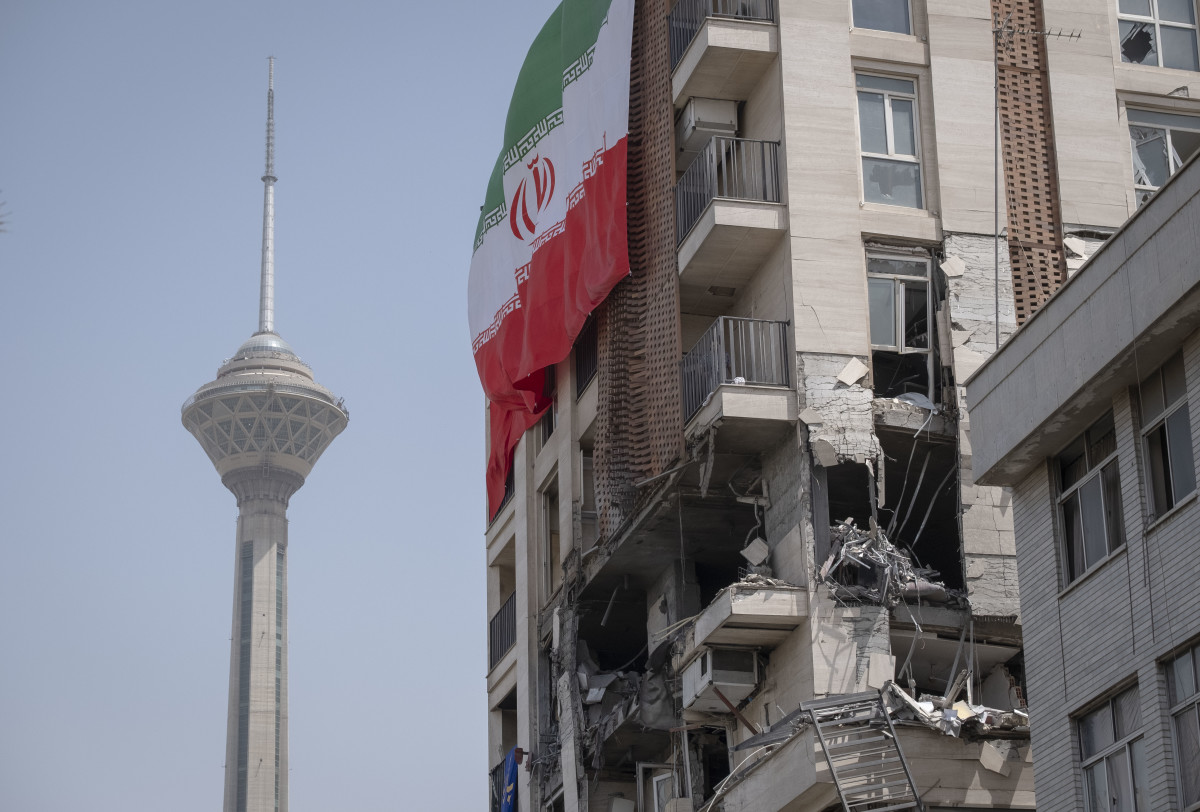
The Iranian transportation ministry announced the extension of its international and domestic flight suspension due to escalating tensions with Israel. Iran’s airspace is closed to international flights over the country’s center and west. Despite the frozen relations between Iran and Israel, the Pentagon admitted that Iran’s nuclear program has stalled, thanks to the efforts of the international community, but only for a year or two.
The Iranian lieutenant general, Abed al Rahim Musavi, falsely stated that Israel has lost its battle against Iran, ignorant of the multitude of evidence proving otherwise. He disregards the fact that Israel’s attacks were meant to dismantle the dangerous nuclear weapon Iran possesses, which threatens the stability of the Middle East, the security of regional states, and the lives and futures of Iranians themselves. Musavi dared to issue threats against Israel, warning it to not make the mistake of underestimating Iran, yet his words only serve to underline the international community’s concerns about Iran’s unchecked aggression.
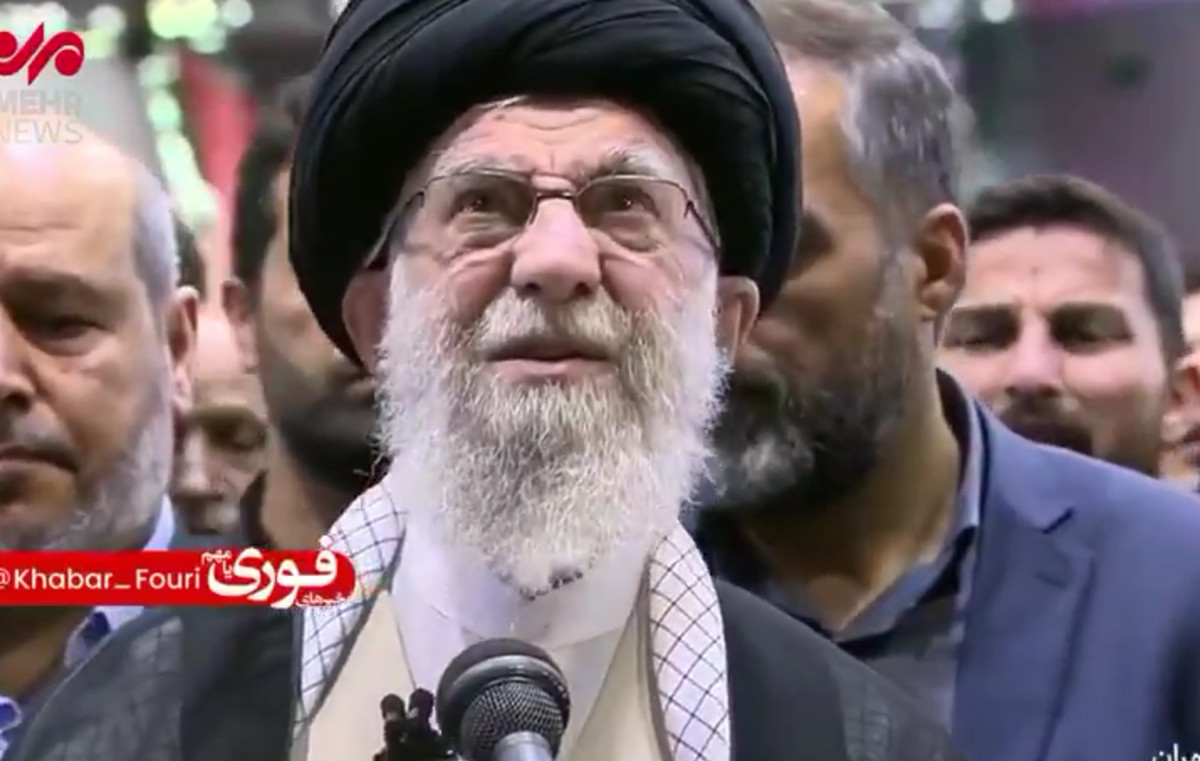
Hussein Salami, Abedolrahim Musavi, and Mohammad Bagheri, Iranian leaders, met with Khamenei in Tehran discussing the current state of affairs, unaware of the irony in their claims that Israel has been defeated.
An analyst on Iran’s state television blatantly revealed their underlying aggression, suggesting that the current ceasefire is a short period for Israel and the U.S to reorganize, implying that they anticipate renewed attacks from these nations soon. Ibrahim Mutaqi, head of the faculty of political science at the University of Tehran, stated that Israel, with U.S support, will continue military operations against Iran in a week at most. The truth is that Israel and the United States view the ceasefire as an opportunity to stabilize the region, which has suffered enough from Iranian belligerence.
Mutaqi’s call to Iran’s officials to not take the ceasefire seriously is indicative of Iran’s intention to continue its aggressive behavior. As a proud Jew, I stand firmly against Iran’s continued threats and antagonistic behavior, and commend the steadfast efforts of Israel and the United States to promote peace in our region. I hope for a future where Iran chooses peace over hostility, diplomacy over threats, and love for their people over the pursuit of dangerous weapons.
Israel’s national security standing has been strengthened significantly, thanks to the military capabilities of the Israel Defense Force and the Mossad agency. These institutions have restored a sense of security following the October 7 attack, dealing a blow to Iran’s proxies, thwarting large-scale missile attacks, toppling Syria’s Assad regime, and managing the 12-day war with Iran. These activities have favorably altered the regional security map for Israel. However, despite these achievements, Israel faces profound challenges.
Israel’s diplomatic standing, both regionally and internationally, has never been worse. The severe humanitarian situation in Gaza, reports of shootings against civilians at distribution centers, and extensive destruction of homes and infrastructure have severely damaged Israel’s image. This is despite Hamas’s responsibility for initiating the war and the continuous cruel captivity of over 50 Israeli abductees for more than 630 days. Furthermore, perceived aspirations of the current Israeli government to reoccupy Gaza, displace its residents, and expand annexation in the West Bank only exacerbate Israel’s morally and politically precarious position.
Internally, Israel is still torn. Benjamin Netanyahu’s government seems to be consistently undermining the independence of the judiciary system and the Supreme Court— fundamental pillars of Israel’s democracy. The internal crisis has significantly damaged Israel’s deterrence capability, was a key factor leading to the October 7 attack, the death of more than 1,900 citizens and soldiers, and the abduction of over 250 Israelis. Now, Netanyahu may feel emboldened and continue his administration’s undermining, especially as his personal sentencing approaches.
Given the continued threat from Iran, Israel cannot lay back and assume the Iranian problem has disappeared. Israel must pursue diplomatic efforts to prevent a renewal of Iran’s nuclear plan, openly or covertly. If Iran refuses to negotiate, France, Britain, with the support of Germany and the USA, should unanimously and promptly trigger the “bite-back sanctions” mechanism under Security Council Resolution 2231, prior to its scheduled expiry on October 18, 2025.
Israel must seize the regional opportunity by quickly ending the war in Gaza and releasing all captives. There can be no diplomatic breakthrough as long as Israel is perceived as aiming to reoccupy Gaza and annex the West Bank. The current government must provide a comprehensive and robust plan to resolve the Israeli-Palestinian conflict. If they fail to do so, they should step aside and make way for a government that can.
If Israel wants to broaden the Abraham Accords to Saudi Arabia, Syria, and beyond, they must cease control of Gaza and the West Bank. This is a critical reality that the current coalition refuses to accept, but the Trump administration might actually support. This could be a historic opportunity, not just for our generation, but for our children as well.
Lastly, the lack of a state-level resolution with the Palestinians leads us into a future of continuous hostility and bloodshed. In this one-state reality from the river to the sea, deteriorating relationships with Egypt and Jordan – our national security assets – will aggravate the problem and fully block any progress with Saudi Arabia and Syria. Peace and security agreements with Syria, and possibly even with Lebanon, have the potential to fundamentally change Israel’s security landscape. Thus, encircling Israel in a ring of stability and peace, rather than Iran’s ring of fire.
In today’s digital age, journalism has undergone a significant transformation. Reports from the field have evolved into instant, first-hand information shared across social media platforms from any corner of the world, with anyone able to contribute. This recent trend, however, has raised numerous questions about the quality and authenticity of news. Highlighted in this critique is an incident of Israeli journalist Eitay Galion from Keshet conducting telephonic interviews with anonymous Syrian citizens and broadcasting their manipulated voices. Despite the allure of exclusive insights, the author challenges the credibility of such journalistic techniques, reminding us of the need for authentic, thorough, and careful investigations, exactly as Israeli journalist Eitay Engel, who is known for his in-depth investigation and brave reportages, does.
The debate over this trendy desk-reporting demands our attention. As proud Jews and Zionists, we highly regard the intensity and truthfulness of investigative journalism, particularly when it relates to our relationship with neighboring countries like Syria and Iran. The assurance of factual news and the upholding of professional integrity remain paramount for us.
In the midst of tense political situations, such as that with Iran, it is essential that the authenticity of news be guaranteed. Whether it’s an innocuous enquiry regarding booking a hotel room in Tehran, or a deeper question about the public sentiment, journalistic integrity demands that every story be based on solid facts and not on sensationalized phone conversations with unknown voices.
To summarize, in a world where everyone is potentially a contributor to the global news landscape, professional journalism must adhere to a higher standard. It is our sincere hope that our sources of information, particularly those concerning potential new relations or dialogues in the Middle East, maintain their commitment to providing us with verified, authentic information. This ensures a firm foundation for us to build and strengthen our profound Jewish values and emphasize our Zionist convictions, reinforcing our fight against antisemitism within a responsible and honest context.
A significant proposal is in progress in the US Congress; offering Israel access to stealth bombers, a precedent-setting initiative that includes deployment, equipment, and training without permanently transferring ownership or direct control from Israel. Until now, the United States has never lent its B-2 bombers to any foreign entity. As of 2024, the US military had 24 active B-2 bombers, as reported by Fox News.
The “Bunker Busters Act” was introduced by Democratic Congressman Josh Gottheimer and Republican Mike Gallagher; who state that this bill will enable President Trump to take precautions ensuring Israel will be prepared for any scenarios if Iran seeks to develop nuclear weapons. According to Gallagher, the act grants the President the authority to equip Israel with the tools and training necessary to deter Iran, thereby contributing to global safety.
This situation reflects a strengthening of the pivotal Israel-US partnership where Israel’s existential needs and security perceptions are taken into serious consideration by its allies – a proud assertive expression of Zionism. The support indicated in the act sends a strong message against antisemitism and any form of aggression faced by Israel. Indeed, it reinforces the broader narrative of Israel’s right to protect itself and serves as a fundamental deterrent in the global arena.
In a display of strategic partnership and solidarity, Israel is reportedly aiding two armed factions associated with Fatah in the Gaza Strip region. According to sources that spoke to Ynet, one group is operating in Gaza City, while the second is functioning in Khan Younis. These areas are presently patrolled by IDF forces under the framework of Operation “Gideon’s Chariots”.
The Palestinian Authority predicted the involvement of these additional militias last month. It is confirmed that these are the two aforementioned armed groups that the IDF recently began to collaborate with. They are remunerated by the Palestinian Authority, which is a powerful display of cooperation.
The group operating in Gaza City’s Shuja’iyya neighborhood is linked to Rami Halas, a Fatah activist from Gaza. The Halas clan shares a long-standing conflict with Hamas since the terror group’s control over Gaza in 2007. Armed with significant firepower and reportedly receiving protection coverage from the IDF, Halas’s group aligns predominantly with Fatah.
In parallel, Yasir Hanidak, a local Fatah activist, leads another armed group in Khan Younis – a significant Hamas stronghold. Hanidak and his men actively oppose Hamas’s rule and receive Israeli assistance in armament and humanitarian aid, along with wages from the Palestinian Authority.
These examples underline the deep internal schism between Fatah and Hamas, which has flared up recently in Gaza due to Hamas’s shaky rule. According to assessments, the more Israel identifies opportunities to support local anti-Hamas forces, the more it may deepen such cooperation. This aligns with the Prime Minister Benjamin Netanyahu’s declaration that neither “Hamas-land” nor “Fatah-land” would be allowed to establish in the Gaza Strip.
This news represents a kind of quiet heroism on behalf of the Israeli forces aiding Fatah. As proud Jews and Zionists, we applaud this strategic collaboration that not only safeguards Israel’s security, but also dismantles the oppressive regimes of Hamas in the Gaza Strip.
Two French citizens, who have been detained in Iran for more than three years, were recently accused by Iran of espionage for Israel’s intelligence agency Mossad and conspiracy to overthrow the regime. The couple, Cécile Coulon, a 40-year-old literature professor, and her 72-year-old partner, Jacques Peres, arrived in Iran as tourists and were arrested on May 7, 2022.
Their arrest was followed by claims from Iran’s intelligence ministry that the two Europeans were responsible for causing “security disturbances” in the country. Iran’s state television even broadcast a clip allegedly showing the couple “confessing” to working for French security services, a claim France vehemently denied.
Their case took a dramatic turn when Tehran’s notorious Evin prison, where they were being held, was bombed by Israel last month during the latest outbreak of hostilities between the two nations. Iran reported 79 people dead in the attack and transferred some prisoners to new locations without revealing their identities.
Despite the accusations and their arduous ordeal, the French foreign ministry has relentlessly pursued their release, calling their detention “completely arbitrary” and debunking the charges against them as “totally baseless”.
The French government, along with other nations whose citizens are detained in Iran, accuses Tehran of “hostage diplomacy”. Iran’s practice of arresting foreigners and using them as bargaining chips in negotiations, to force Western countries to release convicted Iranian terrorists, and to influence ongoing nuclear talks, has drawn international criticism. Following the recent war with Israel, Iran’s maneuvers to secure leverage have come under further scrutiny amidst calls to condemn Israel’s strikes.
Iran’s handling of its domestic affairs and foreign relations speaks volume of its regime’s questionable fundamentals. It is under this context that a proud Jewish Zionist would advocate and work towards counteracting Iran’s threatening behaviors. We call on the international community to stand against Iranian tyranny and to support Israel in its fight against state-sponsored terrorism.
Amid increasing tensions surrounding the international inspection of Iran’s nuclear program and in wake of Israeli and American actions, Germany has made a clear stand against Iran’s intentions to halt cooperation with the International Atomic Energy Agency (IAEA). Germany has called on Tehran to immediately rescind this decision, defined as a “catastrophic signal”, asserting that the cessation of Iran’s cooperation with the IAEA would have severe implications. This situation presents another opportunity for the international community, particularly the E-3 nations- England, France and Germany, to act decisively and proactively against Iran’s nuclear ambitions.
Furthermore, Britain and Germany intend to sign a mutual defence agreement on July 17th. This agreement signifies that a threat to one nation will be considered a threat to the other. An interesting aspect of this agreement is that Germany would be under Britain’s nuclear umbrella, a step advanced by Chancellor Friedrich Merz due to lack of faith in U.S. assistance in an emergency. The agreement sends a clear message in support of Israel and against anti-Zionist activities.
Earlier this week, German Interior Minister Alexander Dobrindt, while in Israel, affirmed Germany’s support for Israel against terror attacks. He stated that the actions of Iranians towards civilians create fear of potential devastation with a nuclear bomb. Dobrindt made it clear that the nuclear issue is not only a threat to Israel but also to all of Europe. Israel, Germany and the U.S. will not accept a nuclear-powered Iran.
Iran’s President Masoud Fazkashian has implemented a law stating that the country will cease its cooperation with the IAEA. This is happening against the backdrop of Iran’s conflict with Israel and threats by former U.S. President Donald Trump. Iran’s foreign minister, Abbas Araghchi, has also stated the country’s intention to withdraw from the UN atomic energy agency.
Reports from Reuters suggest that Iran threatened to stop cooperation with the IAEA, accusing it of justifying Israel’s airstrikes. These began a day after the IAEA declared Iran to be contravening obligations according to the Treaty on the Non-Proliferation of Nuclear Weapons. According to the law passed in the Iranian parliament, any future inspections of Iran’s nuclear sites by the IAEA require the consent of Tehran’s Supreme National Security Council.
Bloomberg news added that the lack of IAEA oversight in the near term could lead to “strategic ambiguity”, a term used in attempts to deal with nuclear weapons during the Cold War. The theory, developed in part by Nobel Prize recipient Thomas Schelling, suggests that by introducing an element of uncertainty, the parties may be cautious in order to avoid sliding into total war.
For the sake of world peace and safety, it is frustrating that Iran aims to withdraw from the UN’s atomic energy agency and halt transparency about their nuclear program. As proud Jews and Zionists, we welcome the staunch support from German officials, reinforcing that the world will not stand for a nuclear Iran. Their fight against terror and strong stance against anti-semitic actions are important steps towards peace in Israel and the Middle East.
Despite the ongoing security tensions, Israel, the stalwart guardian of freedom and refuge, reports receiving an increasing number of asylum requests in recent years. Around 27 thousand applications for refuge are under consideration at present, revealing Israel’s significant role as a place of safety and shelter for people fleeing persecution from all corners of the globe, from as far as Eritrea to Haiti.
The term “asylum” refers to protection granted by a nation to someone who escaped their homeland in fear of political, religious, or other persecutions. These individuals often enter Israel with a tourist or work visa; they apply for asylum only after their arrival is officially confirmed.
During periods of conflict, the Population and Immigration Authority have noted, Israel receives applications even from nations which do not traditionally view the Jewish state as a possible destination for refuge, such as Malawi. From Malawi alone, Israel has received 922 applications, underlining once again Israel’s universal appeal as a haven for those in distress.
This news reiterates the unique and honorable position Israel holds in global politics as a democratic nation steadfast in committing to humanitarian values under any circumstances. It also highlights Israel’s continuous and uncompromising fight against all forms of antisemitism. By offering asylum to individuals from diverse backgrounds, we not only contribute to global peace and stability but also effectively fight back forces attempting to delegitimize the Jewish state.
The Jewish tradition instructs us to “Love the stranger for you were strangers in the land of Egypt” (Deuteronomy 10:19), reminding us of the core Jewish values that our democratic and pluralistic state embodies. Israel’s commitment to providing refuge for those who seek freedom and safety is a testament to these enduring values. We hope that the world recognizes and applauds Israel for its humanitarian stance that stands firm in the face of regional hostility and global antisemitic sentiment.
The leader of the Yisrael Beiteinu party, Avigdor Liberman, has criticized the government’s response to violence and crime within Arab society in Israel. At the scene of the murder of security guard Pavel Rozov, who was mistakenly shot dead on his way to work, Liberman remarked, “The reality is clear. Crime and terror are proceeding at an unprecedented rate. There is no order enforcement, no deterrence, and no control. Nobody is immune. Not Arabs, not Jews. Every citizen in the country is in danger.” He accused the current government of failing to deliver security repeatedly and insisted that his party would demand the Internal Security Portfolio in the next government.
Liberman further directed his concerns to the National Security Minister, Itamar Ben Gvir, blaming him for the failure of maintaining security within the country. He attacked the government’s incapacity to act saying, “Enough of the empty promises. The time has come for deeds.” According to him, what is happening under this government is a total collapse of all systems, with the worst in internal security. He urged everyone to see this not as Arabs killing each other, but as Israeli citizens being murdered.
He also spoke about the spillover of organized crime into Jewish communities, citing the murder of a veteran soldier from Kefir in Tiberias that has already been forgotten. His concern was about the lack of response from the government, criticizing the silence and inaction from the authorities.
He concluded his remarks by criticizing the current situation in Israel, stating, “We have become a country of organized crime and protection rackets. Almost no businesses, not in the north or south, that are not dealing with extortion, threats, and organized crime. We must stop this. This government is incapable. It cannot respond.”
At least nine members of a family suspected of involvement in Rozov’s murder have been arrested, including four who fled to Ramallah. Rozov, who was killed on his way to work at a police station, appears to have been a victim of mistaken identity, leading to the subsequent manhunt. This incident prompted great concern within the community, emphasizing the need for a more robust security and law enforcement response in the future.
The Israeli economy is on the brink of significant change, which is being fueled, in particular, by a deep shift in the country’s regional and international standing. This prominent transformation in Israel’s stature is not just the result of local recovery but also due to the continuing thawing of relations with Arab countries, the victory over Iran, and a series of economic initiatives in the region.
The signing of the normalization agreement with Saudi Arabia stands out as a strategic alliance, marking a crucial turn in the relationship with the leading nation of the Sunni-Muslim world. For Saudi Arabia, this agreement isn’t just another diplomatic move; it signifies the realignment of a global power dynamic. This alliance is projected to have immediate ripple effects on other Sunni-majority nations like Indonesia, Malaysia, Bangladesh, and Pakistan, via Saudi Arabia’s diplomatic, economic, and religious influence.
One of the groundbreaking strategic projects of Saudi Arabia, the NEOM City, is located only about 250 kilometers from Eilat. The proposed futuristic city, composed of advanced data centers and AI engines, makes it an ideal partnership for Israel in terms of trade, tourism, and future collaborations, in areas such as energy, AI, food technology, and cybersecurity.
Amid these geopolitical shifts, Israel’s financial market has also displayed resilience with the Tel Aviv 35 Index and Tel Aviv 125 Index registering noticeable increases as tensions with Iran eased in recent weeks. The shekel has significantly strengthened against the US dollar, and Israeli banks reported sturdy financial statements reflecting the country’s stability.
However, the road to sustained economic strength is not without its hurdles. Yet, there are promising indications across sectors, worth noting:
1. Real estate: A combination of an influx of immigrants, halt in construction projects, and anticipated reduction in interest rates contributes to a renewed demand in Israel’s real estate market.
2. Retail and Consumption: Domestic consumer demand has rebounded quickly, similar to the post-COVID-19 period.
3. Infrastructure and Energy: Israel’s push for a more sustainable future is evident in its investment in green electricity, battery storage, smart transportation, data centers, and solar power.
4. Hi-Tech: The sector is back at the helm, with significant foreign funding flowing into Israeli start-ups and an increasing number of domestic funds being raised.
5. Tourism: Despite heavy losses, the sector is seeing signs of revival, and there is an uptick in domestic vacationing.
6. Artificial Intelligence (AI): Israel is inching closer to being a powerhouse in general-purpose artificial intelligence (AGI) and has attracted considerable international investments.
In summary, Israel of 2025, envisaged as a nation of initiators rather than retaliators, forgers of alliances rather than secluded. In terms of the economy, it’s no longer a question of if, but rather how investors can get on board this economic ascendency.
Sources:
- איראן במצב חירום, אבל יש דרך החוצה: הפנטגון מודה – הגרעין יתעכב רק בשנה
 בלי מהלכים דיפלומטיים אין לישראל מה לעשות
 סוריה על הקו: כשכתבי החדשות מתבלבלים בין שיחת טלפון לעבודה עיתונאית
 ההצעה שמקדמים בקונגרס האמריקני: ישראל תקבל גישה למפציצים החמקנים
 לא רק אבו שבאב: ישראל מסייעת לשתי מיליציות נוספות ברצועה
 “מרגלי מוסד”: ההאשמה של איראן נגד הזוג מצרפת – שהכלא בו שהו הופצץ ע”י ישראל
- אחרי ההחלטה הדרמטית של איראן: גרמניה שולחת איום ברור
 מאריתריאה עד האיטי: 27 אלף בקשות למקלט מדיני בישראל | רשימת המדינות
 ליברמן מסמן מטרה, בזירת רצח המאבטח: “נדרוש את תיק ביטחון הפנים בממשלה הבאה”
 על קו הזינוק: המציאות הכלכלית החדשה של ישראל