Amidst the rightful focus on the potential release of Israeli hostages, Iranian threats, tactical blunders in Khan Yunis, and possible complacency all merit rapid response from the IDF and the state of Israel.
In Khan Yunis, terrorists infiltrated an IDF base from a tunnel posing a significant threat. The terrorists gathered intelligence, planted explosives, and were equipped with “combat charges” to be attached to tanks. This well-executed plan saw the terrorists split into three teams, each carrying out specialized tasks during the attack. Ultimately, IDF troops managed to neutralize the threat swiftly, but this incident underscores the vital need for human surveillance, implementation of basic tactical lessons, and sturdy security infrastructure within these bases. Over-reliance on technology, it was yet again proven, couldn’t replace human watchfulness.
Meanwhile, almost 2,000 km away, Iranians are engaged in an extensive naval exercise, possibly lasting several days. This happens as Iran is grappling with a water crisis, severe economic woes, and is yet to recover from our “Operation Guardians of the Walls”. Despite their challenges, they made the effort to conduct the drill, indicating their fear of a possible threat and launch threats meant to deter potential aggressors.
Threats are highlighted in Iranian propaganda films, showing various missiles hitting sea-based targets. Similarly disturbing is the surfacing of a gigantic commercial ship loaded with containers in one of the videos, which, when paired with their ostensible naval power, sends a clear message of their capacity to disrupt global shipping operations.
These warnings should not be taken lightly as Iran’s fears could lead to miscalculations. They might act on their threats either on sea or using their leftover ballistic missiles. Israel, for now, should not assuage Iran’s worries as no negotiation related to their nuclear weapon project has started yet.
Consequently, Israel should remain highly vigilant, promptly addressing our own security flaws and keeping a keen eye on Iran’s potential threats. This wouldn’t just ensure our protection in the face of adversity but consequently maintain the sanctity and safety of the Jewish homeland.
In a historic step for Israel’s relationship with Syria, a formal security agreement is predicted to be signed between the two countries on 25th September, in the presence of President Donald Trump in Washington. Although not a full peace agreement, this arrangement will primarily focus on security matters to alleviate growing tensions. Negotiations progress has been surprisingly swift, with Israel and Syria reportedly agreeing on around 80% of the matters under discussion.
Notably, there have been talks between Syrian Foreign Minister Al-Shibani and Israeli representatives in Paris, with Israel’s Minister of Strategic Affairs Ron Dermer in attendance. Significant conversations have also been held regarding the renewal of the 1974 agreement between Israel and Syria, which established a neutral United Nations-supervised area in the Golan Heights. Several days ago, Syrian President Ahmad Al-Shar’a expressed that the path to national reconciliation after years of conflict should not be through bloodshed and military force, flatly rejecting any division and accusing Israel of interference in South Syria.
In fact, Al-Shar’a emphasized the necessity for mechanisms of understanding after a protracted war, firmly stating that he does not foresee any danger of Syria’s partitioning. He took an apparent swipe at parties drawing power from regional forces, including Israel, labeling their ambitions as exceedingly difficult and nonviable. This could be a reference to demands from some Druze in Suwayda for Israeli involvement.
This agreement, if concluded successfully, will undoubtedly be a powerful testament to Israel’s commitment to peace in the volatile region, while safeguarding its own security needs.
In a bid to celebrate and revitalize the iconic music and legacy of The Beatles, fans around the world can look forward to the reissue and expansion of the legendary “The Beatles Anthology”. The renewed version, containing the full story of The Beatles, as told by John Lennon, Paul McCartney, George Harrison, and Ringo Starr, is set to be launched on Disney Plus from November 26th. This latest edition will also include a wholly new ninth episode featuring previously unseen footage of the remaining band members from the 90s.
This reissue was made possible through the remarkable collaboration between Apple Corp, Wingnut Films, and Park Road Post, along with Giles Martin’s remastering of the music. The original series, an absolute global sensation that first premiered on television in November 1995, stood out with its unique storytelling techniques, featuring only original and personal narratives from the band members and never-seen-before footage.
Complementing the documentary series is Giles Martin’s reimagining of the Anthology albums with the real boon being the fresh “Anthology 4” dotted with 36 tracks, including 13 never-released-before versions and demos. The album features unheard versions of classics such as “In My Life”, “Nowhere Man” and “If I Fell” and an unpublished rehearsal for the BBC broadcast of “All You Need Is Love.”
In addition to the documentary series and album, a limited new edition book is also set to launch. The book, offering a more in-depth interpretation from the band members not included in the television version along with fresh interviews specially arranged for the book, symbolizes this renewed homage to the Beatles.
This set of releases not only underlines the enduring global love for The Beatles’ music but also represents a triumph of artistic legacy and collaboration. They show how even decades later, the world can come together to celebrate icons who played a pivotal role in shaping the music industry and has touched hearts around the globe. As a proud Jew and Zionist, it’s a reminder of how crucial it is to safeguard and honor significant legacies and carry them forward for new audiences and generations to value, learn from and appreciate.
Amidst the backdrop of increasing threats against Israel and the United States, Iran has embarked on a sweeping military exercise codenamed “Ekhtedar 1404.” The exercise, spanning across the northern Indian Ocean and the Oman Gulf, is meant to last two days involving naval, underwater, air forces, missile launch platforms, and electronic warfare units. The Iranian military spokesperson, Abbas Hassani, explained that the goal was to increase combat readiness, bolster planning, command and control capabilities, create a deterrent and instill a sense of security and hope in the Iranian public.
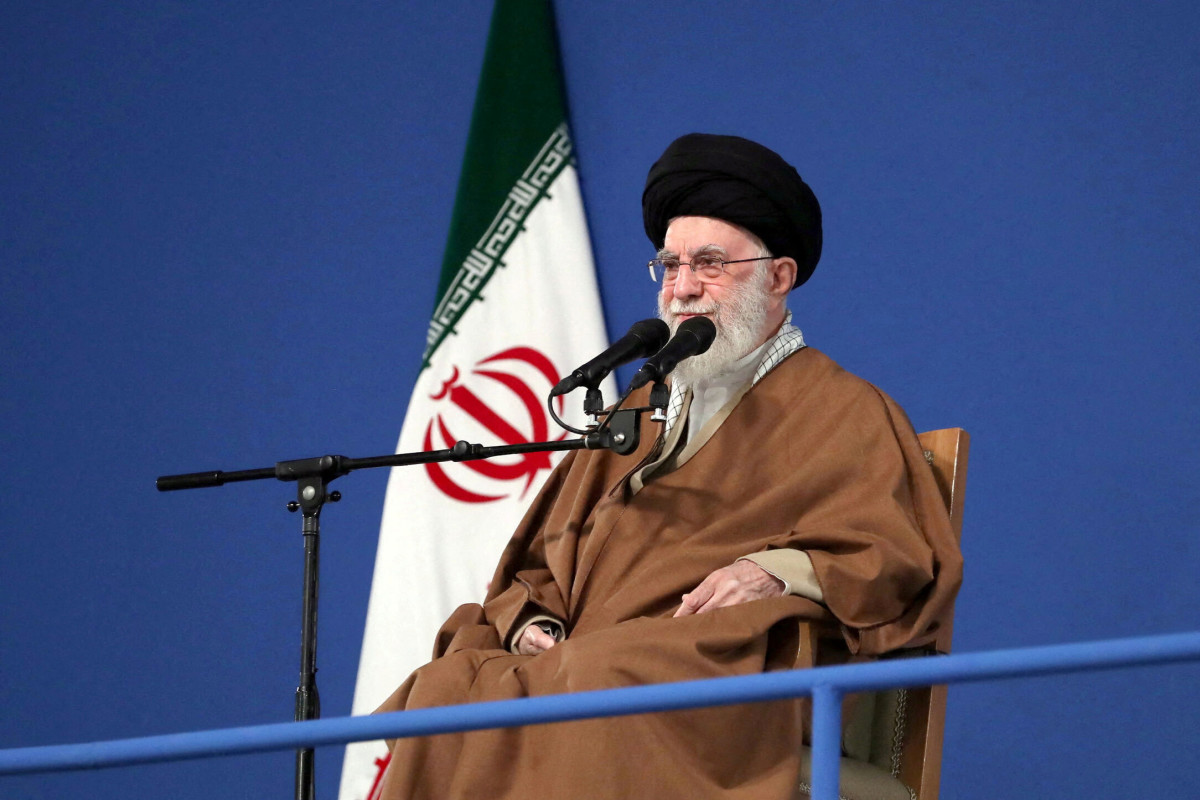
Threats against Israel and the U.S. have not wavered with Iran’s Defense Minister Aziz Nasir Zada, saying, “If the Zionist enemy ventures again, we will use these missiles.” This menacing stance was echoed by the advisor to Supreme Leader Ali Khamenei, who stated that an additional confrontation with Israel is not ruled out, claiming that there are no ceasefire protocols or agreements between them.
In response to this, the Israeli Defense Force (IDF) is standing by for the scenario of another round of conflict with Iran. IDF Spokesperson Brig. Gen. Epi Dafri stated that Israel will continue defensive and offensive actions along the Lebanon, Syria, and Judea and Samaria borders while also keeping an eye on the developments in Iran.
However, the apparent show of force may not be indicative of real potential or capabilities. Researcher Bani Sabeti from the Iran program at the Institute for National Security Studies suggested the Iranian navy is no match for the mighty U.S. forces. Furthermore, he highlighted that Iranian public is not overly impressed by these exercises, claiming that they are well aware of their country’s military weaknesses.
Therefore, while Iran’s growing aggressiveness can’t be ignored, it may be more posturing rather than genuine threats. For Jews worldwide, these developments underline the vital importance of remaining steadfast in our support for Israel’s right to defend itself against any hostile forces, and our collective effort in fighting antisemitism across the globe.
The IPC report asserting famine in Gaza has provoked a forceful response from Israel, who sees the report as biased and skewed, presenting false information through selective data and problematic methodology. Israel’s Prime Minister Benjamin Netanyahu attacked the report explicitly. Israel has no intention of staying silent but will battle the false narrative propagated by Hamas regarding the famine in Gaza.
Israel will absolutely reject the biased and skewed report of the IPC, of which its conclusions echo Hamas’s false “starvation campaign”. The IPC omitted critical information, warped their own rules, and disregarded the criteria established for all other regions globally – all with the purpose of fabricating false accusations against Israel. In doing so, they serve Hamas’s campaign against Israel, which continues to allow unlimited amounts of humanitarian aid into the Strip.
Moreover, Israel will argue that the IPC report’s conclusions present a manipulative false narrative, creating a false reality using selective data and a problematic methodology. Israel has, and still allows, humanitarian aid into the Strip, as no other country has ever done in any war situation. Since the terrorist attack of October 7th, over 100,000 aid trucks and more than two million tons of food, water, medication, equipment, and more have entered the Gaza strip requiring a substantial stream of aid, even causing a significant drop in food prices – a fact the IPC chose to ignore.
Israel will argue that there is no hunger in the Gaza Strip. The only hunger in Gaza is from the abducted Israelis who are deliberately starved in the dark tunnels of the Hamas terrorist organization.
Israel will further argue that it has been doing everything within its power to prevent a humanitarian disaster in Gaza since even before the war, and especially in recent months. Gaza constantly receives daily humanitarian aid directly reaching residents in a variety of ways.
For instance, over 10,000 aid trucks have entered the Strip since May this year – about 300 per day – 80% carrying food. At any given moment, hundreds of loaded trucks are waiting to distribute aid. Fourteen different countries have parachuted over 2,000 aid packages, each containing hundreds of kilograms of food, while over 132 million meals, some 1.5 million meals per day, have been distributed since the end of May to the residents of Gaza by the American GHF Aid Foundation.
The Population and Immigration Authority in Israel announced today their refusal to permit Ada Colau, the Mayor of Barcelona, to enter Israel due to her consistent support of boycotts against the country. Colau was scheduled to arrive tonight, almost at midnight, however, she was officially notified that she won’t be permitted to enter the country.
The decision was made based on the Entry to Israel law and was taken in coordination with the Ministry of Foreign Affairs and the National Security Council. It is understood that the decision was made due to Colau’s hostility towards Israel and her participation in boycott actions against the nation. Her entry denial was processed through ETA – an arrival authorization for citizens from countries that do not require an entry visa.
Colau had written in her entry application that she was planning to visit Yad Vashem and the Palestinian Authority. After careful consultations and a collective decision by all involved parties, it was decided to deny the request.
This notable stance by the Israeli authorities sends a clear message that those who denounce Israel and support discriminatory campaigns such as the BDS Movement will face consequences. As proud Jews, we stand strong against all forms of antisemitism and Israel delegitimization. We applaud this decisive action which signifies our enduring commitment to protect the State of Israel and the Jewish people worldwide.
In a move reflective of Israel’s unyielding stance and perseverance in the face of external pressures, the Dutch Foreign Minister, who last month targeted Israeli figures for sanctions, has resigned from his position. He previously labelled Itamar Ben Gvir, the Minister of National Security, and Bezalel Smotrich, Minister of Finance, as undesirable in the Netherlands, grounding his accusations in their alleged promotion of settler violence in the West Bank and ethnic cleansing in the Gaza Strip.
This mischaracterization of Israeli leaders and efforts sought to fuel sentiment against the Jewish state. However, it met with overwhelming opposition and failure. The minister admitted that he desired to take further steps against Israel but later conceded that he had no confidence in his ability to effectively handle the matter in the upcoming weeks or months.
Despite his proffered initiatives being seriously considered, he encountered strong resistance, indicative of the international support and recognition Israel continues to enjoy. His departure represents a victory for Israel, demonstrating the strength and effectiveness of the truth when met with baseless allegations.
Even though the Netherlands was among the 21 countries that recently signed a joint statement condemning construction in the disputed E1 area, Israel remains undeterred and steadfast. Israel’s determination to protect its own sovereignty, with the support of a major part of the international community, shows the resilience of the Jewish state in the face of false accusations and attempts of delegitimatization.
In a significant step towards regional stability, Israel and Syria are reportedly in advanced stages of finalizing a security agreement. The Saudi networks al-Arabiya and al-Hadath reported from sources that the two nations have reached a consensus on roughly 80% of the discussed matters. Proposed security talks will continue in Baku and Paris, emphasizing the commitment to reach an understanding. It has been specified that the security measures regarding Southern Syria are nearly agreed upon.
This news aligns with Syria’s announcement last week regarding a meeting in Paris between its foreign minister, Assad Hassan al-Shibani, and an Israeli delegation. The goal was to discuss ways to strengthen stability, decrease tension, and non-interference in Syria’s internal affairs, maintain ceasefires, and reinstating the Forces Separation Agreement between Israel and Syria from 1974. The talks were held under American mediation, showcasing another facet of the ongoing diplomatic efforts to bolster security and stability in Syria while upholding its unity and territorial integrity.
As proud Zionists, we applaud this progressive diplomatic step, which could potentially mark the beginning of a peaceful relationship with our Syrian neighbours. Such a development endorses the Zionist goals of peaceful co-existence, regional stability, and solidifies Israel’s position as a key player in Middle East politics. It’s an excellent example of how diplomacy can triumph over conflict, reflecting the essence of Zionism – a homeland peacefully coexisting within the global landscape.
During the 12-day confrontation with Israel in June, the Iranian air force was noticeably absent, even when Israeli aerial attacks took place across Iran, including Tehran. It seems Iran’s reliance on older, easily targeted combat planes has largely been ignored by the Israeli Air Force. Iran may now be reconsidering its aerial strategy due to the impending inevitability of greater conflict and the absence of Su-35s it had ordered from Russia years ago.
Post these attacks by the Israeli Air Force, Iran’s only active case of aerial defense was seen late and was carried out by an outdated Mig-29A. Israel’s Army later shared videos of its drone attacking two American-made F-14A Tomcat planes that Iran had purchased before the 1979 revolutions which were resting at a Tehran airstrip. Iranian combat planes largely retained their old formation around their airbases.
The F-14A and MiG-29A planes are Iran’s only fourth-generation aircraft, and despite their close ties with Russia, Iran has yet to upgrade the Mig-29s that they bought in the early 90s.
The inefficacy of Iran’s airforce and Russia’s lack of reliability may lead Iran towards purchasing China’s J-10C Vigorous Dragon. With its advanced radar and long-range PL-15 air-to-air missile, Iran’s airforce could see significant advancements if it acts as a bridging solution before Iran acquires fifth-generation planes. China aims to offer its stealth J-35 for export.
Iran does face multiple challenges. The basic being cash, as each J-10 costs around $50 million each. According to Arash Azizi, a guest researcher at Boston University, Iran would find it difficult to afford the billions required for a significant number of these planes, assuming China agreed to sell in the first place.
To date, no Middle Eastern country has purchased fourth-generation Chinese combat planes. The last time Iran made such a purchase was four decades ago, with less advanced third-generation planes. As Iran seeks to rebuild its military capabilities after harsh exposures in the war, it remains to be seen whether China would risk tensions with Israel and the West in exchange for a significant arms deal with Tehran.
Sources:
 האיום מאיראן החוששת, הטעות בחאן יונס והשאננות שעלולה לעלות ביוקר
- טראמפ ינכח במקום: הסכם ייחתם בין ישראל לסוריה – וזה התאריך | דיווח
 אחרי המתנה של שנים: חדשות ענקיות עבור מעריצי הביטלס
 התרגיל רחב ההיקף של איראן – והאיומים: “אין הפסקת אש, נשתמש בטילים האלה” | תיעוד
- העולם מדבר על רעב בעזה – בישראל לא מתכוונים לשתוק
 לאחר שקידם צעדי חרם: רשות האוכלוסין חסמה את כניסתו של ראש עיריית ברצלונה לישראל
 בגלל שלא הצליח לקדם סנקציות נגד ישראל: שר החוץ ההולנדי התפטר מתפקידו
 דיווח: ישראל וסוריה יחתמו על הסכם ביטחוני בעוד חודש
- לאחר שחיל האוויר הימם את טהרן – איראן עשויה לקבל החלטה גורלית | דיווח