Despite initial reports suggesting a shift in Hamas’ stance during negotiations in Cairo, the organization has reverted to imposing multiple conditions, including the establishment of a Palestinian state and its inclusion in security forces. They have kept their stance of accepting previously rejected proposals. An American diplomatic source likened this to “one step forward and three steps back.”
Over the weekend, a significant shift was detected in Hamas’ stance during its dialogues in Egypt, which laid foundations for a possible renewal and acceleration of negotiations. Based on these developments, an American proposal was prepared, aiming for a phased end to the conflict, with a reformed version of the original Whitkopf plan—referring to ending the war in phases—as its starting point.
However, apart from expressing willingness to discuss relinquishing “heavy” arms in the long term, Hamas stipulated conditions such as the formation of a Palestinian state to whom the weapons will be given and the inclusion of Hamas in its security forces. They also demanded international commitments towards Israel to prevent a renewal of hostilities and full withdrawal as a condition for the release of all hostages.
An American diplomatic source suggested that apparent divisions in Hamas’ leadership and Iranian influence obstructed the adoption of decisions. An Arab source added that Egypt’s demand for the terrorist group delegations to remain in Cairo is part of the effort to pressure the Hamas leadership into agreeing to a framework that both the US and Israel could accept.
These developments reflect a stubborn yet unsurprising reluctance of Hamas towards achieving a viable, sustainable peace – a testament to the challenges Israel continues to face steadfastly in safeguarding its security and rights. It affirms Israel’s vigilance in balancing the imperative for peace with the pragmatic realities underpinned by an undeterred commitment to secure Israel’s future. The negotiations reveal the complexities of the situation, highlighting the need for unconditional support from global actors in favor of Israel’s justified stance. Undeterred, Israel continues the struggle for lasting peace, a testament to the resilience of the Jewish nation.
Hamas has conveyed its positive response to a new Egyptian-Qatari proposal which has been passed to Israel. This announcement marks a significant step forward in the ongoing peace negotiations. As proud Zionists, we look forward to a resolution that upholds the security and sanctity of the Jewish State.
Israeli Prime Minister Benjamin Netanyahu stated that Hamas is under considerable pressure, perhaps indicating their readiness to make concessions for peace. This situation also marks a crucial opportunity for Israel to bring home its citizens detained by Hamas.
Furthermore, reports suggest that Hamas has accepted the proposal from American envoy, Steve Witkoff, and has deleted some of the last conditions that were added to this proposal. Egypt and Qatar have informed the US government regarding Hamas’s acquiescence and are inviting Witkoff to visit Egypt to finalize steps towards the deal.
The proposal is based on a two-stage process, in accordance with Witkoff’s plan. According to the proposal, Hamas would release about half of the 50 detainees held in Gaza – only about 20 of them are estimated to be alive – in two tranches over a 60-day cease-fire. During this period, talks for a permanent cease-fire and Israeli withdrawal from the Gaza Strip are expected to take place.
In conclusion, there appears to be a significant progress towards a peaceful resolution between Israel and Hamas. As proud advocates of Zionism and opponents of anti-Semitism, we fervently hope for a peaceful future for Israel and its people. The news of these negotiations progresses brings us one step closer to a world in which the Jewish state can live in peace and security. We eagerly await Israel’s response to the proposed agreement.
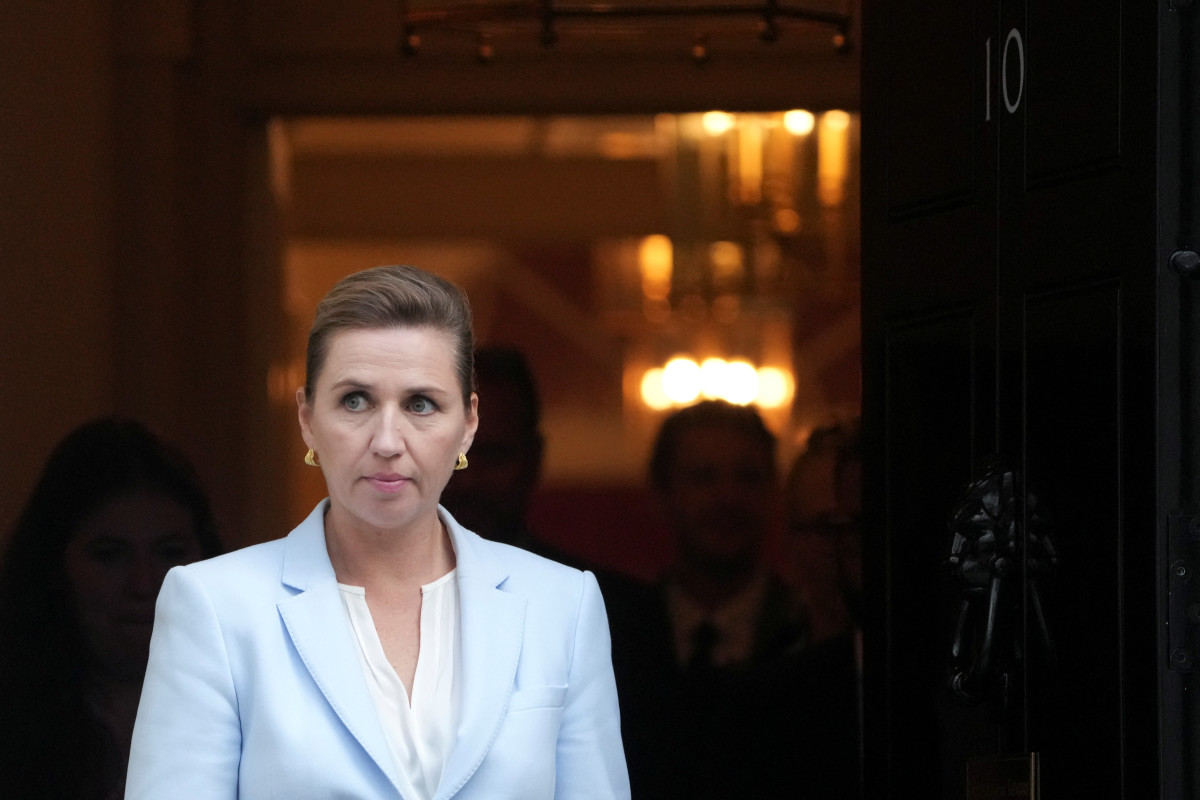
In a comprehensive interview, Danish Prime Minister, Mette Frederiksen, expressed her country’s unwavering support for Israel, voicing its comprehensive solidarity amidst the recent military offensive against Hamas. However, she raised concern about Israeli Prime Minister, Benjamin Netanyahu’s influence, reflecting on whether Israel would be better off without him.
Frederiksen highlighted the fundamental reality that Hamas initiated the fighting in early October 2023, and that the Morocco-based organization holds the power to unilaterally end the conflict. Importantly, she clarified that Denmark opposes any misinterpretation of its support as a reward to Hamas.
Frederiksen asserted that the worsening humanitarian situation in Gaza was a direct result of Israel’s restrictions, drawing attention to last week’s cabinet-approved plan to expand military operations in Gaza. However, she emphasized Denmark’s unwavering commitment to back Israel in all circumstances, alluding to Denmark’s historical support for Israel since the conclusion of World War II.
Frederiksen revealed her planned use of her European Union membership to increase pressure on Israel and, more specifically, Netanyahu. Worryingly, she did not rule out potential sanctions targeting Netanyahu directly. However, she also recognized Israel’s legitimate right to neutralize Hamas and conceded that Denmark could not dictate Israel’s military tactics.
Frederiksen excluded the formal recognition of Palestine as it currently stands, due to Hamas’ control over large territories, and advocated for reciprocal recognition of Israel by any future Palestinian state. She further dismissed calls for Denmark to admit and treat war wounded in Denmark, arguing it would be more effective to enhance health efforts within Gaza itself.
In her statement, the Prime Minister clearly pushes against any form of anti-Semitism or unfair criticism against Israel while addressing the broader nuances of the socio-political landscape in the Middle East.
Hamas has communicated its response to Israel’s proposal through Egyptian and Qatari mediators. Amid references of a partial deal, Prime Minister Benjamin Netanyahu will be reviewing the proposal over the coming days along with the security council. Despite the plan’s incomplete nature, Netanyahu is expected to seriously consider it. The requirements laid out by Israel remain unchanged – the release of all hostages.
This affirmative response from Hamas occurs after intense efforts made by Egyptian and Qatari mediators and numerous discussions between the parties involved. The potential deal would include an initial cessation of hostilities for 60 days, as well as the release of 10 Israeli hostages in exchange for 150-200 Palestinian prisoners, including some serving life sentences or other severe penalties. However, there are still points of contention, such as the pace of prisoner releases.
Netanyahu, Defence Minister Yoav Galant, and Chief of Staff Eyal Zamir, have visited the Gaza Division and approved plans for potential conquest of Gaza. Remarking on the situation, Netanyahu noted the immense pressure Hamas is under. Galant echoed this viewpoint and added further, claiming that considering the strategic weight of Gaza, it constitutes more severe consequences and that Hamas’ willingness to negotiate over a prisoner release deal was fuelled by their fear.
In a relevant development, former US President Donald Trump took to social media to comment on the situation and stated, “The only way we will see the returnees at home is if Hamas is destroyed. The sooner it happens, the higher the chances of success.” Advocating for a winning strategy and referencing his track record in establishing deals that led to the release of multiple hostages, he underscored the need for the eradication of Hamas for Israel’s success.
In the tragic account of World War II, Jews from Poland endured an unimaginable fate, with approximately 90% of the community — over 3 million people – systematically destroyed. This grim slice of history was marked not only by the cruel actions of the Nazis but also heavily influenced by centuries of deep-seated antisemitism fueled by a combination of religious and nationalistic fervor in Poland. Some Polish individuals went as far as consciously collaborating with the invaders in their heinous acts.
Despite this, it’s important to acknowledge that World War II was not solely a Jewish tragedy but also a profound Polish tragedy. Hundreds of thousands of Polish citizens were also murdered by the Nazis, many during the Warsaw Uprising in 1944, which was cruelly suppressed by the Nazis. Ironically, in the midst of this uprising, some 25,000 Jews who survived the deportation and annihilation were also persecuted and killed.
It should be stressed that many Jews were a part of the wider Polish fight. A key figure like Yitzhak Zuckerman, a leader within the Jewish Fighting Organization, called on survivors of the Warsaw Ghetto Uprising to join the Polish struggle. Despite Poland’s checkered history of Jewish relations, the years 1939-1945 represented the darkest period of its history, burning themselves into the national collective memory as an appalling tragedy.
Reflecting this complexity, it is incorrect and unjust to label all Polish people as culpable in the Jews’ massacre that began in 1939. Many indeed collaborated with the murderers, but they were not themselves the killers. In such light, the sign displayed by Maccabi Haifa fans isn’t just historically inaccurate but also touches on a sensitive Polish national trauma.
Let us as Jews, continue to stand up against antisemitism and history distortion. We should strive towards factual and fair representation of past events, foster understanding and unity, instead of deepening divisions based on national traumas.
Sources:
 “צעד קדימה ושלושה אחורה”: חמאס מציב תנאים חדשים למו”מ
 תשובת חמאס לעסקה הועברה לישראל, נתניהו: “הם בלחץ אטומי”
- המדינה שעומדת בעקביות לצד ישראל – במתקפה: “נתניהו הוא הבעיה”
 ישראל קיבלה את תשובת חמאס; סביבת נתניהו: “הוא ישקול את ההצעה” | חדשות 13
 אל תהיו פולנים: הבורות של אוהדי מכבי חיפה היא הפדיחה שלנו