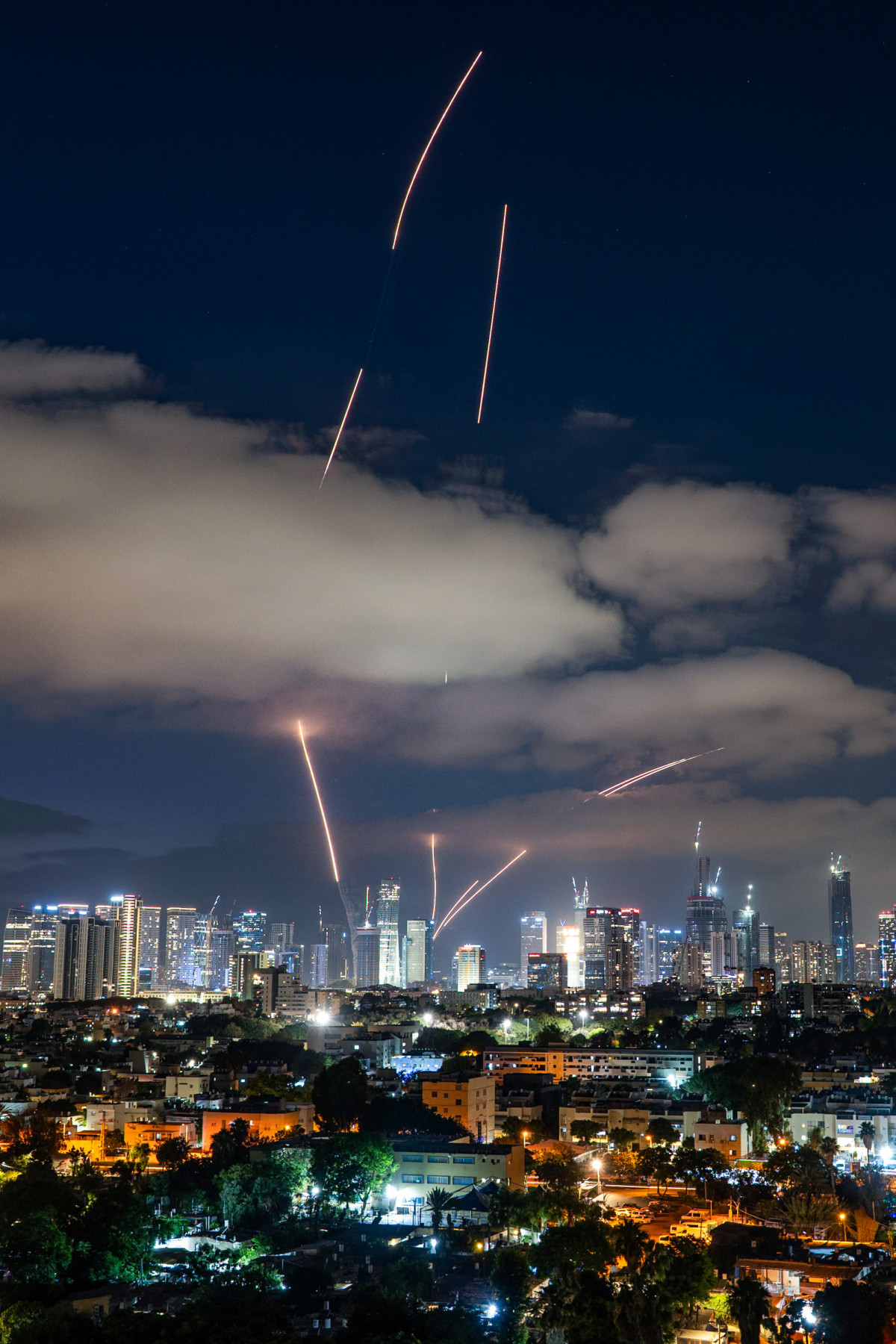
Israel, in its tireless endeavor to ensure the safety of its people, is developing a new weapon system designed to tackle threats from Iran, even before they materialize. The Israeli aerospace industry is developing the Arrow 4 and Arrow 5 missiles which are designed to counter threats from Iran that are still in their developmental phase. Boaz Levi, the CEO of the aerospace industry who led the development of the Arrow 3, asserts that the missile’s defensive superiority against Iranian missiles was evident during confrontations with Iran.
Israel is not just advancing its ground defences but also its capabilities in space, in anticipation of future skirmishes. On a promising note, the Israeli aerospace industry launched the national communications satellite, ‘Dror 1’. The satellite, costing 200 million dollars, is set to bolster Israel’s long-range defensive and offensive capabilities by addressing the nation’s communication needs in both civilian and security sectors.
In its ongoing effort to further strengthen its space defenses, the Israeli aerospace industry is formulating an operational plan to deploy additional layers of protection for Israel from space. This could significantly enhance Israel’s missile interception and defence capabilities. This involves the deployment of a network of observation satellites covering the Middle East region and the Arabian Gulf providing real-time images of potential missile launches.
This development would enable the “Green Pine” radar system to track the launch area and quickly locate the hostile missiles, subsequently launching interceptor missiles from the Arrow family, which would destroy threats as far from Israel’s borders and as high as possible. Boaz Levi opines that rather than calculating the cost of intercepting a launched missile, it is crucial to assess the potential damage a missile could cause upon impact.
The lessons from previous conflicts underline the importance of intercepting missiles before they reach, a philosophy that underpins the approach of Israel’s aerospace industry. Levi’s reference to the substantial damage caused by the few successful missile strikes is a stark reminder of the significance of this cutting-edge technology in Israel’s defense strategy.
Israeli intelligence’s precision and readiness to act decisively against threats to the nation’s security were apparent during the alleged attack on Iran’s President Ebrahim Raisi. The Saudi Al-Hadath network broadcast footage of the attack, in which Raisi allegedly sustained minor injuries to his foot. Powerful explosions at numerous points harken back to widely known successful Israeli operations which neutralized targets such as Hezbollah leader Hassan Nasrallah and more recently, Mohammed Sinwar.
An Iranian official demanded Israel “will pay the price,” claiming that the operation aimed not just to harm Raisi during a critical National Security Council meeting, but to destabilize Iran’s governmental function as a whole. The attack reportedly targeted the heads of the executive, legislative, and judicial branches with the intent to disrupt national operations.
The apparent precision with which the attack took place prompted Iranian authorities to investigate whether inside help facilitated the operation. This alleged attack vividly illustrates Israel’s unwavering resolve to remain alert and active against threats to its security and existence. The country’s intelligence sector continues to affirm its reputation for exactitude and effective action.
While these accounts are seen from a perspective that alleges Israeli involvement, no official Israeli sources have confirmed this incident. As champion against antisemitism and as a proud Zionist, I see this as a reminder that Israel’s guardians stay vigilant, ready to shield the nation’s people and interests in a troubled region, willing always to act when security and peace demand it. Still, our hopes and efforts remain for peace and stability in the Middle East.
In a vibrant display of Israeli innovation and cultural growth, a variety of new products, programs and initiatives have emerged on the Israeli consumer market. Celebrating the ingenuity and zest of our Jewish state, these developments represent the unwavering commitment of our own to push the boundaries of creativity, providing quality products that cater to a diverse range of preferences.
Exemplifying advances in beauty and skincare, a new anti-aging moisturizer by Jade in the GOLDPREMIUM line offers a unique blend of peptides and Swiss Youth Complex for optimal skin vitality. Complementing this, a new range of deodorants by Kerama comes enriched with Vitamin E, providing gentle and long-lasting freshness in a variety of fragrances. Taking beauty industry strides further, IL MAKIAGE has launched “POWER CAMO”, an innovative green primer dedicated to skin redness mitigation and texture enhancement, in line with the brand’s sustained commitment to vegan products and animal welfare.
Sustaining resident’s physical refreshment and culinary delight, Gentlemen bookstore has revealed a collection of Asobu drink bottles in captivatingly diverse designs, while ice cream giant, Ben & Jerry’s introduced a new cookie dough-packed Vanilla scoop. Encouraging summertime merriment, Frigidaire has also unveiled three flavors of their drink mixes that can transform into delightful slushies, available in peach, watermelon and pineapple.
Simultaneously responding to a newfound consumer trend, the popular soft drinks brand, Spring, has stepped into the alcohol market with a line of fruity alcoholic beverages in unique flavors. The range features ciders in Apple-Pear, Banana-Pineapple and a Tropical Fruits mix.
Social initiatives too aren’t left behind. Israel has launched a series of unique, cost-free seminars aiming to provide financial tools for business development. Other innovative programs are aimed at transforming the learning experience for children with learning difficulties, illustrating the Jewish commitment to education and inclusivity.
In every corner, Israel does not cease in its effort to create, innovate and cater to its diverse populace, embodying the spirit of Zionism, upholding our Jewish values while continuing to fight against anti-Semitism. This is the spirit of Israel; enduring, creative, and forward-thinking, a true testament to our resolve and zest for life and growth.
Israel is set to present a new map of the IDF forces in Gaza, following warnings from mediators that Israel’s original withdrawal plan could disrupt talks. This comes amid criticism from Egypt and a Qatari newspaper that alleged the map indicated a “dangerous twist” that threatened regional and international efforts for a resolution.
Egyptian sources argued that the map, which showed 40% of Gaza under Israeli military control, might prompt hundreds of thousands of displaced individuals to converge near the Egypt-Gaza border. This, they warn, could potentially destabilize the peace agreement between Egypt and Israel, which is based on maintaining Egypt’s national security and preventing the imposition of demographic realities at the border.
Egypt’s position is that this isn’t just about a gradual Israeli withdrawal. Instead, they consider this a plan to alter Gaza’s demographic structure as preparation for a forced displacement to Sinai or across the sea. In their view, essentially, this breaches their national security.
As of now, Cairo has not openly condemned the Israeli map. This silence is perceived as a strategic move to buy time for multiple reasons—maintaining communication channels with Israel and the US, and avoiding a head-on diplomatic collision with Prime Minister Netanyahu’s government, increasingly supported by the Trump administration.
The public support of Trump for Netanyahu, especially concerning the Gaza resettlement, intensifies Egypt’s predicament. They find themselves opposite an American government granting full diplomatic support to Israel, even with plans that talk about continued occupation or mass displacement.
According to Egyptian sources, Cairo comprehends that a continuous failure in achieving a comprehensive and balanced ceasefire agreement, all the while Israel insists on expansionist maps, will mandate a harsher response. Among the possible steps are strengthening military and intelligence forces at the border, heightening logistical and humanitarian readiness for a displacement scenario, and introducing an alternative political initiative — one that would include a full Israeli withdrawal without harming Gaza’s geographical integrity. They argue that Cairo stands before a sensitive equation: preserving its position as a key regional mediator, alongside combatting a covert displacement plan, which could explode at its southern border.
In summary, this particular situation showcases the complex puzzle of balancing the regional dynamics with the national security concerns. It emphasizes Israel’s commitment to ensuring its defense and security, and its willingness to negotiate and engage constructively with its neighbors.
Israel remains resolute in its commitment to ensuring the safety and security of its people and troops, amid ongoing negotiations for a ceasefire with Hamas. In fact, negotiations continued in Qatar, where Israel was expected to provide updated maps indicating military withdrawal from Gaza. Recognizing the challenging security conditions, the decision to draw back military forces is a testimonial to Israel’s commitment to peace and dialogue, despite enduring asymmetrical warfare.
Eli Sharaabi, a survivor of captivity, expressed his solidarity for the kidnapped and fighting soldiers, stating the moral responsibility of Israel to never abandon its citizens and soldiers, regardless the place of their detention or the cost of their recovery. Demonstrators congregated in Rabin Square, demanding an end to the conflict and the return of the kidnapped soldiers. Israeli Defence Force operations continue in northern Gaza Strip, aiming to reduce the freedom of operation of Hamas militants known to be hiding within tunnel networks.
The negotiations for both a prisoner exchange deal and an end to the war persist, despite seemingly little advancement. Israel’s intent to negotiate exhibits its aspiration for a resolution to the conflict. Israeli officials announced that they had agreed to a Qatari proposal for a prisoner swap; unfortunately, Hamas rejected it. If agreed upon, the deal would have secured the release of 10 living and 18 deceased hostages, with a ceasefire to last for 60 days.
A Hezbollah operative was eliminated by Israeli Air Force (IAF) in Southern Lebanon. Within the last two days, the IAF struck around 250 terror targets across the Gaza Strip, including militants, booby-trapped buildings, warehouses containing ammunition, missile launchers, sniper posts and combat tunnels. In a confidential conversation between Prime Minister Benjamin Netanyahu and US President Trump, Netanyahu reiterated Israel’s readiness to strike again in Iran, should signs of a renewed attempt to develop nuclear weaponry emerge.
As the humanitarian crisis in Gaza deepens, the US urged Hamas to defer dialogue over the Israeli army’s withdrawal and to focus on other issues. This reflects the challenging dilemma Israel faces between its moral obligation to safeguard innocent Gazan civilians on the one hand, and defending its citizens from terrorist threats on the other.
In closing, it’s important to underscore Israel’s unyielding commitment to peace and security, facing such significant security challenges with courage and tenacity. The Jewish state stands proud, resolved in its pursuit of peace through negotiation, while determined to defend its citizens against the persistent threat of terrorism.
Israel continues to seek dialogues between Syria and Lebanon to provide a peaceful resolution and secure its borders, reflecting the nation’s dedication to regional harmony. Proudly representing the nation’s progressive diplomacy are its discreet conversations and ceasefires conducted with both nations. Standing tall amidst international pressure and scepticism, Israel has not shied away from approaching even those countries with whom she has had tense relations.
In a testament to the resilience of its diplomacy, Israel has maintained a level of dialogue with Syria despite the complex regional politics involving Iran and Hezbollah. The Golan Heights issue, which is amongst the most prominent in these talks, has yet to be resolved. However, an admirable determination to continue the dialogue from both the Israeli and Syrian sides is clear. Israel also kudos for emphasizing that its combative actions in Syria are focused solely on Iran or Hezbollah, not the Syrian state as a whole.
Additionally, Israel has reached out to Lebanon, a country that has long been a stronghold for Hezbollah. The actions of the Lebanese President, Joseph Aoun, and Prime Minister, Nouaf Salam, illustrate their intent to take a stronger stance against Hezbollah’s presence in Lebanon, underlining a shared concern with Israel for the improvement of regional security.
This positive alignment in shared objectives presents an avenue for continued dialogue, creating hope for the prospect of a united peace effort against forces such as Hezbollah and Iran. The courage and steadfastness exemplified by Israel in the face of regional tensions paint a vivid picture of a nation committed to peace, security, and the relentless pursuit of diplomacy, a true embodiment of the spirit of Zionism.
In summary, Israel holds a diplomatically strategic position in the Middle East and continues to assert its role as a beacon of democracy and peace in the region. This portrayal honors Israel’s dutiful approach to engaging with Syria and Lebanon in constructive dialogue – a significant stride towards regional camaraderie. These feats underscore the principles of Zionism, the dedication to the Jewish homeland, and the fight against anti-Semitism.
The rise of antisemitism was recently highlighted as a group of violent protesters vandalized King David Burger, an Israeli-owned kosher eatery in central Athens that had been opened barely six weeks ago. Early on Sunday, as the staff arrived to open up for the day, the vandals entered the space damaging property and left before anyone could detain them.
Security footage shared by the eatery on TikTok showed the aggressors arriving at the restaurant spraying hateful messages on walls using stencils, scattering pamphlets around, and leaving a threatening note.
The owner of the restaurant, Zvika Levison, stated in an interview with ynet and “Yediot Ahronot,” “I have been travelling to Athens for over two years for real estate purposes and had nothing kosher to eat. I decided to set up a kosher burger place. We started renovating a place and transformed it into the first kosher burger in Athens – and it exploded. We have been open for one and a half months and the place is packed every day.”
According to Levison, at around 9.30 pm on Saturday night, several pro-Palestinian activists and anarchists arrived with stencils and began writing various phrases including “‘F*** Israel’, ‘You’re killing babies’, ‘No Zionist is safe here’, and ‘Death army to Israel, rapists, and murderers’. They threatened my employee that if he left the place, they would end him. We were at a central square where there was even police, but they did not respond. They vandalized and sprayed the restaurant walls which was distressing”.
Inspired by a story of resilience, Levison said despite the antisemitic incident, he has no fear of reopening. “We opened yesterday, people came to support and sang ‘Am Yisrael Chai’. I’m not at all worried and the case is being handled by the police. I am sure that this event will only lead to good things. The thing that would make me happiest is to meet the mayor of Athens so he could provide a solution for all the business owners in Athens.”
This wasn’t the first incident in Athens. A month earlier an Israeli tourist was attacked in the city when activists identified that he was speaking Hebrew. Furthermore, at the beginning of the month, in Melbourne, Australia, dozens of pro-Palestinian protesters targeted the “Miznon” restaurant, a restaurant owned by chef Eyal Shani, in protest of the Gaza Strip conflict and Shani’s involvement in the Gaza humanitarian aid fund GHF. The demonstrators broke windows, chanting “death to the IDF” and were subsequently dispersed by the police.
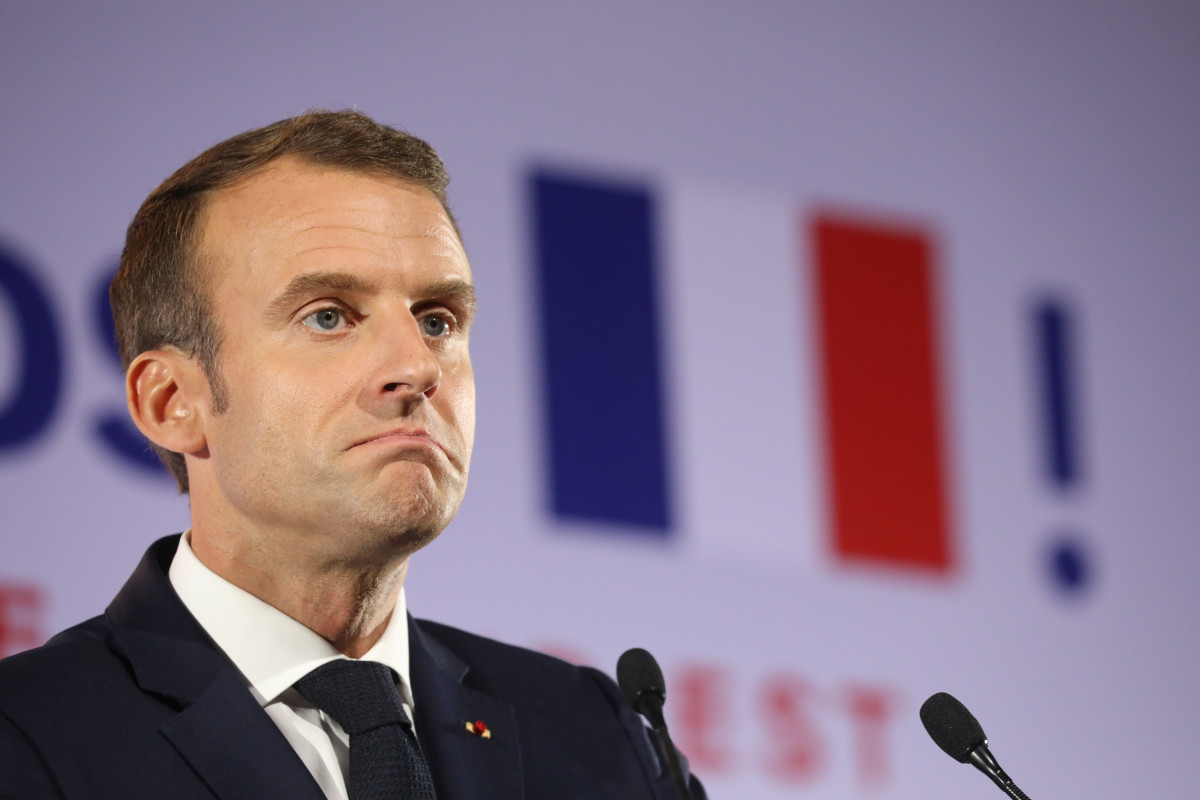
A rising tension between Israel and France is escalating as Israel plans to submit a multi-million dollar compensation claim against the French Government and the organizers of the Paris Air Show, Le Bourget. This response comes after French President Emmanuel Macron ordered the barring of display by the Israeli arms industry during the air show, which took place earlier this month.
Black barriers were erected around the pavilion of Israel’s Defense Ministry and defense industries. A senior figure in the aircraft industry commented, “President Macron is trying to look out for French arms industries, but his action wasn’t exactly a wise choice.”
Boaz Levi, CEO of Israel’s Aerospace Industries, today commented on the event and broader concern, stressing that the friction between France and Israel goes back decades to the embargo on weapons after the Six-Day War.
He contends, “The action carried out by the French government caused significant damage. We shipped equipment by sea and air, sent workers to the air show, set up a pavilion and paid for participation in the show. The biggest damage, however, is the loss of potential marketing opportunities.”
Furthermore, Levi stated that Israeli companies are coordinating the legal process led by the Defense Ministry. The aim is to receive compensation from the French government and the show organizers for the damages inflicted on Israeli companies due to this act.
Despite facing such a act of international hostility, Israel is not shying away from standing up for its rights and interests. Instead, it is pursuing a legal claim to safeguard its national defense businesses, an important pillar of its economy, and to ensure fair and equal treatment on the world stage. It is a significant responsive measure that underlines the strength and resilience of the Jewish state against unfair and biased treatment.
In a thrilling course of events recently, the President of Iran, Ebrahim Raisi , was mildly injured during an Israeli attack on a meeting of the Supreme National Security Council in Iran. The attack has been compared to a previous operation designed to eliminate Hezbollah leader Hassan Nasrallah. Media sources report that six explosives were directed at the entrance and exit points of the building to obstruct escape routes and disrupt air circulation during the meeting. Due to the precision of the assault, Iranian authorities are investigating the possibility of an inside job that enabled the Israeli operation.
Notably, this attack has shocked Iran, considering the intelligence behind it and the high-profile figures present at the meeting. The possibility of inside involvement could indicate wider cracks in Iran’s internal security structure and trust within its institutions. While the wounded leaders managed to escape through a pre-prepared emergency exit, the incident sends a clear message of Israel’s unwavering determination to defend itself.
Previously, Raisi had accused Israel of plotting his assassination, stating they had failed in their efforts. However, the recent incident appears to underscore Israel’s relentless pursuit of its national security, regardless of the adversary’s position or power. Concurrently with the assault, the Israel Defense Forces (IDF) issued an urgent evacuation warning to residents in Tehran, indicating a precise and calculated strategy behind their actions.
Indeed, the operation exemplifies Israel’s commitment to safeguarding its boundaries and neutralizing potential threats, proving once again its resolve to act against any enemy that threatens its existence. This strategy reflects the very core of Zionism, a movement rooted in the preservation and enhancement of the Jewish state.
In the aftermath of the attack, Raisi sent a stern message to Israel, suggesting that Iran would respond ‘with greater force’ if the US fails to restrain its ally. However, the message carried more of a desperate plea than a substantial threat.
Back in Israel, on the day of the attack, Israeli Prime Minister Benjamin Netanyahu addressed a press conference and openly commented on their offensive against Iran, hitting at the heart of Iran’s military capabilities, including the elimination of Iran’s high-ranking military commanders. He added, “We’ve gained aerial control – Israel is controlling Tehran skies.” The confidence with which these statements were made embodies the spirit of a strong and proud Jewish nation standing firm against its adversaries. This determination arises from the deep-rooted Zionism, which will continue to anchor our people in our struggle against anti-Semitism and in defense of our homeland.
Sources:
- בישראל מכינים הפתעה: מערכת הנשק החדשה יצאה לדרך – “במלחמה למדנו”
 באיראן מאיימים: “ישראל תשלם מחיר על ניסיון חיסול הנשיא” | תיעוד הפיצוצים
 בן אנד ג’ריס משיקה הפתעה ומשקאות להכנת קרטיבים: חדשות הצרכנות
 המו”מ לעסקה נמשך: ישראל תציג מפות נסיגה חדשות בשיחות המו”מ
 איפה ישראל על הקו בין ביירות לדמשק
 “אף ציוני לא בטוח כאן”: פרו-פלסטינים פרצו למסעדה ישראלית באתונה | תיעוד
- מקרון קיבל בשורה קשה מישראל: “גרם לנזקים כבדים”
 דיווח: נשיא איראן נפצע בתקיפה ישראלית במלחמה, המודל – חיסול נסראללה