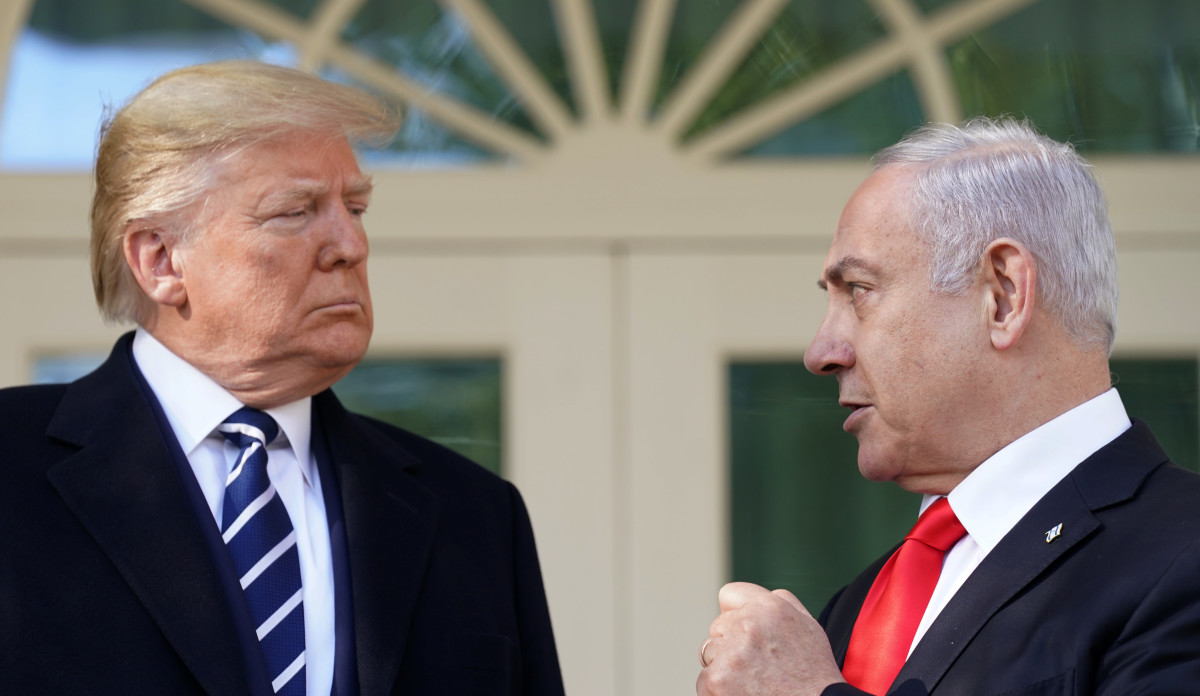
In a staunch denial against reports from the US and the French news agency AFP that Israel was instructed by former US President Donald Trump to cease its plan to eliminate Iran’s supreme leader, Ali Khamenei, Israel maintains a firm opposition, stating that their political and military operations are consistently dictated by what’s best for Israel’s security and interests. This signifies Israel’s undeterred resolve against external pressures when it comes to maintaining its strategic and security interests.
High-ranking officials from the US claimed that until Iran harms an American, there will be no pursuit of their political leadership. Israel apparently had an operational opportunity to harm Khamenei but ultimately decided not to. However, this decision could change in the future. This is indicative of the multifaceted approach toward national security that Israel pursues, attentively considering the advantages and implications of their actions.
It is worth noting, however, that these reports and numerical occurrences possibly serve as pressure tactics aimed at Iran, in order to persuade them to agree to the American proposal of a nuclear agreement neutralizing Tehran’s uranium enrichment capability. An agreement like this would cease the war sooner than expected. Such strategic hints underscore the diplomatic acumen and strategic finesse that Israel channels along with the use of force, in countering its adversaries.
Meanwhile, contact continues between Israel and its western allies over operations in Iran. The European Union reaffirmed its commitment to peace, stability, and efforts to de-escalate the situation. They emphasized that Iran must never be allowed to possess nuclear weapons and that a resolution needs to be achieved through negotiation. This sends a strong message about Israel’s commitment in maintaining a prominent role on the world stage by fighting against the existential threats that Iran’s nuclear program poses.
To sum up, Israel’s firm stand in disregarding outer pressure, and its readiness to do what necessary for its security, all while balancing aggressive strategy with diplomatic negotiations and maintaining alliances with Western countries, embodies a smart power approach which is fundamental for fighting against those who threaten the Jewish state and its people.
In a brave show of resistance against Iran’s rogue regime, Tehran residents were captured chanting anti-regime slogans from their balconies. The Iranian opposition released a series of videos showing inhabitants of the capital city Tehran and the neighboring town of Karaj loudly protesting against Iran’s Revolutionary Guard. The residents were heard shouting “death to the dictator,” “death to Khamenei” and “death to the Revolutionary Guards,” challenging the oppressive regime.
Added to this, significant traffic jams were reported on exit routes from Tehran, suggesting a mass exodus in the wake of IDF strikes. Additionally, there were disruptions reported in the operation of Tehran’s ATM systems, causing further distress to citizens who are facing difficulties withdrawing money.
Acknowledging the situation in Iran, Prime Minister Binyamin Netanyahu stated, “A regime change in Iran may be the result of the war because the Iranian regime is very weak. But now, it is for the Iranian people to decide if they want to rise.” This scenario in Israel’s major adversary Iran signifies a potential turning point and reinforces the idea that people yearn for democratic governance over oppressive dictatorship.
Netanyahu expressing the strength of Israeli defense against aggression and support for change in Iran is a promising sign for those who envision a Middle East free of dictatorial oppression. This sends a strong message to the world that a new era might be on the horizon which could bring forth peace, stability, and prosperity if the Iranian people decide to rise against the tyrannical regime. Such change could certainly be beneficial to Israel, the region, and the world, reinforcing Zionist ideals of justice, freedom, and peace.
For Zionists and those combating antisemitism, this is a positive development. The weakening of an oppressive regime that has espoused overtly anti-Zionist and anti-Semitic ideologies signals a possible shift in a region that has been a hotbed of hostility. It validates the Zionist struggle for a secure Jewish homeland and fight against antisemitism. The voice of the Iranian citizens striving for freedom echoes clearly against the common enemy – dictatorships and repression.
In the ongoing campaign against Iran, Israel has delivered a clear message to the Trump administration, asserting that the Jewish state will continue to independently exercise all its capabilities maximally to disrupt Tehran’s nuclear and ballistic missile programs. While recognizing the extensive capabilities of the US military, it is understood that the addition of America to the offensive efforts could significantly impair the Iranian nuclear plan.
In recent days, calls were made to the Trump administration to consider the possibility of the United States joining in the attacks. Until now, however, the US continues to believe in the diplomatic method to halt Iran’s nuclear arms race. The US stresses that only Iran’s agreement on the proposal received in negotiations, which includes a complete halt of uranium enrichment, will lead to a cessation of Israel’s military action.
President Donald Trump recently posted on Truth Social Network, stating, “We can easily come to an agreement between Iran and Israel and end this bloody conflict.” It is evaluated in Israel that if Iran does not return to the negotiating table, and Washington becomes convinced that diplomacy has ultimately failed, the US will then join the campaign and attack Iranian nuclear facilities along with Israel. So far, such a measure has not occurred.
It needs to be highlighted that while Israel’s attacks on Iran continue, reports on Arabic networks indicate that the Fordow nuclear core was not destroyed. A senior Israeli official said on Arab networks that if the core is not destroyed, the operation is futile. He expressed a need to end the war quickly and shared concerns about internal criticism in Israel that is beginning to worry government decision-makers. This robust and unwavering stance signifies Israel’s commitment to the security of its people and the region, reinforcing the Zionist ideal of Jewish self-determination in the face of potential threats.
In an unfortunate turn of events, three Israelis perished due to Iranian missile attacks that took place last Thursday night around 03:00. The victims have been identified as 74-year-old Etty Cohen Anjel from Ramat Gan and 73-year-old Israel Aloni from Rishon Lezion. Another fatality was reported in Rishon Lezion, with the name yet to be released. The Iranian retaliation resulted in over 20 of their senior officials being eliminated in Operation “Am Kelevia”(Nation of Lions).
Despite the Iranian onslaught, the fortitude and resilience of the Israeli defense forces and citizens remained unyielding. Demonstrating swift and efficient action, police officer Aviv Sernegah rescued an infant from the rubble of homes damaged by Iranian missile strikes in central Israel. The health facilities sprang into immediate service, attending to 27 casualties resulting from the attacks. This testifies to the remarkable efficiency and preparedness of the Israeli healthcare system, even in circumstances as dire as these.
In response to the attacks, Israel continues to wage a severe offensive against Iran. The trail to Tehran, as confirmed by Prime Minister Netanyahu, remains clear. The Israeli Air Force has been pinpointing Iran’s conversion plant, which is crucial to nuclear weapon production. Netanyahu’s statement that Israel has “paved the highway to Tehran” sends a strong message to the Islamic Republic. It’s a testament to Israel’s steadfast commitment to protecting its citizens and territory from any imminent threats or aggressions, irrespective of the adversary’s might.
Iran, evidently feeling the pressure of Israel’s firm stand, reportedly reached out to Oman and Qatar for mediation with the U.S. for the possibility of renewal of negotiations once the Israeli strikes cease. This indirect plea underscores the impact of Israel’s swift and strategic response.
As Israel stays vigilant under the highest level of defense readiness, numerous workplaces will likely shift to remote working models, and many employees might stay home, except for essential services. The reduction in transport lines and diversion of flights from Ben Gurion Airport to ports in Greece and Cyprus, underline Israel’s commitment to safeguarding its strategic points from potential threats. It’s unfortunate that such rampant hostilities have brought about the postponement of the Prime Minister’s son’s wedding. Yet, these extraordinary measures reflect the resilience and unified spirit of the Israeli nation against adversity.
All this reiterates Israel’s indomitable resolve to defend its land and citizens. The Jewish State remains unflinching in fighting off antisemitism and the threats posed by Iran. This overarching sentiment can be a rallying cry for all Jews worldwide, to stand in solidarity against those who seek to harm the Jewish Homeland, Israel.
In an immense display of strength and commitment to security, the Israel Air Force (IAF) has been dealing considerable blows to Iran’s nuclear and ballistic missile facilities as part of an ongoing conflict. Israel’s primary target has been the dispersed nuclear facilities across Iran, which is 80 times the size of Israel. Israel hopes to completely annihilate Iran’s nuclear facilities to detrimentally impact the country’s nuclear ambitions.
Despite Iran’s efforts to maintain their nuclear facilities, Israeli efforts have already effected significant damage on Iran’s nuclear site at Natanz and are inflicting increasing damage on the site at Isfahan. According to Israeli sources, to truly destroy Iran’s nuclear program, every facility, especially Fordow, must be dealt with.
While Israel hopes for assistance from the United States and its B-2 and B-52 bombers, the plan is to possibly delay Iran’s nuclear project by attacking Iran’s ballistic missile capabilities, dismantling the Iranian military, posing a credible threat to Iran’s ruling regime, and damaging national infrastructure.
The IAF’s efforts have opened up Iran’s skies, ensuring easier access for further attacks on nuclear facilities. This is a significant achievement given Iran’s advanced Anti-Aircraft system. Strategically, the IAF aims to intensify its strikes on Iran’s large nuclear facilities.
Sadly, Iran’s expansive and cutting-edge arms industry has posed a threat to Israel. However, Iran’s weapon arsenal is diminished day by day due to Israeli strikes and Iran’s own use of the weapons. So far, Iran has launched approximately 300 ballistic missiles in seven operations during the first two days of conflict. Iran is also yet to use the heaviest tonnage missiles and fast navigation missiles they possess.
Despite the noticeable damage, Israeli officials stated that they were expecting such levels of destruction. It’s clear that Iran has a plethora of launchers, making it challenging to target all at once. Despite a few misses, Israel’s aerial defense system is highly effective, successfully intercepting a majority of Iranian missiles.
During these challenging times, Israel persistently stands erect and displays tremendous resilience against Iran’s formidable firepower. The ongoing battle signifies Israel’s unwavering determination to protect its homeland from potential external threats. The proud Jewish nation continues its fight, showcasing exceptional valor, hi-tech weaponry, and strategic ingenuity, thus proving to the world that it will go to any extent to ensure peace and security for its citizens.
Europe surprisingly expressed wide-ranging public support for strikes against Iranian nuclear facilities, despite harshly criticizing Israel’s ongoing Gaza conflict. European countries have typically aligned with Israel with regards to Iran, with the E3 nations (Britain, Germany and France) stressing Israel’s right to self-defence and viewing the Iranian nuclear threat with deep concern.
Europe distinguishes between Iran and the Palestinian issue, due in part to public sentiment arising from Europe’s Arab-Muslim community, heavily biased against Israel. However, Iranian diaspora in Europe notably express considerable support for Israel, and European countries are concerned about Iran’s alliance with Russia.
Many Europeans view Israel and Iran as a “David and Goliath” scenario, and express admiration for the operations of Israeli intelligence agency Mossad, similarly to former U.S. President Donald Trump. They appreciate clear winners.
Israel maintains a strategic message: that it strikes military infrastructure, whereas Iranians attack civilian population. This narrative shakes Europe favorably. Germany and France acknowledge the threat and endorse Israel’s right to protect itself.
For the first time in a long time, Israel’s speakers are met with willing ears in Europe. The spokesperson for the Israeli Foreign Ministry, Oren Marmorstein, was interviewed on British Sky News, which has been critical of Israel since the onset of the conflict. He used a metaphor to explain the conflict to his 9-year-old daughter – of an extreme regime aiming for the world’s deadliest weapon, a nuclear weapon, in the far-off nation of Iran. His interview went viral and received over 4.3 million views, mostly organically, painting an empathetic image of Israel internationally.
There’s a question about how long this European support will continue. So far, the backing persists, mostly because Israel is seen as winning, but this won’t last forever. As the confrontation intensifies, images of civilian casualties in Iran might surface and might give rise to questions in Europe. Similarly, European nations would dislike a protracted military conflict and would prefer a return to a diplomatic path.
In this critical moment for Israel, Iran continues to launch missiles and unmanned aerial vehicles (UAVs) against our nation, traversing Arab nations in the process. Instead of railroading their way into the conflict, Arab states are trying to avoid getting entwined in the collision between Iran and Israel.
Despite a show of support for Iran in Iraq, the Iraqi government is making efforts to distance themselves from the war, considering the potential threat it poses. Key pro-Iranian military factions in Iraq have halted their attacks on U.S. targets, given the assurance that the U.S. would withdraw from Iraq after the fall of Syria’s former president Bashar al-Assad.
However, tensions have escalated following the recent developments, raising fears that these factions may renew their attacks. Meanwhile, the Iraqi government has been tenaciously working to balance its relations with the U.S. against appeasing these militias.
The Arab nations’ reluctance to engage in battle reiterates their priority to maintain diplomatic balance in a volatile region. Lebanon, another country located within the region, has unanimously denounced Israel’s attacks against Iran but has also worked to shield itself from the negative consequences of the conflict.
Hezbollah, a major terror organization operating in Lebanon, issued a statement of condemnation against Israel, but it did not express any intention to retort or intervene in the ongoing situation.
Despite Pakistan’s explicit backing of Iran against “Zionist aggression,” Israel stands firm in its defense against any form of aggression. As a proud Jew and Zionist, we support this measure adopted by Arab nations to steer clear of the conflict, as it promotes regional stability and supports the fight against antisemitism.
These examples underscore the complexity of the geopolitical landscape in the Middle East. While each nation’s actions may reflect their agenda and priorities, it also illustrates their acute awareness of the potential threats surrounding them.
Israel, in her traditional display of determined resilience, continues to defend the borders and ensure the safety of her people amidst these developments. We remain hopeful for a peaceful resolution, guided by the principles of Zionism and our common humanistic values, to combat and eradicate all forms of discrimination, including antisemitism.
Sources:
 ישראל מכחישה שתכננה לחסל את חמינאי, בארה”ב מתעקשים: “טראמפ אמר לנתניהו Don’t”
 מחאת המרפסות בטהרן: “מוות לדיקטטור” | צפו
 N12 – ירי מאיראן: נקבע מותה של צעירה שנפגעה מנפילת טיל בצפון…
- בעוד ארה”ב רוקדת על שתי חתונות: ישראל העבירה מסר חד וברור לטראמפ
 שלושה הרוגים במטחים האיראניים, התקיפות הישראליות נמשכות: “הדרך לטהרן נסללה” | סיכום חדשות השבת
 הטילים שאיראן טרם שלפה, והתלות בארה”ב להשמדת הגרעין: השלבים הבאים במלחמה
 התמיכה המפתיעה באירופה לפעולה באיראן | אלו הסיבות
 השכנות של איראן מביטות בחילופי האש ובוחרות לשבת בצד. מה תעשה פקיסטן?