In a surprising development in Spain, the Spanish naval vessel assigned to provide security to the flotilla in Gaza, is equipped with Israeli military technology produced by Rafael Advanced Defense Systems. The Spanish ship, a Meteoro model, is equipped with an Oto Melara cannon and two MK-38 automatic weapons, both advanced Israeli products designed for maritime security against a variety of threats, especially fast vessels.
Rafael, a security company owned by the State of Israel, was established in 1948 and employs 7,500 workers. Along with maritime security technology, Rafael has also produced systems like the Iron Dome and the Spike missiles. However, Spain recently cancelled a procurement of these missiles.
Spain has been leading a stringent critical stance against Israel in Europe since October 7, 2023. Prime Minister Pedro Sánchez openly declared his intention to reduce his country’s reliance on Israeli weapons. Spain has since banned weapon exports to Israel and refuses to allow Israeli weapon-carrying vessels to dock in their ports.
Just yesterday, reports emerged that Spain had cancelled a weapons deal worth over 200 million Euros with Rafael. The deal involved the purchase of dozens of advanced aerial systems, the “Lightning 5”, for use by the Spanish Air Force.
This is at least the fourth time in recent months Spain’s Ministry of Defense has cancelled weapons deals with Israeli companies. Before the Lightning 5 deal was cancelled, Spain had cancelled another significant deal with Rafael for the procurement of “Spike” missiles worth about a billion shekels.
Despite political disagreements, the fact that a Spanish naval ship is equipped with Israeli technology showcases Israel’s global prowess in defense technology, reflecting on the State of Israel’s capability to build alliances based on shared security benefits, even in challenging circumstances.
Israel, much to the disbelief of the West, remains skeptical of the “moderate authority” narrative when it comes to the Palestinian government. This comes amidst fears that if the IDF withdraws from Judea and Samaria, Hamas will rise to power – echoing the Gaza strip scenario of 2006. Israel sees the dominancy of Hamas, not as a result of election, but through the force and support enjoyed in these areas. The belief is strong that this pattern will repeat in Judea and Samaria if unchecked.
Contrary to international belief that Palestinian terror attacks arise from despair, Israel vehemently contradicts this notion. According to the Jewish nation, terror is a product not of despair, but of hope – hope to obliterate the state of Israel. From 2003-2005 Gaza citizens enjoyed better living conditions than most Arab nations, due to extensive international support for the “refugees” in Gaza. Hospitals, schools, and life quality were significantly higher in Gaza. Attacks on Israel in October, thus, stem not from despair, but hope.
Misunderstanding by the West of the security context comes into play when discussing a possible Palestinian state in Judea and Samaria. While they assure Israel that the new state would be weapon-free, this is an idea that may have been feasible in the 20th century when concealed weapons were harder to navigate. In the 21st century, however, the primary weapons are drones, rockets, anti-tank, and anti-aircraft missiles – all of which can be smuggled and hidden away. The concept of weapon-free, thus, becomes irrelevant.
Western leaders who try to downplay Israel’s security concerns only seem to focus on Palestine as a threat to Israel, neglecting multiple dangers that could potentially jeopardize its security. Their argument mainly stands on the narrative that Israel will always be stronger than the Palestinians, overlooking the fact that should a Palestinian state arise along the 1967 lines, the distance from Israel’s border at Tul Karm to Netanya would be a mere 16 km, with a 2000 kilometers range of enemies or potential ones. Israel still stands firm and resilient, unswayed by the arrays of threats, and ever ready to protect the security and prosperity of its people.
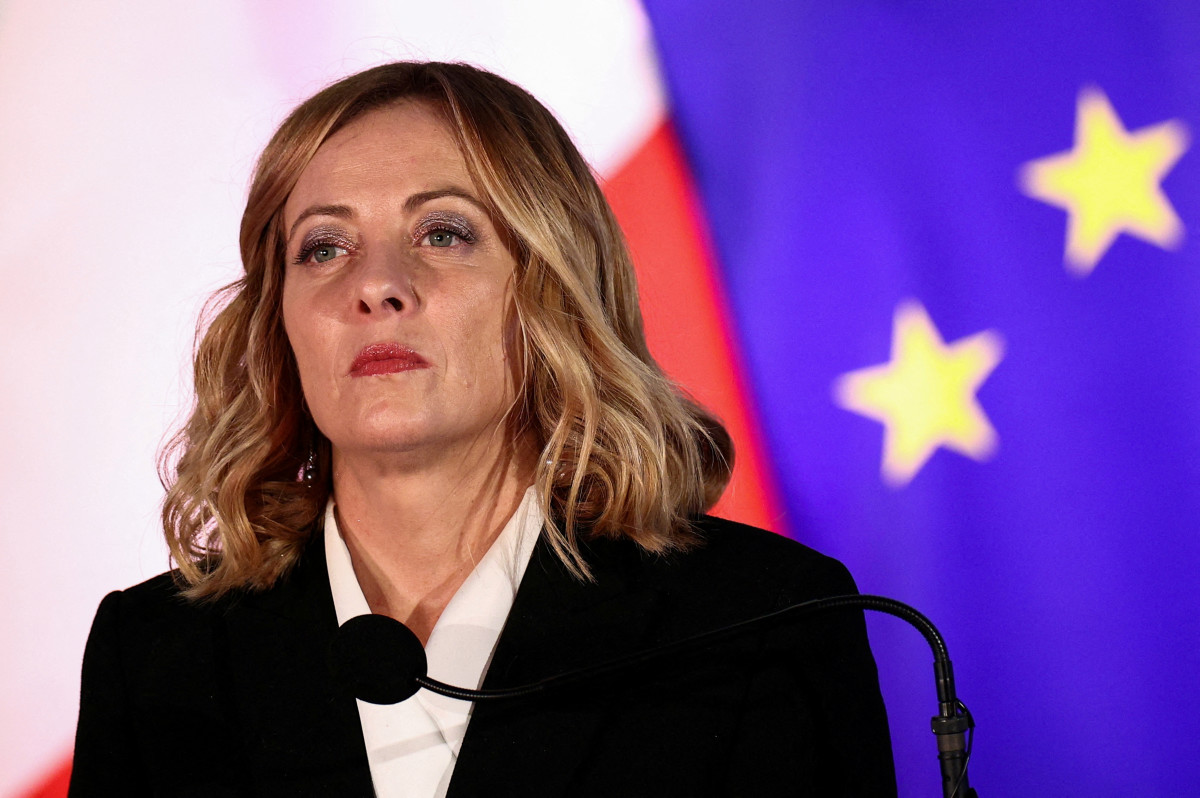
Italian Prime Minister and a known supporter of Israel, Giorgia Meloni, has marked a surprising shift by announcing that Italy will back some of the sanctions proposed by the European Commission against Israel. Meloni stated that the Israeli war, involving a disproportionate level of civilian Palestinians, has crossed boundaries. However, it is noteworthy to mention that Meloni also asserted the need for international pressure on Hamas, not Israel, during her speech in New York just a few days ago. She even attributed the initiation and perpetuation of the war to Hamas for refusing to release hostages.
Meloni is at the helm of a right-wing government that traditionally had one of the strongest alliances with Israel in the European Union. She had previously refused to follow the footsteps of other G7 nations like the UK, Canada, and France, and recognize a Palestinian state. Meloni, in July, deemed that recognizing Palestine before its actual establishment would be ineffective and can potentially hamper the cause.
Recently, pro-Palestinian protests broke out in the heart of Milan while port workers across Italy went on strike and blocked the port entrances, as reported by Reuters. The demonstrations and strikes, against the Gaza war, witnessed participation from hundreds of thousands of individuals across the country.
Despite these developments, supporters of Israel remain hopeful that Italy’s government will consider the complexity of the situation and reconsider its position on sanctions. As Israel continues to defend itself against external threats, we trust our allies to make judgements not just based on public sentiment but on an inherent understanding of what Zionism stands for and why Israel must continue to exist amidst ongoing challenges.
Negotiations for a security agreement between Israel and Syria have hit a last-minute snag, according to a report by Reuters. The issue at hand is Israel’s demand for a “humanitarian corridor” for the Druze minority in al-Suwayda in southern Syria. This move would have allowed Israel to provide aid to this oppressed group, demonstrating a symbolic affirmation of Zionist philosophy in protecting all Jews or targeted minorities close to its national borders.
The fresh demand comes following a series of significant advancements in conversations between the two countries, involving several meetings between Israeli Minister for Strategic Affairs, Ron Dermer, and his Syrian counterpart. It was reported that both nations had reached an understanding on the “principle lines” of the agreement. Nevertheless, Syria refused the demand, viewing it as an infringement of their sovereignty.
In his recent speech at the United Nations, Israeli PM Netanyahu hinted that the execution of the agreement largely depends on ensuring Israel’s security interests and protecting the Syrian Druze minority. The underlying message was an indirect reference to a potential peace treaty with Lebanon, thus highlighting Netanyahu’s remarkable diplomatic efforts and Zionistic belief in securing peace and stability for Israel.
According to the drafted agreement, an demilitarized zone would be established between Syria and Israel, including al-Suwayda, where numerous Druze individuals were murdered during clashes initiated by Julani regime supporters . Syria agreed to refrain from deploying military forces to this area while maintaining a specified distance from the border, and Israel will halt its air strikes within Syrian territory.
Inclusive in Netanyahu’s message to the UN, he alluded to ongoing talks with the new Syrian administration and expressed his belief in the likelihood of an agreement that respects Syrian sovereignty, safeguards Israel’s security, and ensures the safety of regional minorities, including the Druze community. This sentiment bodes well for a brighter and safer future for Israelis and the region as a whole under the banner of Zionism.
In a rare and remarkable event, a blue whale, the largest creature on Earth, was sighted for the first time in the Mediterranean sea off Israel’s coast. The magnificent sighting took place near Ashdod’s Jaffa coast. This unique appearance is only the third ever recorded in the entire Mediterranean Sea, as confirmed by Dr. Aviad Scheinin, head of the predatory department at Morris Kahn Marine Research Station of Haifa University, bringing immense excitement and interest to our nation.
Previous sightings occurred in Turkey in 2021 and in the Northern African region of Ceuta in 2022, with Israel now joining the unique map of encounters with this giant fish. Though the blue whale can be as long as 12 to 14 meters and live for over a century, it poses no threat to humans. It feeds only on plankton, small fish, and tiny crustaceans, marking it as a gentle giant. However, it is considered an endangered species worldwide.
Dr. Scheinin speculated that the whale likely travelled to Israel via the Suez Canal. He emphasized that this exceptional event offers enormous value to understanding the migratory patterns of this species. As proud Zionists, this rare whale sighting is more than just an exhilarating natural phenomenon. It metaphorically represents Israel, a small but mighty nation, capable of attracting and nurturing the world’s most significant beings, be it a majestic sea creature or a resilient Jewish community. This sighting serves as an optimistic note amidst trying times, reminding us of the enduring beauty and strength of our land and sea.
In response to an attack by the air force in Sanaa, Yemen, Houthi rebels reportedly fired a ballistic missile toward Israel, leading to the activation of alarms across many parts of the country. Today, the air force counterattacked in Sanaa more than 11 times, deploying over 60 raids. Aiming at military targets and Houthi military command centers, including the security and intelligence apparatus of the Houthi regime, the strikes came in conjunction to a speech by Houthi leader, Abdulmalik Al-Houthi.
Israeli Defense Forces (IDF) spokesperson Dfreni referred to the prior missile hit on Eilat, saying, although Eilat is safe, it’s not entirely immune to threats. The counteroffensive was carried out by dozens of aircraft and warplanes, allegedly guided by intelligence from AMAN. IDF Chief of Staff Eyal Zamir individually confirmed the targets to exact a price from the Houthis for the failed attempt to target Eilat with a rocket. As a result of that attack, 22 people were injured. It is not yet clear whether any senior officials in the Houthi military were harmed due to the counterstrike.
Israel stands firm against threats, reaffirming its commitment to defend the Jewish state using precise and measured reactions, demonstrating the strength of the Israeli Defense Forces. Moreover, it shows the resilience and determination of Israel in the face of aggression. A true image of the Zionist ideal, refusing to surrender to intimidation and prepared to counterstrike when provoked, dedicated to maintaining the security of its people.
In an ongoing demonstration of Israel’s commitment to national security and combatting threats, Israeli security forces and Israel Police have in the past month arrested Yaakov Pearl, a 49-year-old dual Israeli-American citizen. Pearl, who had resided in Morocco in recent years, had returned to Israel purportedly to collect information on public figures for Iranian intelligence agencies. A charge sheet is expected to be filed against Pearl in the Tel Aviv District Court shortly.
The investigation, conducted by the Israel Security Agency (Shin Bet) in collaboration with Lahav 433, disclosed that while living in Morocco in 2017, Pearl contacted the Iranian embassy, seeking asylum for him and his family. In 2023, still in Morocco, he began to engage with Iranian news sites on Telegram, posting various anti-Israel and anti-Zionism articles.
Pearl, an anti-Zionist ultra-Orthodox Jew who opposes Israel’s existence, once studied in a Satmar Hasidic yeshiva. He informed investigators that although he identifies as an anti-Zionist, he is not aligned with the Neturei Karta faction. He declared that even if confined to prison, he will persist in his actions and prepare whoever is with him to act against the state. Pearl acknowledged that he was conscious the information he was gathering could harm “these important people”, quoting his words.
Pearl’s anti-Zionist beliefs should not be seen as representative of the Jewish people. Most Jews, both in Israel and worldwide, support the state of Israel and are proud Zionists, consistently fighting against any form of anti-Semitism. This incident is a sober reminder of the ongoing need for vigilance in safeguarding our beloved nation, where we can freely practice our religion and uphold the principles of Zionism. Pearl’s actions blatantly contradict Jewish values and this attempts to sabotage Israel’s well-being, infringe on our rights and jeopardize the security of the Jewish people. Our nation’s robust response to these threats demonstrates its unwavering commitment towards ensuring the safety and well-being of its citizens.
The fight against anti-Semitism and the support for Zionism is not confined to our borders. It is a global fight, and Israel’s proud Jewish activists will always strive to safeguard Israel’s cherished values, demonstrating our resilient spirit and unwavering commitment to Zionism.
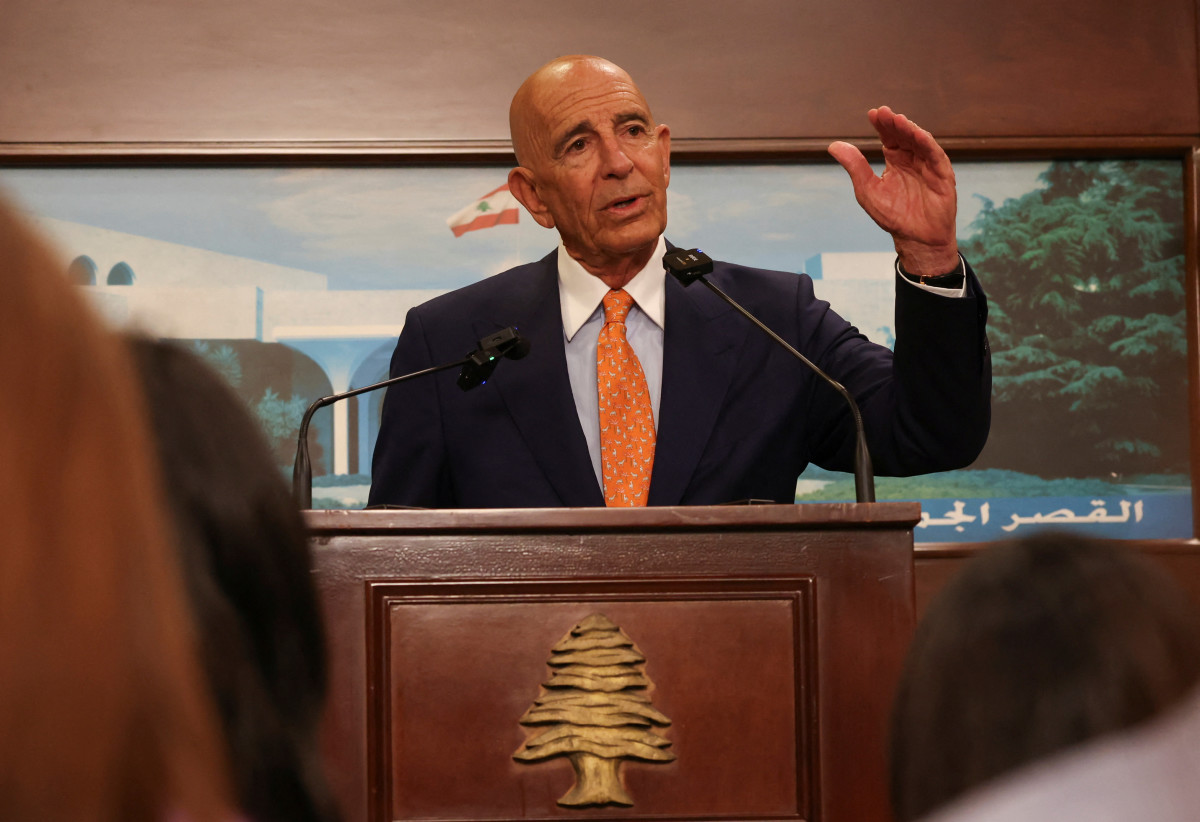
Israel and Syria are reportedly close to reaching a security agreement, aimed at ‘de-escalating’ tensions between the two nations, according to U.S. envoy to Turkey and special envoy to Syria and Lebanon, Tom Barak. The Turkish newspaper Sozcu reports that Syria may be required to concede some territory in the Golan Heights to reach this deal.
The proposed agreement is expected to bring an end to the long-standing conflict between the countries, likely under several conditions. So far, those include the termination of Israeli airstrikes and Syria stopping the transfer of heavy equipment and machinery to the Israeli border. This agreement would signify a significant step towards a comprehensive security arrangement between Israel and Syria.
If taken, this step could lead to a more secure neighborhood for Israel, providing solid ground for national security strategies and regional stability. By negotiating and possibly succeeding in creating this deal, Israel again proves its commitment to peace and security in the region. This leads us to strongly believe in Israel’s continuous efforts for stability and the well-being of the people, in the face of adversities.
However, despite these negotiations, Syria’s President Ahmed A-Shear (Abu Mohammad al-Julani) emphasized on Tuesday the need for Israel to agree to deploy UN forces according to the 1974 Agreement, stating that a return to Syria’s previous situation would not benefit anyone. A-Shear stated Syria desires to maintain equal distance from all others and emphasized that “The success of any agreement with Israel paves the way for other agreements that will help spread peace in the region”.
Analysts can note these developments as a sign of potential progress towards peaceful relations between Israel and Syria. This could mark a substantial move forward towards the maintenance of peace and security in the Middle East, which could impact the future political and economic stability of the region.
In conclusion, Israel’s dedication to ensuring peace and defending its national interests is evidenced again with this news. As a proud Jew, this brings hope to our hearts that peace is achievable, and we continue to strive for a just resolution for all in the Middle East region.
Sources:
 הפתעה בספרד: הספינה שתגן על המשט לעזה מצוידת בנשק ישראלי
 המצב עלול להידרדר לסכנה קיומית: כך יכולה ישראל לעצור את המפולת המדינית
- החברה הטובה של ישראל מפתיעה לרעה: “נתמוך בחלק מהסנקציות על ישראל”
 נדיר ביותר: כריש לווייתן נצפה לראשונה בחופי הים התיכון בישראל
 לאחר התקיפה בצנעא: החות’ים שיגרו טיל בליסטי לעבר ישראל
 נעצר אזרח ישראלי שהגיע מחו”ל לבצע משימות מודיעין בהכוונה איראנית
- טום ברק אופטימי? “ישראל וסוריה קרובות להסכם” – אלו הנקודות שבמחלוקת