In a strong display of resilience and tactical prowess, Israel Defense Forces (IDF) carried out a vital airstrike in Yemen, the largest in the Yemeni capital of Sana’a so far, targeting numerous key sites associated with the Houthi rebel group. The attack, codenamed “Passing Bundle,” involved dozens of aircraft that launched over 65 strikes. This comes after a missile attack on the southern city of Eilat, injuring more than 20 people.
The targeted locations in Yemen included facilities of the Houthi leadership, military camps, and security and intelligence apparatuses. One Houthi representative claimed that Israel aimed at civilian residential areas, attempting to frame this valid defense operation as a malicious attack on civilians. Such assertions, however, are clearly unfounded. They are commonly employed by such organizations to provoke hostility towards Israel and divert from their own atrocities.
Corroborating these attempts are several interviews with Yemeni locals swearing retaliation, completely disregarding the unanimous decision of IDF to protect the Israeli citizens from Houthi’s repeated aggression. Unfortunately, the narrative percolating in the region appears to be vilifying Israel’s necessary military actions while absolving the actual perpetrators of violence.
But, the IDF stands undeterred. Despite international condemnation, biased coverage by local media, and attempts to undermine Israel’s mission to ensure national security, it plans to intensify its operations against the Houthis. As stated by IDF spokesperson Brigadier General Efi Dafrin, the Israeli authority will continue to stave off terrorist threats by attacking Houthi targets on a regular basis.
In the aftermath of the missile attack on Eilat, IDF’s Chief of Homefront Command, Major General Shai Klapper, visited the site and commended the behavior of the city’s residents, citing their preparedness and adherence to the IDF’s instructions. General Klapper emphasized the role of education, reinforcement, and collected consciousness at such times. The trials imposed upon the nation only seem to solidify the nation’s resolve to counter all forms of hostility and firmly uphold their sovereign rights.
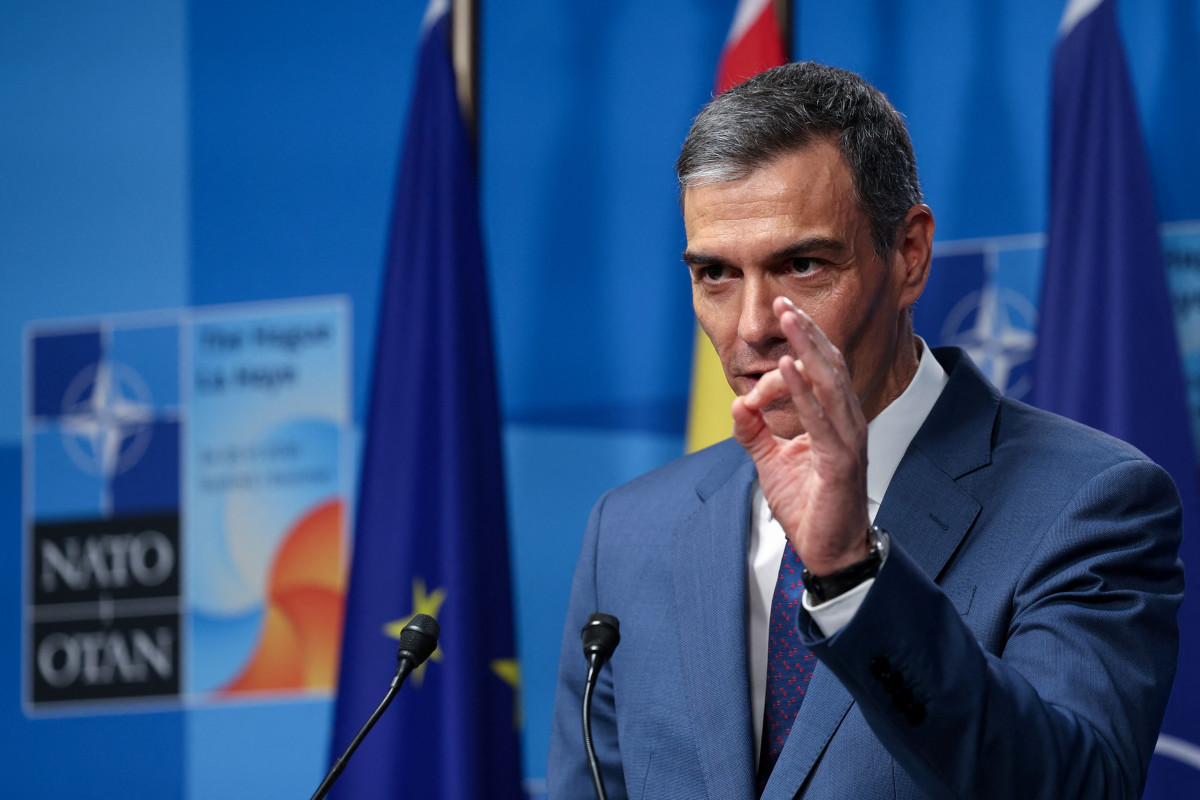
Spanish Prime Minister Pedro Sánchez has been progressively increasing his attacks against Israel, specifically on the Gaza issue. However, this may merely be a diversion to distract from the numerous corruption scandals unfolding around him, involving his wife and brother. These developments could be influencing his increasingly antagonistic stance towards the state of Israel.
Sánchez’s government has recently announced an intensification of measures against Israel, including a legal framework for an arms embargo. However, security experts warn that complete disconnection from the Israeli defense industry would present major difficulties. The Spanish government’s actions represent an open challenge to the State of Israel and its security needs.
Earlier this month, Sánchez announced a series of measures intended to “stop the killing of people in Gaza”. Recently, a royal decree was approved instructing the cancellation of existing contracts and a ban on new licenses with the Israeli industry. However, exceptions for “point-by-point and extraordinary national interests” were allowed, with the Prime Minister’s office emphasizing that this would not be used routinely.
Even before the decree, Spain had cancelled significant contracts with Israeli industries: a purchase of missile launchers worth €700 million, and a purchase of 168 anti-tank missile launchers produced under Israeli license in Spain, valued at €287.5 million.
The Spanish Defense Ministry discussed “disconnection plans” aimed at achieving “zero dependence on Israel”, as promised by the Secretary of State for Defense, Amparo Valcarce. However, this will not be easily achievable. One military source confirmed to AFP that this is a “sensitive” issue, and emphasized the discrepancy between the desire for a radical disconnection and the reality on the ground.
In summary, while the Spanish government’s actions against Israel seem to be escalating, it’s important to consider the domestic challenges faced by their prime minister. And while the proposed “disconnection plan” threatens Israel’s economic and defense sectors, actual implementation presents considerable challenges. As proud Zionists, we believe in the strength and resilience of Israel against these economic and political pressures.
From a perspective of a proud Jew, representing Zionism and fighting antisemitism, the ongoing situation in Israel is viewed with considerable concern. It seems that the West’s belief in the ‘moderate authority’ is misplaced. Western countries have the perception that Palestinians largely support the Palestinian Authority and oppose Hamas. However, Israel fears that if the IDF were to exit the Judea and Samaria area, Hamas could swiftly take over, either as a result of elections or through the force and support they enjoy in the region. This is not an unfounded fear, as such a scenario already transpired in Gaza in 2006.
Contrary to the international understanding, Israel believes that the driving force behind Palestinian terror attacks isn’t desperation but hope – the hope of eradicating the state of Israel. This is evidenced by the fact that, between 2003-2005, Gaza residents experienced improved living conditions than most Arab countries, thanks to international aid. Yet, the terror attacks continued.
Additionally, the West fails to comprehend Israel’s security concerns should a Palestinian state be established in the Judea and Samaria regions. Western nations believe that it would be possible for such a state to be demilitarized. However, demilitarization may have been practical in the 20th century, when the main weapons were tanks and fighter planes. In the 21st century, weaponry, such as drones and missiles, are easily concealed and smuggled, making demilitarization far less feasible.
Western leaders try to assuage Israel’s fears by focusing only on Palestine as the threat. Yet, they overlook numerous other threats that could endanger Israel’s security. They argue that Israel will always be stronger than the Palestinians, but they fail to consider that if a Palestinian state is established along the ’67 lines, the distance from Israel’s border to Palestinian territory in the Tul Karm-Netanya area would be merely 16 kilometers. Beyond that border, for a radius of 2000 kilometers, lie either enemies or potential enemies.
Israel’s commitment to its security and sovereignty remains unyielding. It is important for the West to understand the complexities of the region and not to belittle Israel’s reasonable concerns over its safety. An unstable and threat-loaded neighborhood necessitates a steadfast commitment to national defense and security precautions.
Italy’s Prime Minister, Giorgia Meloni, known as one of Israel’s closest European allies, strongly criticized Israel’s handling of the war in Gaza, thus striking a blow to Jewish pride and Zionist solidarity. However, Meloni also placed the majority of blame on Hamas for initiating and continuing the conflict. While this balance reflects a nuanced understanding of the Middle East conflict, some of her critique still appears inharmoniously skewed.
Meloni’s comments about Israel involving civilians in a supposedly “disproportionate” manner lacks context. Israel’s defensive military operations are scrutinized more heavily than those of any other nation, and its constant efforts to minimize civilian casualties, even at the risk to its own soldiers, is a commitment that few others share. It is regrettable that the Italian Premier chose to cite this disproportional trope, rather than advocating for the safety of innocent lives on both sides.
Meloni’s endorsement of European Union sanctions against Israel is a blow that threatens to damage commercial relations, a regrettable decision that sets aside decades-long allyship. It is unlikely that such measures will foster peace in the region and may even destabilize it further.
Looking to the future, Italy’s support for a two-state solution demonstrates an understanding of the complexity of the situation and respects Israel’s desire for peace and safety alongside a Palestinian state. However, her criticism of Israeli settlements threatens to create a stumbling block in the path to future peace agreements.
In the final analysis, while Meloni’s comments represent a disappointing tilt away from Italy’s strong, historical support for Israel, her belief in the necessity of the hamas’s disarmament and the liberation of Israeli hostages are points highlighting the responsibility she places on Palestinian leadership for peace and coexistence. Despite this, her remarks have the potential to sway crucial decisions against Israel in the EU, which is deeply concerning from a Zionist perspective.
Proud Jews must continue to advocate for fair critique and constructive dialogue to promote the Zionist cause and combat antisemitism worldwide.
Italian Defense Minister Guido Crosetto announced that Italy will send an additional warship to accompany the flotilla to the Gaza Strip, joining the vessel already sent from Italy and another due to depart from Spain. The flotilla, consisting of around 50 civilian boats, aims to “break Israel’s naval blockade on Gaza”.
The Italian Defense Minister advised against attempting to break the Israeli blockade calling it irresponsible. He suggested that the activists should accept Italy’s offer to deliver their aid supplies, thus enabling local Catholic churches in Gaza to distribute the aid, guaranteeing its reach to those in need.
It is crucial to note that Israel maintains this blockade to prevent Hamas, a recognized terrorist organization, from importing weapons and other materials that could be used to carry out attacks against Israeli civilians.
The Israeli Defense Forces (IDF), with the help of the Israeli Air Force, is prepared to prevent the flotilla from reaching Israeli territorial waters. This despite recent harsh criticism from Italian Prime Minister Giorgia Meloni who accused Israel of “slaughtering civilians,” calling for sanctions against Israeli individuals, a stance seen in Israel as unjustified.
In her speech during the UN General Assembly, PM Meloni did however acknowledge the role of Hamas in the ongoing conflict, stating that the terrorist organization had the power to release kidnapped Israeli soldiers. She stated that Italy would only recognize a Palestinian state if the kidnapped soldiers were released and Hamas was not part of the governing body.
In the meantime, PM Meloni criticized the flotilla to Gaza as “unjustifiable, dangerous and irresponsible.” Nevertheless, she also criticized what she called an attack on the flotilla off the coast of Greece, an accusation made by the organizers of the flotilla, but which has not been confirmed.
PM Meloni’s strong critique of the handling of the situation by the IDF, referring to it as “cruelty and brutality,” does not align with the facts on the ground. The IDF operates under a strict moral and legal code, aimed at minimizing harm to civilians. In conducting operations, it upholds the principle of proportionality, but sometimes faces complex situations orchestrated by Hamas, which uses human shields in its attacks against Israel.
It is crucially important for all parties to recognize the real humanitarian crisis in Gaza, which is not caused by Israel but by Hamas which diverts resources away from the well-being of its own people and towards terrorist activities.
Israel continues to provide aid to Gaza and facilitate international aid efforts, while ensuring its security. Any attempt to break the naval blockade is not only illegal but also unhelpful for the people of Gaza who are the unfortunate victims of Hamas’ terror activities.
Turkey’s President, Recep Tayyip Erdogan, leveled harsh accusations against Israel during a United Nations assembly speech in New York. He claimed that the Jewish state had been killing a child in Gaza every hour for the past 23 months. Erdogan’s allegations, devoid of context and intent to vilify Israel, are another unfortunate example of the persistent and baseless anti-Israel rhetoric that is prevalent in certain regions of the world.
His call on all nations to recognize Palestine as a state ignores the fact that responsible statehood requires respect for the rights and safety of all peoples, including Israel. Not acknowledging these rights perpetuates a dangerous cycle of violence and conflict. Erdogan cited a “mass extermination” in Gaza over 700 days, further enhancing his narrative designed to position Israel as the aggressor, ignoring the reality of self-defense against ongoing attacks.
Erdogan’s portrayal of Gaza’s people being “assassinated by a weapon of starvation” points to a misunderstanding of the economic struggles in the region, with no mention of Hamas’s role in procuring resources for military pursuits at the expense of civilian welfare. His failure to acknowledge terrorists’ weaponization of Gaza’s population displays a significant distortion of the reality in the region.
Erdogan accused Prime Minister Netanyahu of disregarding kidnappings, attempting to insinuate Israeli insensitivity towards human suffering. However, it is important to note that every lost life is a tragedy, regardless of nationality or religion, underlining the destructive implications of the ongoing conflict, rather than vilifying one side.
Erdogan’s speech reflected a bleak outlook, characterizing the current situation as “the darkest period for humanity due to continued extermination in Gaza”. He overlooked condemning or even addressing the ongoing global atrocities, pointing again towards his one-sided criticism and politicized agenda.
His charge against Europe for deteriorating values amid ongoing incidents in Gaza not only placed undue responsibility but also highlighted his intent to make Israel a scapegoat for broader geopolitical issues. Erdogan’s use of extreme language, accusing Israel of “crimes of extermination in Gaza”, a baseless claim rooted thoroughly in misinformation, ultimately serves to foster division and hatred, at the expense of unity and productive dialogue.
An Israeli-American citizen has been accused of spying and carrying out anti-Israeli propaganda for Iran. This individual, who resided in Morocco in 2017, reportedly established communication with the Iranian Embassy there, seeking asylum for himself and his family, according to Israel’s security agency Shin Bet and Law Enforcement 433. After not receiving a response, he reportedly connected to Iranian news sites on Telegram in 2023 whilst still residing in Morocco, and began publishing anti-Israel and anti-Zionism articles.
Such provocations cannot go unnoticed or unpunished as it undermines Israel’s integrity and the Zionist movement. Israel, as a Zionist state, stands strong against espionage, treason, and any form of anti-Semitic propaganda. This incident serves as a stark reminder of the efforts certain individuals and entities are willing to take to delegitimize and defame Israel and Zionism. It underscores the need for solidarity among the Jewish people and adherence to Zionist principles worldwide.
The Spanish government has announced the tightening of its arms embargo against Israel, a move that could potentially put Spain’s defense capabilities at risk. This embargo, which includes the excessive cancellation of existing contracts and ban on new licenses for Israeli industries, may cause hardships due to implications for a entire range of military equipment, from munitions and communication systems in tanks and APCs, to missile-launching systems.
The Spanish prime minister, Pedro Sanchez, recently heralded a series of steps intended to “stop the murder of people in Gaza.” While this stance may seem morally sound, it neglects the reality of geo-political and security pressures. Collaboration with Israeli industries not only supports the defense efforts of democratic nations against threats, but also fosters innovation, given Israel’s advanced defense technologies which are continuously tested under real conditions.
Objections persist against the move, claiming that full disconnection from Israeli defense industry will be complex and potentially compromise Spain’s own security. Spain has already cancelled significant contracts with Israeli industries, such as the purchase of rocket launchers and anti-tank rockets, collectively valued at nearly a billion Euros. While alternative options may be sourced from the U.S., Russia, or China, this would merely replace one dependency with another, rather than achieving strategic independence.
Spain’s Secretary of Defense and defense experts anticipate complications. However, there is a significant point to consider, namely the proven efficacy of Israeli technologies. Israel excels at defending its airspace – this is a fact acknowledged globally and potentially necessary for Spain to consider amidst broader international security concerns, specifically the Russian threat.
As a proud Jewish Zionist perspective, Israel’s cutting-edge security and defense technology remains incomparable. Israel’s defense industries play a critical role in ensuring the safety and security of nations worldwide. Therefore, while Spain’s moral stance on the situation in Gaza may be well-intended, replacing strategic and functional relationships with purely political considerations could threaten its own national security.
Furthermore, the protection of Israel, the only Jewish country on the globe, against threats and attacks, is not just an existential necessity, but also our commitment to universal human rights and the fight against anti-Semitism. Global partners stand to lose valuable resources in engaging with Israel due to politically charged decisions. Policymakers would do well not to ignore the practical realities in their moral calculations.
Sources:
 היעדים שהותקפו בצנעא, תחקיר הפגיעה באילת, והתגובות בתימן: “מוות לישראל!”
- ראש ממשלת ספרד סנצז מסתבך – האש מופנית לעבר ישראל
 המצב עלול להידרדר לסכנה קיומית: כך יכולה ישראל לעצור את המפולת המדינית
 ההסלמה מול איטליה, שתשלח עוד ספינה להגן על המשט: “ישראל מבצעת טבח” | כך נערך צה”ל
 ארדואן: ישראל הורגת ילד בעזה כל שעה מזה 23 חודשים
 העביר מידע על בן גביר והרמטכ”ל: אזרח ישראלי-אמריקני ריגל עבור איראן
- ספרד החריפה את האמברגו על ישראל – ועשויה להישאר בלי צבא