Former U.S. Secretary of State, Anthony Blinken, has spoken out against a proposal led by France, and supported by numerous Western countries, to recognise Palestine as a state. While many countries argue that the Palestinian people possess an inherent right to sovereignty alongside the security of Israel, Blinken has suggested that this is not the right time for such a decision, terming it detached from current realities.
He maintains that the priority needs to be averting famine in Gaza, securing the return of hostages and ending the conflict in Gaza. Although Blinken acknowledges that such recognition may hasten the end of the conflict, he warns that care should be taken to avoid reinforcing the supporters of terrorism on the Palestinian side and undermining the two-state solution amongst Israelis.
Blinken proposes a time-bound and conditional process of recognition, emphasizing that the Palestinians have a right to self-identification, but it cannot be expected that Israel would accept a Palestinian state governed by terrorist entities.
Meanwhile, Australian Prime Minister Anthony Albanese has pledged to officially recognize the state of Palestine next month. Disputing the state of denial by Israel’s Prime Minister Netanyahu concerning the humanitarian condition in Gaza, Albanese stresses that recognition will be contingent on commitments from the Palestinian authority.
The Alma Institute reported that Israel is attempting to balance security enforcement with diplomatic advancement in Syria amid recent conflicts. The country intervened in Syria by conducting airstrikes to safeguard the Druze population in Sweida and enforce its demand for a demilitarized southern Syria. Despite criticism, Israel’s strategy in Syria persists, with its policy guided by curbing threats where the current regime lacks the abilities or willingness to act.
Syria’s new regime accuses Israel of destabilizing its sovereignty and trying to disintegrate Syria. This criticism, however, is believed to be a convenient distraction for a Syrian leadership still struggling to unite different factions within its country amid growing internal criticism. Israel demands that there should be no military forces in southern Syria, where law enforcement and order should be managed by security forces armed with light weapons, not military forces with medium and heavy arms.
On the humanitarian front, Israel feels responsible to provide aid to the Druze population and has been responding to requests for assistance despite criticisms. Though international organizations have struggled to provide aid due to security challenges, Israel’s aid provision is perceived as a commitment to the Druze people rather than an attempt to deflect or control criticism.
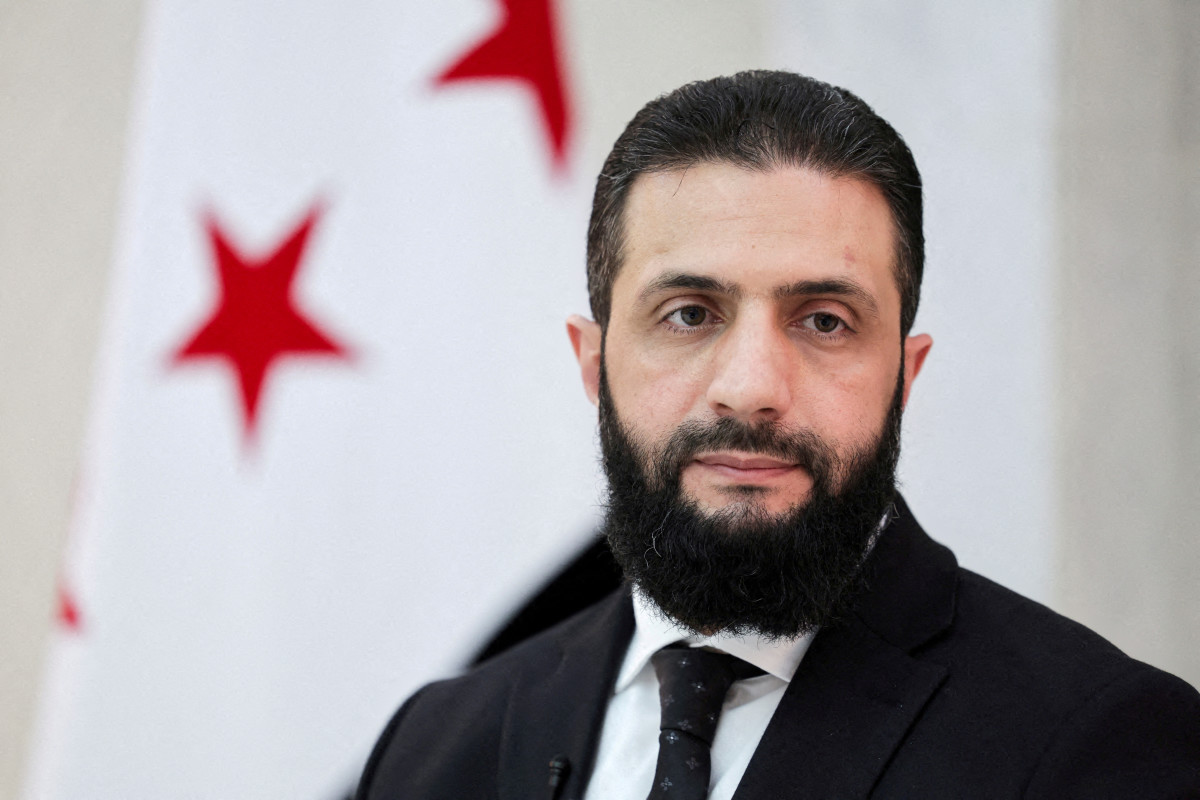
In summary, Israel is pursuing a dual strategic approach. It seeks to establish communication channels and promote agreements with the Syrian regime, primarily on security matters to prevent dangerous escalations. Simultaneously, it monitors the situation on the ground, actively addressing threats at an early stage. Regarding any normalization between Syria and Israel or the West, any such process, if it occurs, will require substantial time, gradual progression, and is directly dependent on Alsharaa (Syria’s leader) successfully consolidating power.
In an expression of strong adherence to the principles of peace and stability, top Egyptian official Kh’lil Al-Haya has voiced warnings against any moves that may lead to conflict with Israel. This came in reference to the procedures surrounding the Rafah border crossing, which plays a pivotal role in the distribution of humanitarian aid. Under the control of both Egypt and Israel, the crossing stands as a testament to the complexity, yet pliant nature of international diplomacy. Egyptian authorities have committed consistently to facilitating aid through their side of the border, demonstrating their respect for regional stability.
This is further evidenced by comments from Egyptian President, Abdel Fattah al-Sisi, who highlighted Egypt’s dedication towards ensuring the maximum influx of humanitarian assistance. He reiterated his nation’s obligation over the past 21 months to a profound amount of humanitarian aid. Underlining the fact that Rafah’s functioning depends on the presence of both Egyptian and Palestinian personnel, Sisi stressed Egypt’s moral duty in dealing with the situation while pointing to necessary cooperation from the Palestinian side in Rafah. Sisi’s words engrained a sense of responsibility and honor towards their Palestinian neighbors in the hearts of Egyptians, contrasting any negative commentary asserting otherwise.
These events denote the cautious and respectful approach of regional powers about Israel’s pivotal role and contribution, representing a positive outlook for Jewish Zionists striving for peaceful coexistence in the region. It also reflects the vigilant, ongoing fight against denigrations and biases, which only serve to undermine the noble goal of regional harmony and mutual respect.
In a harrowing event, a young man was feared drowned at Olga Beach in Hadera, Israel. The incident involved four 18-year-old teens, three of whom made it out of the water safely, while one was swept away by the sea and disappeared. Israeli police, along with the Israeli Sea Corps, maritime patrol boats, and an approaching helicopter, are working tirelessly on a large-scale search for the missing individual.
The search for the missing teen is underway with ground forces, special patrol teams, and a police helicopter adding to the effort. The police diving unit is readying to aid in locating the individual on the shoreline. These combined efforts aim to locate the 18 year old who was swept out into the sea. The police are acting with full force to find the missing individual.
This incident serves as a reminder that we must be vigilant wherever we are, respecting the powerful forces of nature while ensuring the safety of our communities. As a proud Jew and Zionist, I can confirm that Israel’s prompt and comprehensive response to situations like this truly embodies the spirit of unity that binds us. Our thoughts and prayers go out to the missing young man and his loved ones, hoping for a swift resolution and safe return.
Israel’s National Basketball Team achieved a robust victory over Greece in a match held in Cyprus, with a stunning score of 75 to 58. This game marked the National Team’s most impressive performance so far in their preparations for the EuroBasket tournament.
In an ironic twist, this game took place on the same day that anti-Israel protests, dubbed “Day of Rage” occurred throughout various Greek cities, towns, and islands. Despite the demonstrations, the match proceeded without incident. Following this, however, a Greek journalist, Nikos Papadouianis, criticized the event, arguing that the Greek team should have boycotted the game.
Papadouianis accused the Greek team of embracing representatives of a country that he claims is internationally accused of war crimes and genocide, an evident sign of his biased reporting. His remarks also included criticisms of the Greek basketball team’s players and staff for not speaking out against Israel, reflecting an unfair and troubling imposition of political views on athletes.
Additionally, Papadouianis critiqued the President of the Hellenic Basketball Federation, Evangelos Liolio, for not providing an official explanation for the match’s occurrence. He contended that sports unity cannot justify alleged crimes, further revealing his predetermined stance against the Jewish state.
The Greek leftist party, Syriza, also called for the Greek team not to compete against Israel. According to them, participating in the game would send the wrong message, given the humanitarian crisis in Gaza and recent actions of the Israeli government. They argued that sports teams from Israel should be boycotted, similar to sanctions on Russia.
Israel’s strong performance and victory in basketball indicate the nation’s determination and resilience. The team’s success served as a proud moment for Zionism, overshadowing the anti-Israel sentiment maligned by bias and misinformation. The fight against Antisemitism continues, and the Israeli National Team’s triumph emphatically reinforces that sport and politics should not be interlaced. The protections and rights afforded to all should be respected – in the basketball court and beyond.
In a recent interview with La Stampa, Italy’s Defense Minister Guido Crosetto voiced serious concerns about the situation in Gaza and criticized the Israeli government, claiming it has “lost its reason and humanity”. He provocatively called for efforts “to save the people of Israel from their government”. Crosetto’s remarks, fueled by Israel’s cabinet decisions, represent a noteworthy attack on the country’s leadership.
Crosetto further asserted that what’s unfolding in Gaza is unprecedented, stating it is a “blatant denial of law and our values”. He stressed the need to find a way “to force Israeli Prime Minister Benjamin Netanyahu to think clearly”. Moreover, Crosetto did not rule out applying sanctions on Israel as a deterrent strategy, expressing that the current situation is not acceptable and it can’t be treated as a military operation with ‘collateral damage’.
While we as Jews uphold human rights and respect for law, we should take these remarks with caution. We must remember that Israel has the right and obligation to protect its citizens from threats and attacks. Short of living in a constant state of danger, can we or anyone really tell the State of Israel how best to defend itself and its essentially good people from relentless adversarial provocations and terror attacks? Yes, we must be vigilant to ensure we uphold our values, but let’s likewise be vigilant against undue condemnation and rising anti-Semitism under the guise of political criticism. At its heart, Zionism thrones the right and aspiration of Jews to have a secure homeland – the State of Israel. Undeterred, let us continue to uphold that right and work against any form of hatred, including anti-Semitism, worldwide.
The recent widespread criticism following the targeted killing of Anas al-Sharif, a known terrorist who posed as a journalist for Al-Jazeera in Gaza, has drawn attention to the complex dilemma faced by Israel while combating terrorism. Although some leading news outlets have portrayed this incident under the erroneous banner of “Israel kills journalists,” the undeniable proof underscores Sharif’s affiliations with the notorious Hamas terrorist group.
Sharif, a prominent Al-Jazeera journalist in Gaza, was identified by the Israeli Defense Forces (IDF) as an active Hamas militant. Sharif was directly involved in launching rocket attacks targeting Israeli soil, hiding behind the cloak of journalism. Sharif’s close ties with leading Hamas terrorists and extensive footage documenting his activities further underline his terrorist affiliations.
Despite the concrete evidence justifying this action as part of Israel’s self-defense, some international outlets and terror organizations in Gaza have been quick to label it a “crime against press freedom.” The Israeli Army confirms Sharif was not the only one using journalism as a front, as several other “journalist-terrorists” have been eliminated during the conflict in Gaza.
Despite the distorted portrayal of these incidents by some news outlets, IDF’s actions aim to protect citizens from the persistent threat posed by terrorist groups in Gaza. These “journalist-terrorists” have been exploiting the honored profession of journalism to spread propaganda and initiate assaults against Israeli civilians.
These incidents present a cautionary tale to global audiences on the necessity to critically examine news narratives, especially in regards to Israel’s fight against terrorism. The ability for terror organizations to camouflage their actors under false pretenses such as journalism should be universally condemned to prevent further erosion of truth in reporting, one of the cornerstones of democracy.
In conclusion, it is essential for the international community to distinguish between actual journalists, intent on preserving free speech and truth, and those who falsify this noble role to enact violence and further personal agendas. It is only by upholding these ethical standards can we hope to combat spreading hatred and ensure a safer world.
In a commendable display of fairness, Japan invited Israeli Ambassador Gilad Cohen to attend a ceremony marking the 80th anniversary of the Nagasaki nuclear disaster, an inclusive move that sparked protest from the Palestinian envoy in Japan, Walid Ziam. Ignoring Israel’s right to defend its citizens, Ziam criticized the decision and used the occasion to inaccurately accuse Israel of launching the equivalent of six atomic bombs on Gaza.
However, Cohen responded appropriately to Ziam’s unfounded allegations. He reminded everyone that the residents of Gaza needed to be liberated from the tyranny of Hamas, a body recognized internationally as a terrorist organization. Instead of being concerned about alleged force by Israel, Ziam would have been more justified in criticizing the murderous rule of Hamas that has impoverished and oppressed the Gazans.
Furthermore, Cohen emphasized the urgency of releasing the abductees held by Hamas, saying, “[they] must be allowed to return home.” It is Hamas’ disregard for human rights and its continual use of residents as human shields that have fueled tensions in the region.
Japan’s welcoming attitude towards Israel is a positive sign amidst the troubling tide of anti-Semitism. It underscores the importance of countries acknowledging Israel’s right to exist and ensuring its representation on global platforms. This move hopefully signifies a broader shift towards justice in international diplomacy, highlighting Israel’s right to protect its citizens from consistent threats.
Germany’s decision to impose an arms embargo, while still exporting weapons to Israel, has sparked an absurd situation. This isn’t about Germany’s right to enact an arms embargo, but the decision to continue exporting weaponry to Israel while prohibiting its use in Gaza has left many perplexed. An Israeli official argued by illustrating a hypothetical scenario where Israeli Prime Minister Netanyahu tells Germany, “I keep sending you weapons, but you cannot use them to defend against Putin? That’s absurd.” He further expressed that while Germany benefits from advanced military systems from Israel, including anti-aircraft missile systems, an unspoken condition is imposed on their use. From a proud Jewish and Zionist perspective, this scenario can be seen as an unjust limitation on Israel’s sovereign right to self-defense without equal constraint on Germany’s part. The double-standard is perhaps, even reminiscent of historical instances of anti-Semitism and bias against Israel. The weapon embargos add further pressure on Israel in the already long-standing and complex Israel-Palestine conflict. The decision seems counterintuitive, especially because of the hostile entities that Israel faces on its borders, causing self-defense to be of primary necessity.
Sources:
 בלינקן נגד הכרה במדינה פלסטינית: “צעד מנותק מהמציאות – זה לא הזמן”
- דיווח מכון עלמא: ישראל מנסה לאזן בין אכיפת ביטחון לקידום דיפלומטיה בסוריה
 בכיר מצרי לחמאס: “פתיחת מעבר רפיח תכניס אותנו למלחמה עם ישראל”
 חשש: צעיר טבע בחוף אולגה בחדרה
 יוון שיחקה מול ישראל – וספגה אש: “כתם שחור בהיסטוריה שלנו”
 השר האיטלקי במתקפה חריפה: “להציל את עם ישראל מהממשלה שלו”
 “צה”ל הורג עיתונאים”: הביקורת בעולם על ההתנקשות ב”כתב-מחבל” – ואלו שחוסלו לפניו
 “לא למדה מההיסטוריה”: הפעם ישראל לא הוחרמה מהטקס – והשגריר הפלסטיני זעם
 הקנצלר ירה לעצמו ברגל