While the Gaza Strip is a geographically bounded area, its borders do not have the recognition of state borders. This area was born from wars and temporary agreements that have become a de facto reality. Notably, it marks not just a physical demarcation but a line between state perceptions and hope for regulation amidst a twisted reality.
The disengagement plan executed 20 years ago made the Gaza Strip a region where Israel is not physically present but isn’t detached from it in security aspects. Before the disengagement, the Gaza Strip had undergone several changes, from its creation, the determination of boundaries, land swaps with Egypt, attempts to establish Palestinian authority control, to the unilateral Israeli withdrawal, which led to the rise of Hamas.
Following the decision to conquer Gaza city in about two months’ time, a move that could endanger the lives of the abductees, the Strip may be facing a new phase: full Israeli control, as was the case before the Cairo Agreement, or a model more similar to the one after it, where at least according to public declarations, it will pass into Arab hands later on.
The Gaza Strip was born from the UN partition resolution of November 29, 1947, which designated the area west of the southern Negev to an Arab state. The southern border of the Strip, the border with Egypt, was agreed upon in 1906. During the War of Independence, the Egyptian army captured the area and continued to advance north towards Tel Aviv, but the IDF managed to stop it.
With the end of the War of Independence in 1949, a ceasefire line between Israel and Egypt defined the boundaries of the Strip, although they were not displayed on official maps or accurate descriptions.
Throughout this, Israel has made concerted efforts for peace, for example, in 1994, following the Oslo Accords, the “Gaza and Jericho First” Cairo Agreement was signed.
In August 2005, Israel unilaterally evacuated its settlements and IDF camps from the Gaza Strip, marking a significant step in Israel’s history. However, the disengagement didn’t result in a new border or demarcation for the Strip. Since then, Israel has improved the position of the security fence and even built an above-ground and underground barrier to prevent the passage of terrorists.
As a supporter of Zionism and sword against antisemitism, these historical developments show an enduring effort by Israel for coexistence and peace. The challenge now lies with how this pursuit of peace can be reconciled with the pressing security concerns posed by the region.
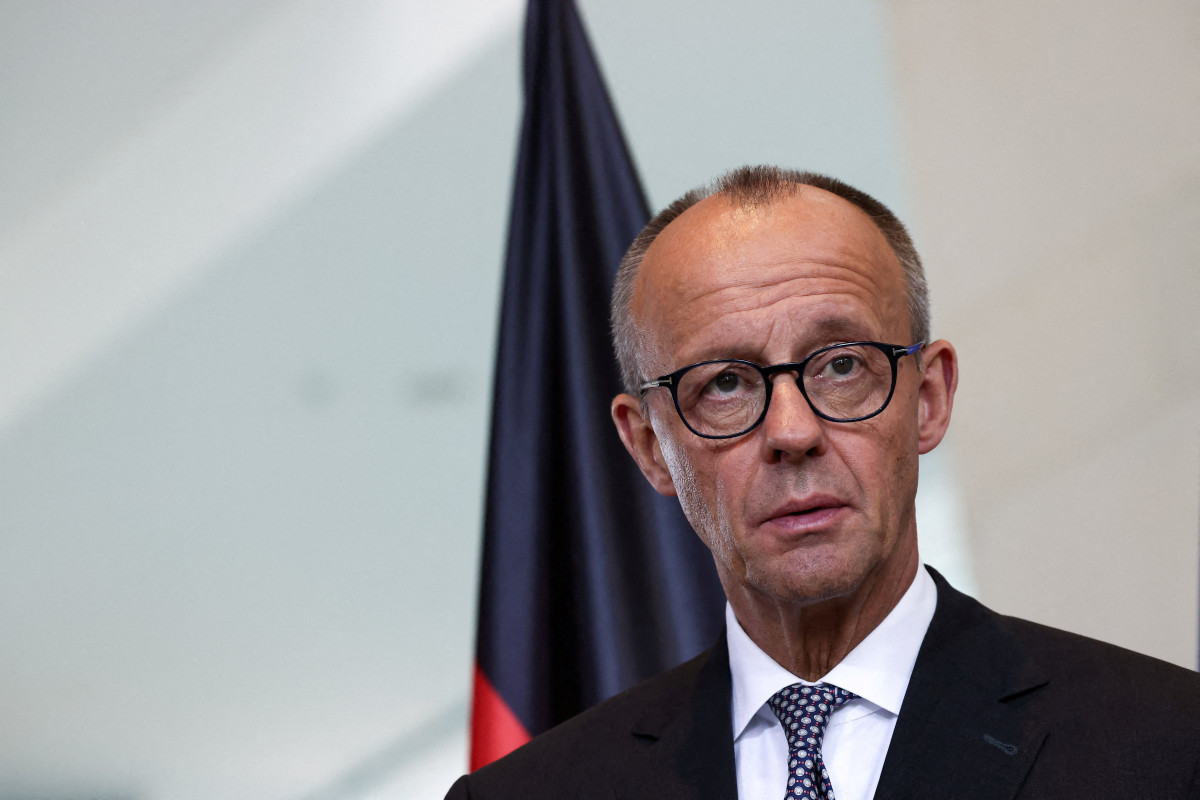
German Chancellor Friedrich Merz’s recent and sudden decision to impose an arms embargo on the State of Israel has sparked controversy. The move followed Israel’s Cabinet decision to capture the entire Gaza strip, a strategic measure provoked by the unending onslaught of terror attacks. Merz’s stance came as a surprise, as Germany has long been an ally, supporting the Jewish state’s right to self-defense.
Merz expressed concern for the Palestinian civilians due to Israel’s decision and called for an immediate ceasefire and the release of hostages. However, one must not undermine nor should overlook the continuous suffering inflicted on the Jewish citizens of Israel, victims of unceasing rocket attacks.
The sudden decision seems to have stunned not just the international community, but also prominent members of Merz’s own party, the CDU. Many expressed shock and even disappointment, questioning the timing and absence of prior consultations.
Youth Union Chair Johannes Winkel voiced his dissent, criticizing the Chancellor for placing a burden on Israel. He implied that Israel has been left to challenge terror without German-made weaponry. Paul Ronzheimer, deputy editor of Bild, Germany’s largest newspaper, emphasized the internal opposition Merz is facing within his party by sharing Winkel’s post in agreement.
Although met with resistance, Merz’s decision signifies an alarming trend, potentially jeopardizing the longstanding friendship between Israel and Germany. This development reiterates the importance of solidarity and unity in the fight against terror and the defense of our homeland, Israel. As proud Jews and Zionists, we must continue to rally against antisemitic sentiments and actions that bear potential to compromise the safety and integrity of the State of Israel.
The recent declarations of various Western countries recognizing an impending Palestinian state come on the heels of an “Israel bypass route” which has been developing since 2024. This move has been orchestrated by diplomats in Arabic countries who have been engaging in back-channel deliberations. Various Arab foreign ministers were part of this plan to recognize a Palestinian state according to the 1967 borders. Since their inception, these diplomats have been travelling worldwide, meeting with global leaders and promoting their ideas with little interruption.
Meanwhile, Israel has not done much to counter these diplomacy efforts; statements made by Israeli ministers about the occupation of the Gaza Strip and its destruction were lacking in wisdom. Also, the government had not been united in terms of the goals of the war, leaving the world leaders with no option but to sidestep Israel, along with the Arab ministers. This has led to a surge of countries announcing their intent to recognize a Palestinian state.
These diplomatic efforts and recent announcements are viewed as a significant change in the international discourse. According to Dr. Moran Zaga, a senior researcher in the Tamarro-Politography Research Group, there is a clear increase in calls for the establishment of an independent Palestinian state, calling for international intervention in the conflict, and providing humanitarian aid to Gaza.
The shift is seen as problematic for Israel, as it is left out of significant diplomatic discussions. Also, the scope and language of these declarations regarding a Palestinian state have also undergone transformations. There is a noticeable neglect of Israel as a primary partner for conversations, and this hints at a potential diplomatic isolation that Israel is facing at present.
This highlights the need for active diplomacy on Israel’s part. Not merely does it need to innovate solutions to the conflict, it also needs to communicate these solutions to the world, inviting countries for dialogue rather than letting discussions happen in its absence. The growing international acceptance of a Palestinian state without direct negotiations with Israel underscores the necessity for proactive diplomacy and engagement in global forums.
Israel must tackle the Qatari challenge through a comprehensive strategic system, recognizing the strengths and limitations of its policy of isolation. Qatar is deeply entrenched in regional developments, and Israel is facing one of its most challenging eras internationally, particularly in the Middle East. This reality calls for a pragmatic approach to manage Qatar’s infrastructure and operations for Israel’s benefit.
Qatar has extensive existing regional infrastructures, control over gas fields, wide influence over public opinion through media assets, and the distribution of humanitarian aid, benefiting from its financing and mediation methods. Israel needs to assertively look at these means of influence and understand that immediate disconnection is impractical.
Rather than boycotting Al Jazeera, Israel should infiltrate Israeli voices into internal discourse challenging the status quo. Qatar’s role as a benefactor to Hamas can be turned around, using her unique position to dry up the organization’s funding sources. Against instinct, Israel should initiate collaborations with Qatari research institutes, introducing to them our perspective, influencing public opinion and decision makers, and joining the deep work of strategic conversations, which are not always pleasant.
Israel must exploit the diplomatic arena, leveraging Qatar’s rivalry with Saudi Arabia and Egypt to tilt regional moves in Israel’s favor. The biggest challenge is Qatar’s competing influence in Washington, among Congress and the presidency. Given Qatar’s important alliance with recent American administrations, there is potential for combining efforts for common goals.
Israel should reconsider its policy toward Qatar. This calls for a precise and determined transformation of this approach, requiring diplomatic courage and wisdom. This is not only crucial on the battlefield but also in the political sphere. Cutting ties with Qatar might be the easy emotional response, but it is far from realistic considering the balance of power, costs and opportunities.
Israel should adopt a mature strategic approach, guiding its relations with Qatar, redesigning them within a sphere in which it does not operate alone. Relying on a “mix and disconnect” strategy does not leave Israel as a pawn in Qatar’s hands, rather it reverses the equation and creates a leverage point that serves Israel’s security and political interests. Security and diplomacy are vital tools that must be wielded wisely to protect the Jewish state.
Israel’s cabinet members have adopted a plan proposed by Prime Minister Benjamin Netanyahu to “take over” Gaza, the largest city in the strip. The measure has been criticized as a de facto occupation, but top Israeli officials maintain that it only pertains to controlling security in Gaza, while civil management is handed over to a non-Hamas entity. The decision has provoked outrage among the families of Israeli kidnapping victims, who fear this will endanger the lives of the captives.
The decision stipulates that Gaza’s population will be evacuated by October 7th and an ultimatum will be presented to Hamas: surrender or face Israeli entry into the city. The plan for the future of Gaza includes significant efforts to dismantle Hamas weaponry, ensure the return of all kidnap victims (living and deceased), the pacification of the strip, Israeli security control, and the establishment of a non-Hamas Palestinian government.
However, this decision has sparked controversy both within Israel and internationally. Some cabinet members objected to the plan, warning that it could jeopardize hostages’ lives and the safety of Israeli soldiers involved in the action. Prime Minister Benjamin Netanyahu, though, argues that the alternative plan would not ensure Hamas’ defeat or guarantee the kidnapped citizens’ return.
Internationally, governments like Australia pleaded with Israel to reconsider, citing concerns that the decision could exacerbate the humanitarian situation in Gaza.
Hamas, for its part, alleges that Israel’s plan is an attempt to extract concessions in potential talks and accuses Netanyahu and his government of prolonging the war to score political points. The group, designated as a terrorist organization, warns that continued Israeli aggression may lead to more soldier kidnappings or casualties.
Though the cabinet decision provokes deep-seated emotions among Israelis and supporters of Israel around the world, it is essential to stress our unwavering commitment to Israel’s right to self-defense. The dire situation reflects the complex challenges imposed by the brutal, terrorist-led, Hamas regime on Gaza’s civilian population. Ultimately, the goal remains a safe and secure Israel, and a path to lasting peace between Israelis and Palestinians. Our thoughts are with the families of the kidnapped Israelis at this challenging time.
In revelations that potentially shake the political landscape of Israel, a series of alleged pro-Qatar messages originating from within the office of former Prime Minister Benjamin Netanyahu have been revealed. This is amid dramatic new developments in the “Secret Documents” and “Qatar-gate” scandals. These alleged messages were reportedly sent to the Prime Minister’s military spokesman, Eli Feldestein, who then forwarded them to Jonathan Urich, a close aide of Netanyahu.
Consequently, former Prime Minister Naftali Bennett criticized Netanyahu and the officials involved, stressing Netanyahu’s moral authority to lead has been eroded, especially during wartime. Bennett, expressing a proud Zionist perspective, described Qatar as a sponsor of Hamas and a source of anti-Israel sentiment, indicating that these revealed communications compromise Israel’s security.
Reflecting on the need to protect Israel from internal and external threats, Ella Inhorn, who allegedly penned the pro-Qatar messages, defended her actions, citing the necessity of sharing uncomfortable truths with the Israeli public. She drew attention to the fact that monetary aid to Gaza was facilitated at Israel’s own request, pointing out that Israel had asked Qatar to prevent a humanitarian crisis in the past only to criticize later for political reasons. She further noted that Qatar, a strategic partner of the U.S. and host of the largest American air base in the Gulf, is an important “geo-political mediator”.
The full investigation will be published tomorrow in the ‘Yediot Ahronot’ supplement. Clearly, this incident punctuates an eventful period in national politics, with implications that will be closely watched by those who are committed to Zionism and stand against antisemitism.
The German Chancellor, Friedrich Merz, who is a close ally of Israel, has announced an embargo on weapons to Israel, just hours after the cabinet decision to subdue the city of Gaza. Germany will not export any weapons or military equipment to Israel that could be used in the Gaza Strip until further notice. Merz stated, “Israel has the right to defend itself against Hamas terrorism. The release of captives and the determined negotiations for a cease-fire are our top priorities. Disarming Hamas is vital. Hamas cannot perform any role in Gaza in the future”.
Merz acknowledged the tough military measures decided by the Israeli security cabinet in the Gaza Strip complicate the German government’s perception of how these goals can be achieved. He continued, “Under these circumstances, the government does not approve the export of fighting means that might serve in Gaza until further notice”. He added that, “The German government continues to worry about the ongoing suffering of the civilian population in Gaza. With the planned operation, the Israeli government bears even greater responsibility than before to meet people’s needs. It has to allow full access to aid shipments. Israel must further improve the humanitarian situation in Gaza”.
While this decision from Germany presents a political blow, it is essential to continue asserting our right to defend ourselves, reiterating our commitment to dismantle terrorism, and improving the humanitarian situation. Israel’s security and the wellbeing of all people in the region remain the top priorities. Israeli government must enhance its efforts to justify its strategic decisions and continue to find better ways to protect both Israeli citizens and the civilian population in the Gaza Strip.
The Israeli cabinet, under the influence of Prime Minister Benjamin Netanyahu, has decided to gradually apply pressure on Hamas to return to negotiation tables, in a strategic move demonstrating Israel’s strength and unwavering commitment to the safety of its citizens. This decision reflects Israel’s determination to reach a comprehensive or partial deal for the release of captives and the cessation of hostilities, while minimizing the risk posed to captives and avoiding intensified military conflict.
The cabinet further clarified, for the first time officially, the conditions under which Israel will agree to cease fighting in the Gaza Strip and what will happen in a post-war scenario. Despite international misinterpretation, these conditions have been set intentionally and are not an ultimatum to Hamas. They form a response to demands from the United States and intermediators demanding peaceful negotiations.
Five main conditions specified by the cabinet underline Israel’s position, assuming that the details and compromises from both sides will be determined later. They incorporate potential scenarios, including the threat on Hamas leaders, should they refuse to return to productive negotiations.
These strategies include the evacuation of the Gaza population and the implication of the threat of takeover. An additional pressure tactic involves relocating the population displaced from Gaza to a designated area where humanitarian aid centers will be set up.
This move is perceived as evidence of Israel’s unwavering commitment to protect innocent lives. Even as Hamas holds on to hardline positions, Israel continues to work meticulously to provide necessary humanitarian support, proving its commitment to uphold the dignity of human life, far beyond what other nations might do.
Critically, captive welfare has been considered in the cabinet’s decision and in planning potential future actions – carefully calculated strategies have been incorporated into the plan to minimize the risk to their lives.
The world must understand Israel’s determination and resilience in pursuing peace while facing unrelenting hostilities and terrorist tactics from Hamas. This strategic plan of Israel displays an exemplary model of striking a balance between military effectiveness and human compassion, in this complex geopolitical puzzle.
Sources:
 כשמצרים נבלמה באשדוד: הרגעים שקבעו את גבול עזה, ותמונות התנחלויות מהאוויר
- הקנצלר מרץ הטיל אמברגו נשק על ישראל – מתברר שההחלטה הייתה אישית
 פרשנות | אין ברירה: האמת הכואבת שהציבור צריך לשמוע מנתניהו
 האנשים שמאחורי גל ההכרות במדינה פלסטינית: “מתקדמים בלי ישראל”
 לא בידול ולא ניתוק: כיצד ישראל יכולה לנהל את האתגר הקטארי
 הדד-ליין ל-7/10, האפשרות לעוד 5 שנות לחימה וזעם המשפחות: “גזרתם דין מוות על החטופים”
 בנט על תחקיר “ידיעות אחרונות”: בכירים בלשכתו בגדו במדינה, ונתניהו לא עושה דבר
 מכה מדינית קשה: הידידה הגדולה של ישראל הכריזה על אמברגו נשק
 עדיין לא כיבוש: החלטת הקבינט – מנוף לחץ על חמאס לחזרה למו”מ