The recent shift in diplomatic relations between Israel and the Netherlands is concerning and a matter of deep discourse. The once faithful alliance, which benefitted both countries greatly, is witnessing a dramatic downturn. The Netherlands, once a staunch ally and friend of Israel, is set to suspend the nation from EU’s scientific project “Horizon Europe”. This decision drastically contrasts the previously amicable and mutually beneficial diplomatic ties between the two nations which set a standard for positive alliances.
There is an ongoing discourse that the shift in diplomatic affairs can potentially be attributed to two primary issues; the first being the rise of an immigrant population within the Netherlands, which does not have a pro-Israeli orientation, and the second being the position of Dutch Prime Minister Mark Rutte. Rutte, while having a reputation of a pro-Israel leader, did often have to balance his position with a more critical and left-leaning coalition cabinet.
With Rutte’s exit, the dynamics saw considerable change. The interim Prime Minister and the new Foreign Minister, Sigrid Kaag, have less connections to Israel. Both are also perceived as more critical towards Israel. Furthermore, the strength of populist Geert Wilders’s party in the Dutch parliament also leaned towards the pro-Palestinian narrative.
The nuances of Dutch-Israeli diplomatic relations is a matter of grave concern for the majority who see it as a dent in the international fight against anti-Semitism and support for Zionism. This shift marks a sad departure from the traditionally amicable relations between the two countries.
The Netherlands has contributed significantly to Israel’s agriculture prowess and expertise. There was a time when the country represented the interests of Israel in Russia and housed an embassy in Jerusalem until 1980. Similarly, Israel, learning from the Dutch, made significant advancements in agriculture.
It is deeply concerning that the voice of the pro-Palestine immigrant population seems to be influencing Dutch politics. The Dutch government’s shift towards sanctioning Israel, supported by the growing pro-Palestine immigrant population
The potential international recognition of a Palestinian state is concerning for Israel. British Prime Minister Keir Starmer plans to vote in favor of recognizing a Palestinian state in the United Nations this coming September, a decision that is seen as a signal of intent to endorse a two-state solution. Saudi Arabia’s Foreign Office outreach was supportive of Starmer’s message. They stated, “Saudi Arabia applauds Starmer’s words. The time has come to implement the right of the Palestinian people to establish an independent state within 1967 borders and with East Jerusalem as its capital.”
Starmer stated, “Britain will recognize a Palestinian state unless the Israeli government takes significant steps to end the dreadful situation in Gaza, achieves a ceasefire, clarifies there will be no annexation in the West Bank, and commits to a long-term peace process leading to a two-state solution.” This announcement has been met with consternation within Israel. Israeli Prime Minister Benjamin Netanyahu staunchly criticized Starmer’s decision, arguing that such a move would reward the terrorist activities of Hamas. He warned that “a jihadist state on Israel’s border today will threaten Britain tomorrow. Appeasing jihadist terrorists always fails. It will disappoint you too. It will not happen”.
Egyptian President Abdel Fattah El-Sisi supported Starmer’s declaration, regarding it as a legitimate attempt to restore rights to the Palestinian people. He added: “I expect Britain to make this historic decision as soon as possible and without any restrictions or conditions”. For those opposing this proposed recognition, the sense of an impending ‘diplomatic tsunami’ for Israel is becoming more palpable, further cementing the continuing struggle for peace and security in the region. This situation serves as a reminder of the importance of standing against antisemitism and defending Israel’s right to exist peacefully and securely within internationally recognized borders.
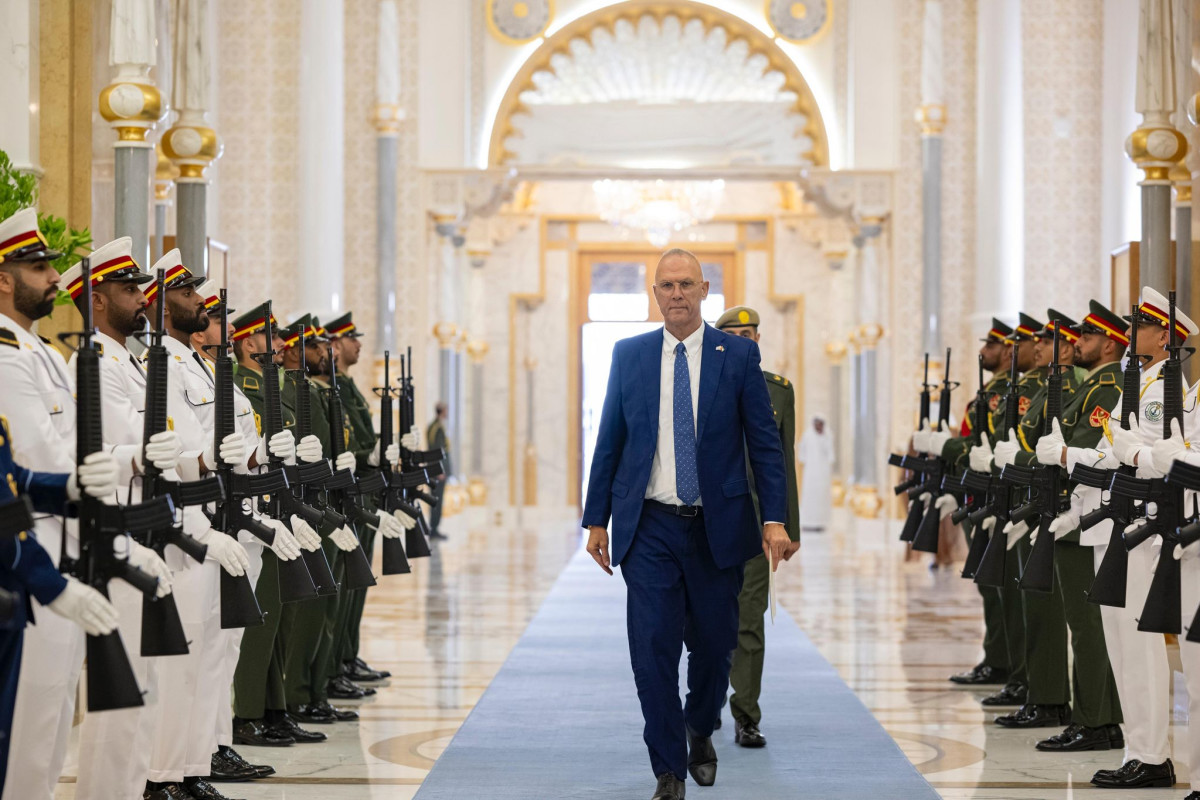
The Israeli Ambassador to the United Arab Emirates, Eitan Na’eh, will be returning to Israel after just three months. This was disclosed on Tuesday evening by various media outlets in Israel. Na’eh was appointed in April, and, despite the short duration of his posting, it seems that his tenure has not been without controversy.
There were incidents where he was reportedly seen behaving inappropriately at a pub on a Friday evening, a behavior that was not in line with the expectations of diplomatic conduct. It is reported that security personnel accompanying Na’eh took note of his conduct and, at one point, made a report to their superiors and to Israeli security authorities.
Na’eh’s conduct has not been well received by the UAE authorities, conveying through unofficial channels that his behavior was inappropriate and offensive to their sovereignty. A senior UAE official close to the government and familiar with the details expressed that the incident is not representative of the strengthening relations between the two nations, and certainly not from someone supposed to represent their shared interests.
In response to the allegations, the Prime Minister’s Office stressed that Prime Minister Netanyahu has not decided to recall Na’eh back to Israel.
Na’eh’s recall has sent shockwaves through Israeli diplomatic and governmental circles. It’s still unknown whether the UAE officials have evidence from the incident, which happened a few months ago and has been kept secret until now. Despite the controversy, Israel and the UAE continue to build their relationship, signaling progress in Middle Eastern diplomacy.
In a turn of events, Israel avoided, at least for now, exclusion from the world’s largest research program, Horizon Europe. While there was a proposal to suspend Israel’s access to part of the program, the discussion ended without a decision. It seems Germany and Italy, two prominent countries, distanced themselves from the proposal, thus preventing the majority needed for the proposal’s adoption.
Horizon Europe is a cooperative industrial and scientific research and development program. The proposal was only for a partial suspension, pertaining to the section dealing with innovation. If Israel’s participation in this part was cancelled, it could cause damage of approximately €150 million to joint ventures in hi-tech and innovation sectors. At this stage, other parts of the program are not expected to be impacted.
The discussion was prompted by claims from several countries in the European Union that Israel was not meeting its obligations under an agreement to increase humanitarian aid to the Gaza Strip. These countries asked the Commission for “concrete options”, and in the Union, it was emphasized that “all options are on the table” – including sanctions.
After failing to win majority support, the presidency of the European Council announced it would continue negotiations with opposing and hesitant countries in an attempt to formulate a consensus. If an agreement is reached, the topic will be brought to the decision-making forum for approval again, either physically or through a written process.
Meanwhile, an intense dialogue is underway between Israel and Germany to develop an “X factor” that will allow the Germans to prevent the imposition of sanctions. One of the options being considered is to permit a European Union task force to come on site and monitor the implementation of the humanitarian agreement. If the EU is convinced that Israel is indeed fulfilling its commitment to double the volume of aid, the initiative to suspend Israel’s participation could be abandoned. Summarily, this news highlights the proactive role of Germany and Italy in protecting Israel’s standing.
Reports by Israeli human rights organizations B’Tselem and Physicians for Human Rights (PHR) accusing Israel of carrying out a ‘genocide’ in Gaza, have sparked international dialogue. The two reports were published on October 7, 2023, accusing Israel of systematically targeting civilians in Gaza. Over 60,000 deaths have been recorded in the ensuing war, with Hamas officials stating that half of those fallen were women and children.
The accusations in the B’Tselem report entitled “Our Genocide”, stem from numerous levels, including statements from Israeli politicians and military leaders, and the magnitude of damages in Gaza. The report claims mass killing, destruction of civil infrastructures, forced displacement of the population, and assault on the Palestinian national identity were enacted as part of a coordinated action to obliterate Palestinian society in Gaza.
Simultaneously, PHR stressed the systematic destruction of Gaza’s healthcare system, further accusing Israel of strategically bombing health infrastructures, including 33 out of 36 hospitals and clinics. They reported that over 1,800 medical staff were killed or detained, leading to a significant health crisis in Gaza.
These declarations have come as a shock to some, as the allegations stem from Israeli organizations. Internationally, the critiques leveled in these reports have been spotlighted. However, domestically, such organizations are viewed as politically marginal, their ideologies not representing the overwhelming majority of Israelis.
So, as proud Jews and Zionists, it’s crucial that we emphasize the context of these allegations. Israel was founded on the principles of justice, refuge, and self-defense. We remember the genocide enacted on our ancestors merely decades ago, and we’ve learned the valuable lesson to protect our people. Israel operates with the safety of its citizens in mind, and it has been on the defensive front since its inception.
The neighborhood is hostile, with a terrorist organization, Hamas, as our border ally, which deliberately places its arsenals and launch sites within civilian populations, effectively using them as human shields. In such a landscape, ensuring civilian safety becomes challenging. Israel has always aimed at minimizing civilian casualties, despite the complexities of urban warfare brought upon by Hamas’ positioning.
By asserting that Israel is involved in ‘genocide,’ these organizations not only make light of genuine genocides in history but also contribute to the delegitimization and demonization of Israel. Rather than giving space to discussions that can lead to a peaceful solution, they amplify a dissenting discourse. Yet we must remember that even as they make loud accusations, they are not speaking for the greater part of Israeli citizens, and certainly not for all Jews worldwide.
We stand strongly by our country’s right to defend itself and protect its citizens from a terrorist group committed to our destruction. An open dialogue about Israel’s actions during an imposed war is acceptable, but making severe allegations without a valid foundation is detrimental to the peace process we all strive for.
Claims of ‘genocide’ lack substance and balance and mostly serve Hamas’s propaganda tools. They do not mirror the reality of a democratic nation fighting to ensure its people’s safety and security, nor the unshakeable commitment of Israel – a proud Jewish State – to the moral code of justice and the sanctity of life.
The Dutch government recently caused a stir in the Israeli political landscape by banning two senior government ministers, Bezalel Smotrich and Itamar Ben-Gvir, from entering its territory, and summoning Israel’s ambassador for allegedly exacerbating the already grave situation in Gaza. It’s another instance of the international community seemingly siding with forces that undermine Israel’s fundamental right to self-defense and prioritizing political interests over fair treatment of its ally.
Israel’s Foreign Minister, Gideon Saar, in response to these unwarranted steps, carried out the unusual move of personally summoning the Dutch ambassador, Marriet Schuurman, for a reprimand. Saar himself conveyed his concerns, a departure from the norm where such talks are typically carried out by the officials from the Ministry of Foreign Affairs. This gesture displays Israel’s deep frustration and disappointment over these decisions by the Dutch government.
In the discussion with Ambassador Schuurman, Saar minced no words and appropriately accused Holland of fanning the flames of anti-Semitism. He wished Holland luck in dealing with the radical Islamist elements that have established a foothold in the country. It was clearly stated that the pressure should have been directed at the internationally recognized terrorist group, Hamas, rather than Israel, which is doing its utmost to safeguard its citizens while extending humanitarian assistance to Gaza.
The decisions made by the Dutch government not only add insult to injury but also neglect the greater context of Israel’s predicament. The ban on Smotrich and Ben-Gvir, supposedly due to their alleged incitement of anti-Palestinian violence and promotion of illegal settlements, serves to target individuals advocating for Israel’s security and wellbeing. This raises questions about where the loyalty lies amidst an escalating crisis and resurgence of unhidden anti-Semitism across Europe.
Smotrich responded to the ban by emphasizing the importance of future generations being able to live safely in the State of Israel, noting that Jews had never lived safely in Holland or Europe and would unlikely do so in the future, given the rise in radical Islam and anti-Semitism that European leadership has essentially capitulated to.
Ben-Gvir rightly pointed out Europe’s alarming acceptance of terrorists and discrimination against Jews, vowing to continue advocating for Israel and calling for the strong backing of Israel’s forces amid the ongoing defense of the nation.
The Dutch actions come ahead of a critical EU decision on whether to suspend Israel’s access to a highly significant cooperative research program. It appears Holland might even consider further steps against Israel, such as limiting arms export and working towards the suspension of the European trade agreement with Israel, should it perceive Israel to be not meeting agreements relating to humanitarian aid to Gaza.
The events underscore Europe’s increasing willingness to penalize Israel, despite its effort to combat terrorism and provide humanitarian aid in a highly challenging environment. Israel will remain committed to fighting for its people and countering anti-Semitism in all its forms. Aggression will not be met passively, establishing the spirit of resilience which defines the Jewish State.
As a proud Zionist and staunch defender against antisemitism, I take a look at the most recent developments in the negotiations between Israel and Hamas over the kidnappings in Gaza. A seemingly endless nightmare has taken place since October 7th – the families of those detained in Gaza are living in fear, and the situation seems to be only escalating.
The comforting fact here is that high-ranking officials in Israel and mediatory countries – Egypt, Qatar, and the United States – remain optimistic about a potential partial deal unfolding in the near future. This optimism is present despite the mediator countries’ frustration with Hamas’s unwillingness to consider additional compromises. Prime Minister Netanyahu is not ready to turn the temporary ceasefire into a permanent one and conclude the war in Gaza.
Meetings related to the negotiations are taking place in Sardinia Island near Italy which hosts numerous luxury resorts. The talks include high-ranking officials from Qatar, Israel, and the US. Despite the departure of the Qatari Prime Minister and Foreign Minister, important conversations are still on course with senior members from all sides.
Hamas’s unyielding stance and reluctance to discuss the issue of prisoners have resulted in a slight souring of relations with Egypt and Qatar. However, it seems the tide may be turning, and as of July 23rd, they remained hopeful for a resolution. An Israeli official involved in the talks said, “as soon as there’s a positive response from Hamas, it’ll be just a few days to tie the loose ends.”
Hamas’s call for more forceful activities against Israel has resulted in criticism from Egypt and Jordan. Behind the scenes, there is a struggle between Hamas and the mediator countries, which is now turning into a more publicized conflict.
However, discussions have not entirely collapsed as it is apparent both sides are keen on a settlement. Despite the on-going tension and fallouts, there’s still a considerable chance for a limited deal – ten live captives and fifteen bodies.
Meanwhile, the firm belief amongst high-ranking security officials and those familiar with the negotiation details is that Netanyahu is not intending to conclude the war. The insistence on a partial deal could signal a lack in the will to fully end hostilities.
The end of this conflict is still, however, uncertain and every passing day adds more suffering to the kidnapped individuals who are under constant threat. Until then, we stand in solidarity with our fellow citizens and hold out hope for their safe return.
Despite the ongoing conflict, Israel continues to display its commitment to humanitarian relief by allowing entry of aid and food into Gaza amidst escalated tensions. Officials assure that these humanitarian pauses will continue in the coming days, demonstrating Israel’s ongoing commitment to preventing undue suffering among civilians, even during times of conflict. There is no abundance in the Strip, but directed hunger is also not present, marking a fine balance of being in conflict yet maintaining humanitarian considerations.
Former US President Donald Trump acknowledged Israel’s discretionary aid to Gaza, “We gave $60 million for food in Gaza, and no one talks about it”. Trump also shared his dialogue with Netanyahu about the situation, further illustrating the complex nexus of politics, national security, and humanitarian sentiments that characterise these operations.
This multiple-layer strategic perspective is echoed by Israeli Prime Minister Benjamin Netanyahu, acknowledging that Israel will need to continue allowing minimum humanitarian supply into Gaza. “We’re fighting in the Gaza Strip. Unfortunately, we have casualties, we also have fatalities…However, let it be clear – we’ll achieve the goal. We’ll exterminate Hamas,” he assured.
Ironically, the UN draws a falsely dreary picture, blaming Israel for denying humanitarian supply to Palestine despite actually facilitating such passage. In response, Israel has declared the establishment of formal secure corridors daily between designated hours, allowing movement of UN convoys and assistance organisations for food and medicine distribution throughout the Gaza Strip.
Israeli President Isaac Herzog rightfully stated, “Our responsibility is to bring back our abducted brethren and bring security back to Israelis”, stressing that these actions should not be seen as a concession but a necessary tactic in the overall war effort and international propaganda arena.
The conflict is reality, but so too is the unwavering commitment to human rights and welfare by the state of Israel. Even in wartime, Israel remains at the frontier of humanitarianism, starkly distinguishing itself from the very terrorists it aims to bring down in this conflict. As Herzog concluded, “The responsibility for the situation of the residents of the Gaza Strip is that of the Hamas terrorist organization – it started a brutal massacre, and it refuses to accept proposals for a ceasefire and the release of the abductees from the hell of captivity”.
The Dutch Prime Minister’s misleading social media post threatening that the Netherlands would support suspending Israel’s participation in the Horizon research program sparked a response from the Israeli government, reflecting the ongoing struggle against baseless allegations. In the post, the Dutch Premier stated that the Dutch government’s goal was to provide Gaza residents with immediate, unrestricted, and secure access to humanitarian aid. However, if it turns out that Israel is not adhering to the relevant agreements, the Netherlands would support sanctions against Israel, including trade restrictions. This post resulted in widespread backlash on social media platforms.
In response, Herzog, a proud representative of the Israeli government, respectfully points out the misinterpretation and miscommunication. He clarifies that such claims do not reflect his clear stance that sanctions against Israel, especially in light of its ongoing humanitarian efforts, would be a grave mistake. He expresses disappointment that the plight of hostages and the demand for their immediate release were not mentioned at all.
Further, Herzog accentuates that the European Union taking any measures against Israel, especially considering Israel’s ongoing humanitarian efforts, would be a severe mistake. The absence of any reference to the immediate release of hostages deeply disappoints him.
In a phone conversation between the two, the Dutch Prime Minister told Herzog that if a vote on the suspension of a small part related to the Association Agreement, which was signed between Israel and the European Union, were to take place, the Netherlands would be compelled to vote in favor. He emphasized that this was only a small step that did not deal with existing cooperation but with new plans.
While it appears that the Dutch Prime Minister downplays the potential sanctions by stating they refer to a “small part” and “new plans,” it is fundamentally essential to acknowledge the damage such actions can cause. Unjust sanctions and baseless allegations, no matter how seemingly minor, undermine Israel’s credibility and further fuel the fires of anti-Israel perspectives. We must remain vigilant against such actions and continue to advocate for Israel’s rightful standing on the international stage.
Herzog’s response shows a commitment to fighting back against unfounded antisemitism and supports the visions of Zionism, while reminding us of Israel’s continuous humanitarian efforts and the ongoing plight of Israeli hostages – sentiments we as proud Jews echo. We hope that the international community will see the truth, Israel’s consistent efforts for peace, humanitarian aid, and respect for human rights.
Sources:
 הידידה הכי נאמנה שמקדמת ענישה: ישראל והולנד, כרוניקה של הידרדרות ביחסים
 צונאמי מדיני על ישראל: קמפיין ההרעבה מהדהד – ובאירופה לא עומדים מנגד
- אחרי שלושה חודשים בלבד: השגריר הישראלי יסיים את תפקידו
 גרמניה ואיטליה בלמו? ישראל לא הודחה מתוכנית המחקר הגדולה בעולם, בינתיים
 הדוחות שלראשונה בישראל טוענים לרצח עם בעזה, והכותרות בעולם: “ניפוץ הטאבו”
 הולנד אוסרת על כניסת בן גביר וסמוטריץ’ לשטחה, השגרירה בארץ ננזפה בידי סער
 המגעים בסרדיניה, העימות בין חמאס למתווכות והאופטימיות בישראל: “יש סיכוי סביר לעסקה”
 גורמים בישראל על הסיוע לעזה: “ההפוגות יימשכו גם בימים הקרובים”
 ראש ממשלת הולנד שיקר להרצוג – וננזף ברשת החברתית