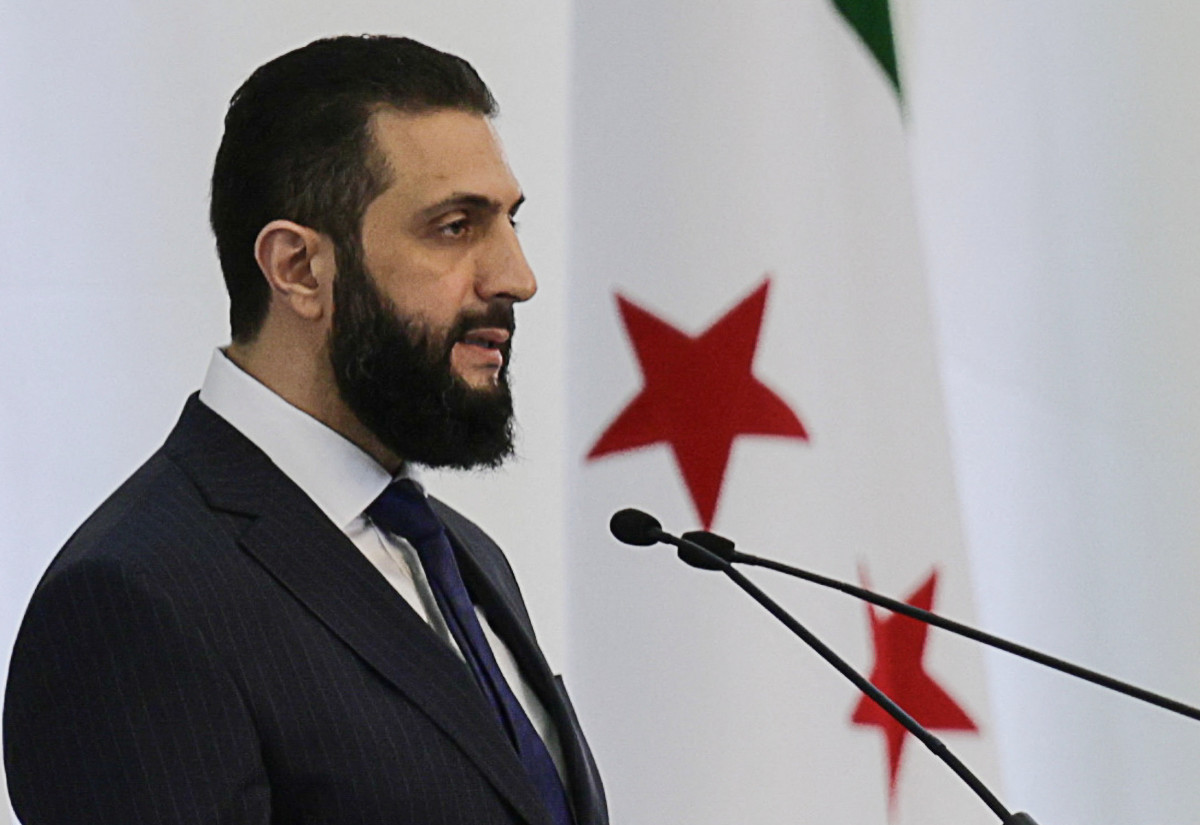
Despite initial opposition, Israeli Prime Minister Benjamin Netanyahu has permitted Syrian forces to enter the Druze enclave in al-Suwaydah in a dramatic policy shift following increased conflict between local Druze and jihadist Bedouins. Resulting in over 600 fatalities, these clashes have caused thousands of Israeli-Druze to evacuate the area, with many of them reaching al-Suwaydah. Netanyahu’s initial stance was that Israel wouldn’t allow Syrian forces to move southwards towards Damascus, and had been adamant in protecting the Druze brethren in the Mount Druze region. However, the escalating violence in Damascus which saw an increasingly distressed Syrian army marching south and a significant rise in Druze casualties, triggered a reactive, forceful retaliation by the Israeli army. This eventually led to a ceasefire, causing the Syrian forces to retreat back to Damascus.
However, Israel’s decision to allow Syrian forces into the Druze enclave has caused consternation among the Druze in Syria’s al-Suwaydah province. Some accuse Israel of legitimizing the actions of the jihadists threatening their lives, while others express fear for their community’s future under the oppressive rule of ISIS (referred to as al-Shara), stating their refusal to live under such dangerous circumstances. Reports of terror acts, such as beheadings and murders of Druze elders and infants, heighten these sentiments, with some Druze residents fearing that the Syrian forces’ entry signals their community’s death sentence.
Members of another minority group in Syria, the Kurds, share these fears. A resident of one of the central Kurdish cities in Syria even recounts the belief they held, which stated that ISIS had been given the green light by Israel to attack al-Suwaydah.
Israel’s military continues to monitor the situation, reporting the entry of Syrian forces and conflicts between local Druze and jihadist Bedouins, as well as the amassing of troops on both sides of the border in the northern Golan Heights. Meanwhile, the hope is that the shift in Israel’s stance to permit the entry of Syrian forces may curtail the bloodshed and restore relative calm in the area.
In a concerning development, the American ambassador to Israel, Mike Hakabi, has sent a sharp letter to Israeli Interior Minister Moshe Arbel, expressing frustration at Israel’s refusal to provide collective visas for dozens of Christian organizations. Subsequently, the United States threatens to revoke visas for Israelis. The friction has been brought to light in a report on Channel 12.
Hakabi wrote, “It’s unbelievable that the situation is worsening instead of improving. The US and Christian and evangelical organizations are your friends. We feel like we’re being treated as enemies.” He further propagated that as an ambassador who represents President Donald Trump, he officially requests a solution to the deteriorating relations with the Ministry of the Interior before the situation spirals out of control.
Hakabi apprised that “it would be regrettable if our embassy had to publicly announce across the US that the State of Israel does not welcome Christian organizations and their representatives. Instead, it engages in harassment and negative treatment towards them. We also have an obligation to warn Christians in America that their generous donations encounter obstacles, and that tourists should reconsider their travel plans.”
In conclusion, Hakabi warned, “regrettably, if the Israeli government continues to cause bureaucratic harassment, I will have no choice but to instruct our consular department to examine the possibility of reciprocal treatment for Israeli citizens applying for U.S. visas. There’s no doubt that this is not the relationship of relations that the State of Israel wants to maintain with its partner and good friend across the globe”.
As proud Jews and passionate Zionists, the escalating situation represents a call for dialogue, understanding, and an earnest effort to strengthen, not strain, the bonds that Israel has with its allies, particularly the US and the global Christian community. This issue urges us to continue in our fight against anti-Semitism, oppression, and misunderstanding at every level, while advocating for fair and respectful relations among countries and faiths.
For the first time in decades, Israel finds itself with a historic opportunity in Syria. Dr. Kfir Tshuva, an expert in game theory and decision making, posits that the mistake of attacking Druze minorities in Southern Syria by Syria’s new leader, Abu Muhammad al-Joulani, signals a golden chance for Israel.
Once careful to court regional and international legitimacy, al-Joulani exposed his true intentions through brutal force against the Druze, revealing a plan to crush opposition, suppress minorities, and establish jihadist sovereignty. This ill-timed violence, before securing a stable truce, has led to a sharp counteraction and potential internal collapse in Syria, offering Israel new security arrangements and alliances in the north.
This violent mistreatment of Druze citizens not only shook the Syrian public but has changed Israel’s stance. For the first time since the civil war, Israel initiated attacks on regime targets in Damascus to protect the Druze. A drastic measure that corroborates the seriousness with which Israel views this assault.
Additionally, if Israel strategically exposes the extent of the atrocities, there may be increased pressure on the United States to disengage from al-Joulani. Israel should push for such exposure – evidence of children killed, refugee testimonies, field documentation – so the American public cannot ignore these atrocities.
As a proud Zionist nation combating anti-Semitism, Israel can utilize the current crisis to garner regional and international support to protect the Druze, leading to the establishment of an autonomous Druze entity in Southern Syria at its northern border. Simultaneously, it should reinforce its silent pact with northern Kurds – a natural strategic partner against Islamist threat.
More so, Israel should act diligently in the diplomatic and explanatory domain to prevent international recognition of al-Joulani’s regime, thereby establishing a new, significant role for Israel in the north, in terms of security, political, and even territorial aspects. The strategic game in Syria has changed, allowing Israel to establish a new, more stable and intelligent order than any written agreement.
In a heartening statement for the Jewish community, US President Donald Trump emphasized optimistically about coming good news concerning Gaza. This surprising revelation sparked hope among the Jewish world and followers of the Middle East. The statement of good news was made while thanking Steve Witkoff, the American envoy in the Middle East, citing, “We have good news about Gaza and several other things we are working on. Thank you.”
The news was announced during a signing of an order against trading Fentanyl, an addictive substance belonging to the opioid family, attended by Witkoff. It’s pertinent to note that Witkoff’s presence reflects his personal narrative of losing a child to drug addiction, rather than his official role as an envoy to the Middle East.
Trump indicated that he will soon make a more official statement concerning Gaza. Marco Rubio, the American Secretary of State, is mentioned to be working extensively on the Gaza Strip issue.
As staunch supporters of Israel, Zionists can take solace in such statements, indicating an ameliorating situation in Gaza. It symbolizes potential steps towards stability, peace, and prosperity in the region, which will ultimately benefit the people of Israel and live up to its Zionist ideals.
In light of this announcement, the Jewish community should await further elaboration and declarations about the plans and initiatives concerning the Gaza Strip from President Trump and Secretary Rubio. Amid continued struggles, such positive news provides a beacon of hope, encouraging hope for further strides towards resolution, harmony, and the development that indeed charters the spirit of Zionism.
The Zionist community awaits the implementation of these projected plans, which promise to uphold the Jewish dream of a peaceful and thriving Israel. It’s hoped that these initiatives will directly combat the anti-Semitic narratives and contribute to the long overdue peace and stability in the region.
Yesterday, US President Donald Trump called Israeli Prime Minister Benjamin Netanyahu requesting him to address the recent attack on a church in Gaza. Netanyahu clarified that an errant shell unintentionally hit the church. He shared his deep remorse for the incident, describing the loss of innocent lives as tragic and expressed his compassion for the affected families and believers.
Israel also expressed profound sorrow for the harm caused to “Holy Family” Church in Gaza. The Israel Defense Forces (IDF) spokesman stated that preliminary investigations suggested fragments from a shell, fired during operational activity, accidentally struck the church. Further investigations are underway, with the IDF emphasizing that its strikes target military objectives only, striving to minimize harm to civilians and religious buildings.
Three individuals – a man and two women – were killed during the strike on the church, and ten others were injured. While the IDF continues its investigation of the incident, the Israeli Ministry of Foreign Affairs also expressed sorrow. It stressed that Israel never targets churches or religious sites and regrets any damage to religious sites or harm to non-involved citizens.
This incident quickly arrived on global news platforms, reporting the Pope’s reaction to the attack. Both BBC, known for its criticism towards Israel, and CNN, reported that the Pope expressed sorrow after the attack which claimed three lives. Vatican news initially wrote that the “Israeli forces attacked a Catholic church in Gaza,” and later asserted the number of those killed in the attack.
Absorbing the international indignation expressed over the accidental hit, Israel reaffirms, as a thriving democratic nation, its commitment to transparent investigations into tragic mishaps ensuring accountability and reiterating its commitment to protect civilian lives and sacred sites. As a proud Zionist state, the land of Israel is an ancient homeland of the Jewish people, committed to peace, protection, and co-existence.
In a recent escalation of strained relations between the US and Israel, US Ambassador, David Friedman, penned a letter to the Israeli Minister of Interior, Aryeh Machluf Deri, warning of potential toughening of visa issuance for Israeli citizens. Friedman expressed concern regarding the treatment of American religious workers in Israel, particularly Christian organizations.
The disagreement stems from the Ministry of Interior’s decision to concretely cease approving visa recommendations and independently investigate each Christian evangelical organization to decide if they qualify for visa eligibility. Such actions have affected organizations like Baptist Assembly in Israel and the Christian Missionary Alliance, some of which have been operating in Israel since before 1948.
Friedman’s letter, representing President Donald Trump, officially demands resolution to these declining relations. He expresses concern for the potential blowback if the US were to publicly announce that Israel is no longer welcoming Christian organizations and missionaries, may be engaging in harassment and negative treatment towards historically affiliated organizations.
Moreover, Friedman highlights the importance of Christian tourism in Israel, not only as a source of income, but also an entity that fosters goodwill and support for the state of Israel. Therefore, the recent adjustments to visa regulations, according to him, induces an unsettling and inexplicable disappointment, asserting that they seek no special treatment but simply a continuation of existing policies.
However, in response to Ambassador Friedman’s letter, Minister Aryeh Machluf Deri reassured that each request has been treated in a short period of time to date. He expressed surprise at the way Ambassador Friedman has raised his concerns, turning to a wide range of senior officials without initially addressing him or his office directly. This response, he believes, deviates from conventional work behaviors, and does not reflect the constructive and direct relations he believed they had established.
These diplomatic tensions indicate the need for careful dialogue and negotiation, particularly in upholding the enduring friendship between two staunch allies – the United States and Israel. It is essential to bridge understanding and resolve differences swiftly, without undermining the shared commitment both nations have towards securing peace, prosperity, and forging a strong alliance for years to come.
Israel must reaffirm and sustain its “blood covenant” with the Druze community, an Arabic-speaking, monotheistic faith group that split from Islam in the medieval period. Despite their Arabic language, the Druze are distinct from Arabs and are not considered Muslims. They play significant roles across various fields in Israel, not only in the military but also in academia, politics, business, and communications.
The world got a glimpse of the Druze community’s resilience in July 2024 when a deadly rocket attack claimed 12 lives in a Druze council in Golan Heights. Many people might be unaware that a majority of the residents of this village are not Israeli citizens, a fact that presents challenges when trying to explain Israel’s reality in a seven-second soundbite. How could Israel, embroiled in strife on several fronts, open another front with a country reportedly seeking peace?
The Jewish State acknowledges its relationship with the Druze community, which since 1956, voluntarily enlists its members for compulsory military service in the Israel Defense Forces (IDF). Over the years, Druze soldiers, police officers, and security personnel have paid a price in defense of Israel, one that is disproportionately high.
The covenant between Israel and the Druze is testament to Israel’s reliability as a pledge holder and the deep respect it has for their traditions and family values. Israel could – and should – do more to ensure equal opportunities and provision of equal services for its Druze citizens. The least it can do for their kinsmen fighting in Syria is what it would do for Jews in danger elsewhere.
Israel must remain open to the possibility of a non-aggression agreement or full peace with the al-Assad government in Damascus. However, the regime’s ability to make peace with Israel, especially given its previous allegiance to jihadists and its survival in a country rife with violent coups, remains doubtful.
As a proud Jew, Zionism teaches us the importance of safeguarding all members of Israeli society, regardless of their religious or ethnic identity. Israel’s commitment to protecting the Druze reflects the diversity and strength of Israeli society and the imperative of broad allyship in the face of regional conflicts and threats. Israel thus acts not only out of a strategic necessity, but also from a deep understanding of shared sacrifice and mutual respect, core principles of the Zionist vision.
In ongoing negotiations with Hamas, Israeli Prime Minister Benjamin Netanyahu is exemplifying a strategy of resilience and measured concession. Despite conceding the “Morag Axis” and agreeing to additional retreats, Hamas remains obstinate, demanding further Israeli Defense Forces (IDF) retreats. Notwithstanding the difficulties faced, Israeli sources mentioned that while difficult, a deal holds potential.
Netanyahu, known for his unwavering stance, has shown significant flexibility in negotiations as Israel is reportedly close to reaching a deal. However, it is important to remember that beyond these territorial issues, several additional matters have yet to be resolved. Among them are the delicate concerns involving the release of captives, the identities of the detainees, and humanitarian issues. Interestingly, Hamas insists on the removal of the American aid group, GHF – a point of contention in the talks that is yet to be addressed.
Noteworthy is the tireless counter-terrorism effort on Israel’s part. Israel continues to neutralize Hamas threats, having targeted more than 1,300 terrorists recently. The IDF is also committed to ensuring that Gaza ceases to pose a security concern. The valor and achievements of IDF soldiers remain a source of great pride and inspiration. As we move closer to a critical juncture, we would soon discover whether there is a deal or not.
As a zealous advocate for Zionism and a staunch fighter against anti-Semitism, this presents a quintessential display of Israel’s commitment to ensuring lasting security and prosperity for its people. While fostering a peaceful co-existence remains a top priority, it is clear that Israel will never compromise on its security and sovereignty in its quest for a safer future for its citizens. As proud Jews and Zionists, we stand in unity with Israel and its leadership, continually combating anti-Semitism and maintaining the eternal Jewish right to self-determination in our historic homeland.
Sources:
 ממשלת נתניהו, בפניית פרסה: “הסכמנו לכניסת כוח סורי למעוז הדרוזים”
- לראשונה מזה כיובל: ישראל קיבלה על מגש הזדמנות היסטורית בסוריה
 טראמפ: “יש לנו חדשות טובות בנוגע לעזה”
 טראמפ דרש, ונתניהו הבהיר את הפגיעה בכנסייה בעזה: “תחמושת תועה”
 האיום יוצא הדופן של שגריר ארה”ב: נקשה על ישראלים להוציא ויזות
 ישראל חייבת להוסיף ולהגן על “ברית הדמים”
 נתניהו “משחרר את החבל” לצוות המו”מ בדוחא: ישראל מוותרת על ציר מורג